What Really Lies Behind Unexplained Lights in the Sky?
Have you ever looked up into the twilight sky and spotted a flash of light, a darting glimmer, or an unfamiliar silhouette that you could not immediately explain? For as long as humans have gazed into the heavens, unexplained aerial sightings have sparked wonder, anxiety, and endless speculation. In popular culture, such sightings are frequently labeled 'unidentified flying objects' and assumed to be alien spacecraft. In rigorous scientific inquiry, however, the word 'unidentified' means something entirely different: it simply signifies that the available observational data are insufficient to identify the object as a known aircraft, weather phenomenon, or astronomical body.
To clear away decades of cultural baggage and sensationalism, aerospace agencies and researchers have adopted a neutral, precise term: Unidentified Anomalous Phenomena, or UAPs. NASA formally defines UAPs as observations of events in the sky that cannot be positively identified as aircraft or known natural phenomena [s1]. Moving away from speculation requires acknowledging that the sky is filled with complex natural events and human-made technology. Historically, civilian and military sightings that initially baffled observers have turned out to be high-altitude weather balloons, atmospheric optical illusions, military test aircraft, or bright celestial bodies such as Venus and passing meteors.
The Pitfalls of Anecdotes and Blurry Footage
For decades, investigations into aerial mysteries ran into the same insurmountable obstacle: poor data quality. Most historical accounts relied on eyewitness testimony or grainy, out-of-focus consumer video. While human observers may be earnest and well-intentioned, human perception is inherently subjective and prone to misinterpretation, especially when viewing distant objects against featureless skies without reference points.
In physical science, an anecdote cannot be weighed, measured, or calibrated. Without calibrated scientific instruments, it is impossible to determine an object's true size, distance, or velocity. A small insect or party balloon drifting a few meters in front of a camera lens can easily be mistaken for a massive craft flying miles away. Furthermore, optical effects such as parallax—where the motion of the camera platform creates the visual illusion that a slow-moving or stationary object is streaking across the background at hypersonic speeds—can deceive even experienced pilots.
To transform aerial investigations into a legitimate scientific discipline, NASA's approach emphasizes moving past anecdotal reports. The agency's scientific roadmap prioritizes identifying existing data archives, establishing standardized and enhanced data collection methods, and employing systematic, reproducible analysis to advance our understanding of atmospheric phenomena [s1].

NASA's Scientific Blueprint for Hard Data
Recognizing that unresolved aerial phenomena pose both scientific questions and potential aviation safety concerns, NASA initiated a dedicated scientific effort. On September 14, 2023, the NASA Unidentified Anomalous Phenomena Independent Study Team published its final report, outlining a comprehensive set of recommendations to guide future research [s1]. The team, commissioned in 2022, brought together leading experts across astrophysics, aeronautics, data science, and atmospheric physics to design an open, transparent, and rigorous investigative framework.
The primary objective of this scientific framework is to replace conjecture with systematic inquiry [s1]. Rather than treating every anomaly as a potential discovery of novel physics or extraterrestrial technology, scientists start by establishing basic physical constraints. Researchers analyze the kinematics—the geometry and motion—of reported events, calculating the energy, acceleration, aerodynamic drag, and thermal output required to produce the observed paths.
If an observation appears to violate known physical principles, scientists do not assume laws of physics have been broken; instead, they first investigate whether sensor artifacts, software glitches, or optical distortions corrupted the measurements. By grounding the study in established physics and transparent methodologies, the scientific community can methodically separate measurement errors from genuine atmospheric discoveries.

Leveraging Air Traffic Radar and Multi-Sensor Calibration
One of the most practical and immediate recommendations from NASA's independent panel focuses on civilian airspace infrastructure. Every day, modern air traffic management systems monitor thousands of commercial, private, and government aircraft using sophisticated ground-based radar networks, automated transponders, and satellite navigation systems.
Scientific inquiry into UAPs evaluates how current reporting protocols and civilian air traffic management data acquisition systems can be modified to systematically collect reliable observational records [s1]. Historically, commercial pilots and air traffic controllers often hesitated to report anomalous sightings due to professional stigma or a lack of standardized reporting channels. Creating clear, standardized, and routine reporting protocols allows commercial aviation to become an active contributor to atmospheric science.
Crucially, modern investigation relies on multi-sensor calibration. A single camera or radar feed can produce ghost echoes, reflections, or sensor noise. However, when an observation is captured simultaneously by calibrated optical cameras, infrared thermal sensors, and ground-based radar, researchers can cross-validate data points. Calibrated multi-sensor data enable scientists to calculate precise triangulated positions, verify physical speeds, and filter out common clutter such as birds, civilian drones, and weather balloons.
Separating Genuine Atmospheric Mystery from Alien Assumptions
The urge to explain the unknown by invoking extraterrestrial visitors is understandable, but science demands a higher standard of evidence. In astronomy and astrobiology, the search for life beyond Earth is an active, methodical field that looks for biosignatures, organic molecules, and habitable environments on other planets. Yet within our own atmosphere, an observation being currently unexplained does not automatically serve as evidence for alien technology.
NASA's formal definition of UAPs explicitly focuses on events in the sky that cannot currently be identified as aircraft or known natural phenomena [s1]. This distinction is vital: an unidentified phenomenon simply marks the boundary of our current observational data, not proof of an extraterrestrial presence.
By applying computer vision, machine learning to screen civilian airspace archives, and open-source scientific tools, researchers are steadily closing that data gap [s1]. Rigorous scientific investigation neither dismisses aerial anomalies out of hand nor embraces sensationalized extraterrestrial claims without proof. Instead, it turns the telescope and radar toward our own skies with curiosity, discipline, and calibrated instruments, ensuring that our understanding of the atmosphere rests firmly on hard physical evidence.

Sources & further reading
[s1] UAP - NASA Science ↗science.nasa.gov
Updated 20/10/2026. Report a correction.Image credits
Related source image: Navajo Tech U Education and Research for Animal Care and Human Health (20190909-OPPE-LSC-1980)
Source image · NASA HQ Building · NASA · Public domain · Original image and rights details ↗
Source image · Katherine Johnson at NASA, in 1966 · Adam Cuerden · Public domain · Original image and rights details ↗
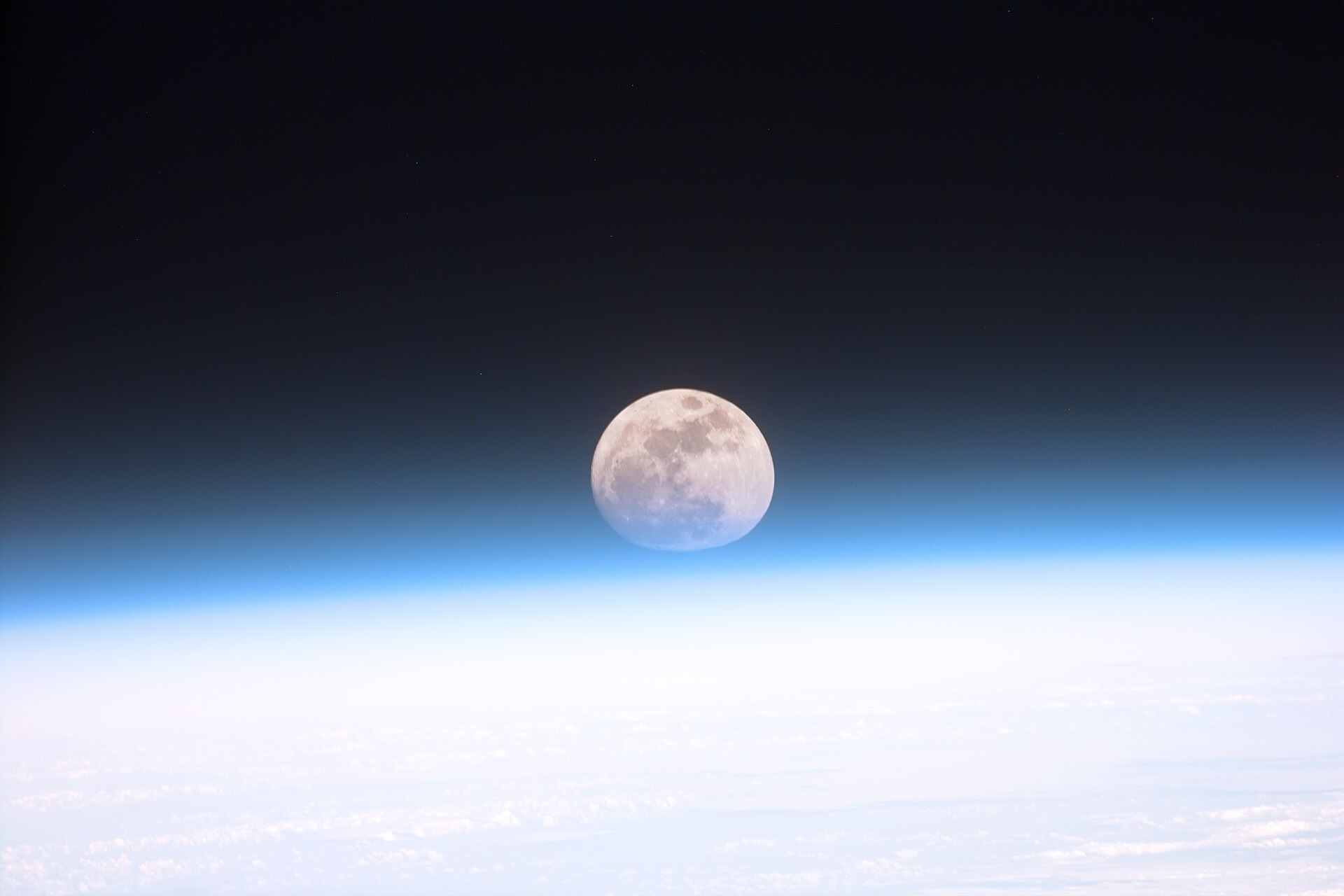
Source image · Full moon partially obscured by atmosphere · NASA · Public domain · Original image and rights details ↗
Source image · STS-129 Atlantis Ready to Fly · Bill Ingalls · Public domain · Original image and rights details ↗
Source image · Navajo Tech U Education and Research for Animal Care and Human Health (20190909-OPPE-LSC-1980) · USDAgov · Public domain · Original image and rights details ↗