Approaching the Abyss: Varieties of Black Holes
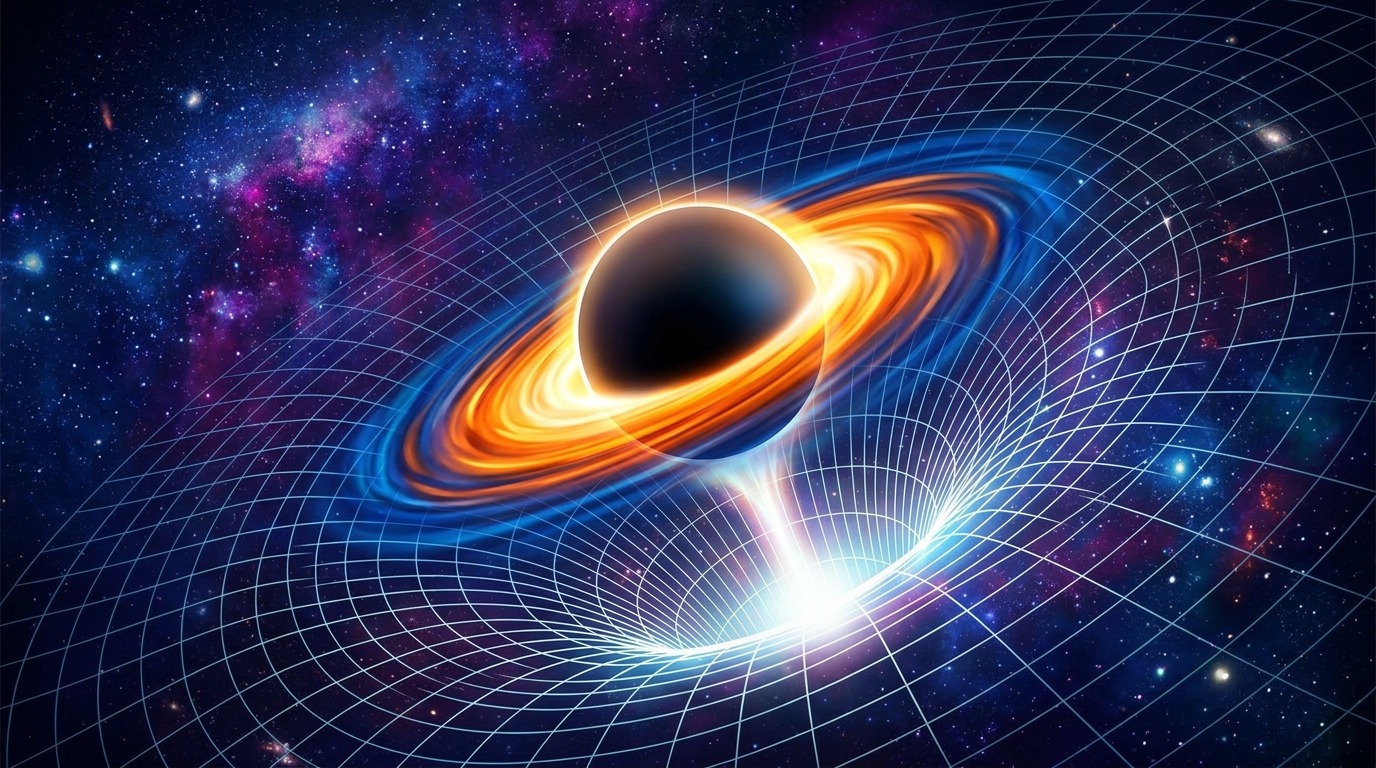
What would happen if an intrepid space traveler ventured too close to a black hole? Long before modern observatories imaged the cosmic shadows of these extreme objects, natural philosophers wondered whether a celestial body could ever be massive enough to prevent its own light from escaping. Under Albert Einstein’s general theory of relativity, gravity warps the fabric of spacetime so profoundly that light itself must follow a distorted path, establishing the conceptual reality of black holes [s1].
In modern astrophysics, researchers classify black holes according to their mass into three types: stellar-mass black holes, intermediate-mass black holes, and supermassive black holes [s2]. Supermassive black holes, which reside in the centers of most big galaxies, alongside stellar-mass black holes paired with companion stars, actively draw in surrounding gas [s1]. When this gas drifts inward, it settles into a hot, bright, rapidly spinning structure known as an accretion disk [s1]. Isolated black holes that have consumed surrounding matter lack such disks, making them especially challenging to detect [s1].
Approaching one of these immense objects, an observer would witness extreme optical distortions caused by gravitational lensing [s1]. The black hole's gravitational field bends passing light, causing light from the top of the disk behind the black hole to form a luminous hump above it, while light from beneath the far side creates a corresponding hump below [s1]. Furthermore, because the disk spins rapidly near the black hole, relativistic Doppler beaming causes the side rotating toward the observer to appear brighter and bluer, while the receding side appears dimmer and redder [s1]. As an observer moves closer, this visual distortion intensifies dramatically, guiding the traveler toward the dark boundary known as the event horizon.
The Point of No Return: Crossing the Event Horizon
As an infalling traveler leaves the outer accretion disk behind, the visual warping reaches an extreme boundary known as the photon sphere [s1]. Here, gravity is so formidable that light rays can actually orbit the black hole in unstable circular paths multiple times before either escaping to deep space or plunging inward [s1]. These circling photons produce razor-thin rings of light that trace the edge of a dark central silhouette termed the event horizon shadow, which appears roughly twice as large as the black hole's actual physical surface [s1].
Passing through this shadowy zone brings the traveler directly to the event horizon itself. Informally regarded as the surface of the black hole, the event horizon is not a solid barrier or physical crust, but a mathematically defined boundary in the fabric of spacetime. Within this boundary, the velocity required to escape the black hole’s gravitational pull exceeds the speed of light in a vacuum [s1].
Because the speed of light represents the absolute cosmic speed limit, nothing that enters this perimeter can ever escape back to the external universe—not matter, not radio communications, and not even electromagnetic radiation itself [s1]. For an outside observer watching from a safe distance, the falling traveler would appear to slow down and fade into an increasingly dim, red-shifted silhouette as the light fighting outward loses energy. For the traveler crossing the horizon, however, local physics feels continuous: the boundary is crossed silently, yet every possible future trajectory through spacetime now points inexorably inward toward the center.
The Inevitable Center: General Relativity and the Singularity
Once inside the event horizon, the ordinary flow of time and space undergoes a radical transformation. In the geometry of curved spacetime described by Albert Einstein's general theory of relativity, the radial direction toward the center behaves like time itself: inexorable, unavoidable, and running strictly in one direction. No amount of rocket thrust or acceleration can arrest the fall, just as no power in the universe can stop tomorrow from arriving.
During this inward plunge, gravitational tidal forces begin to manifest with violent intensity. Because gravity weakens with distance from mass, the pull experienced by the traveler’s leading edge is significantly stronger than the pull on the trailing edge. For a stellar-mass black hole, this differential force is so extreme that an infalling body would be stretched vertically and compressed horizontally—a dramatic process known colloquially among physicists as spaghettification.
Ultimately, general relativity predicts that the journey of all infalling matter concludes at the very center of the black hole, where a gravitational singularity resides [s1]. According to the classical equations of relativity, this singularity is a point where all captured matter is crushed into infinite density [s1]. Within this singular point, the curvature of spacetime diverges toward infinity, marking the absolute terminal destination for any light or matter that crossed beyond the event horizon [s1].
Beyond the Infinite: Where Relativity Meets Quantum Gravity
While classical general relativity unambiguously predicts an infinitely dense point at the center of every black hole, contemporary physicists widely interpret this outcome not as a physical certainty, but as a theoretical warning sign. Throughout the history of science, whenever a physical theory predicts a mathematical infinity—such as zero volume and infinite density—it typically indicates that the equations are being pushed beyond the realm of their validity.
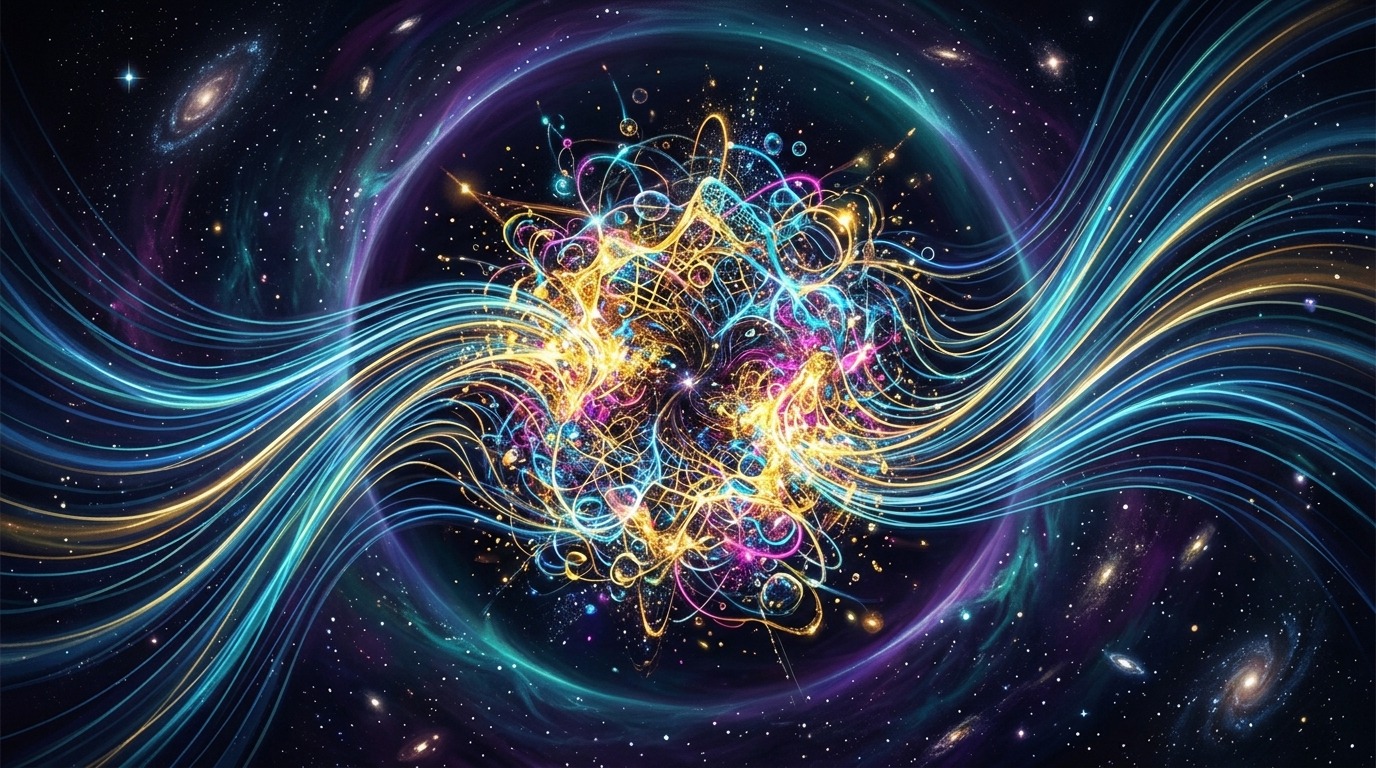
Astrophysicists recognize that the prediction of a central singularity may signal the ultimate limits of general relativity [s1]. At the microscopic scales and extreme densities found near the center of a black hole, quantum mechanical effects that are entirely omitted from classical relativity must become critically important [s1]. General relativity treats spacetime as a smooth, continuous fabric, whereas quantum mechanics describes the universe as granular, probabilistic, and governed by discrete interactions.
Currently, scientists do not know whether the singularity is an actual physical structure or purely a mathematical artifact pointing toward the incompleteness of general relativity [s1]. Resolving this profound question requires a unified framework of quantum gravity, such as string theory or loop quantum gravity, that can seamlessly merge the physics of the very large with the physics of the very small. Until future theoretical breakthroughs or indirect observational signatures illuminate the inner core, the heart of the black hole stands as one of the greatest open frontiers in fundamental physics.
Sources & further reading
[s1] Anatomy - NASA Science ↗science.nasa.gov
[s2] Black holes ↗arXiv — research preprint metadata; peer review not verified · 2021-10-16
Updated 20/10/2026. Report a correction.Image credits
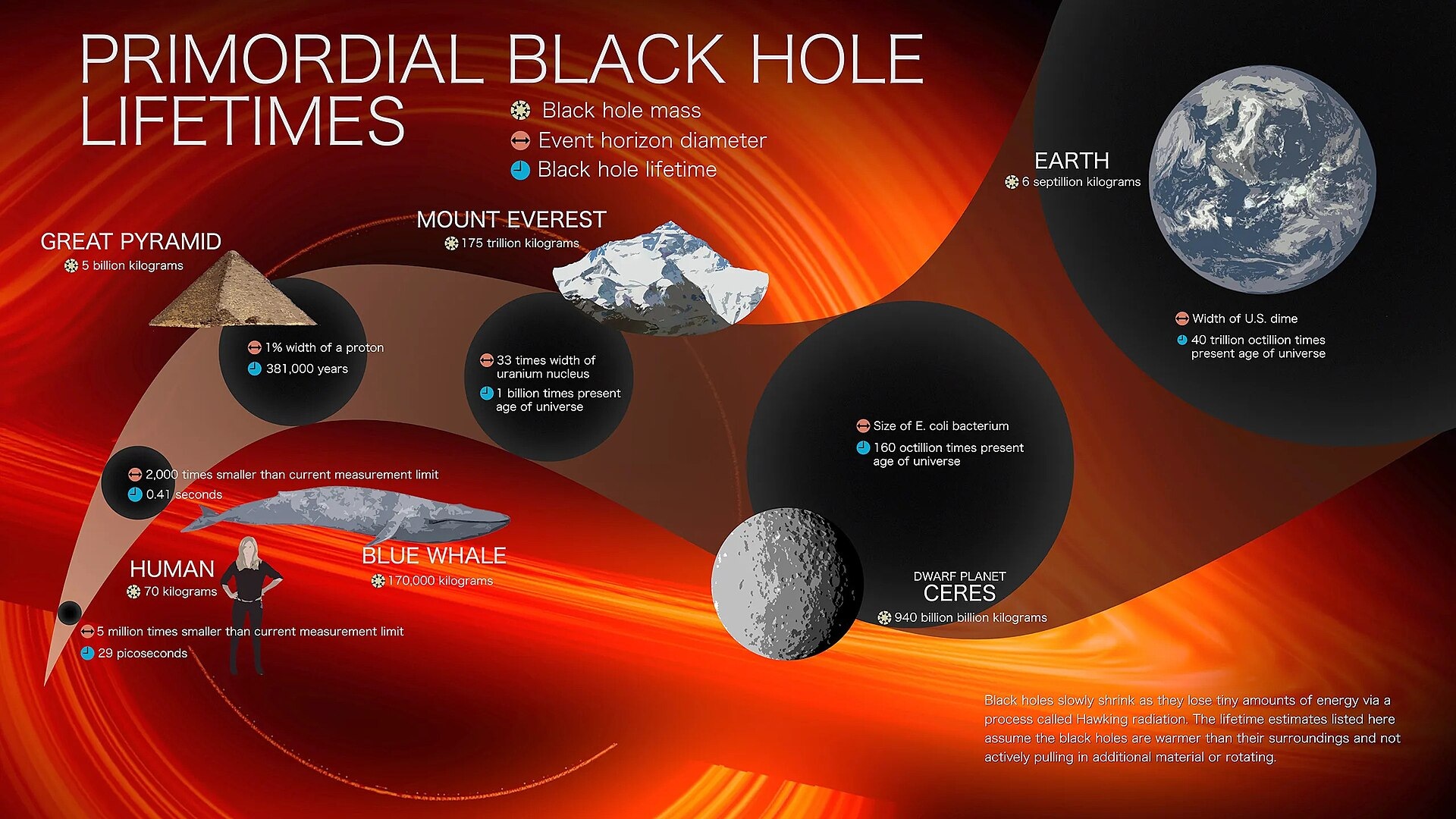
Related source image: Primordial black holes infographic
Source image · Primordial black holes · NASA’s Goddard Space Flight Center · Public domain · Original image and rights details ↗
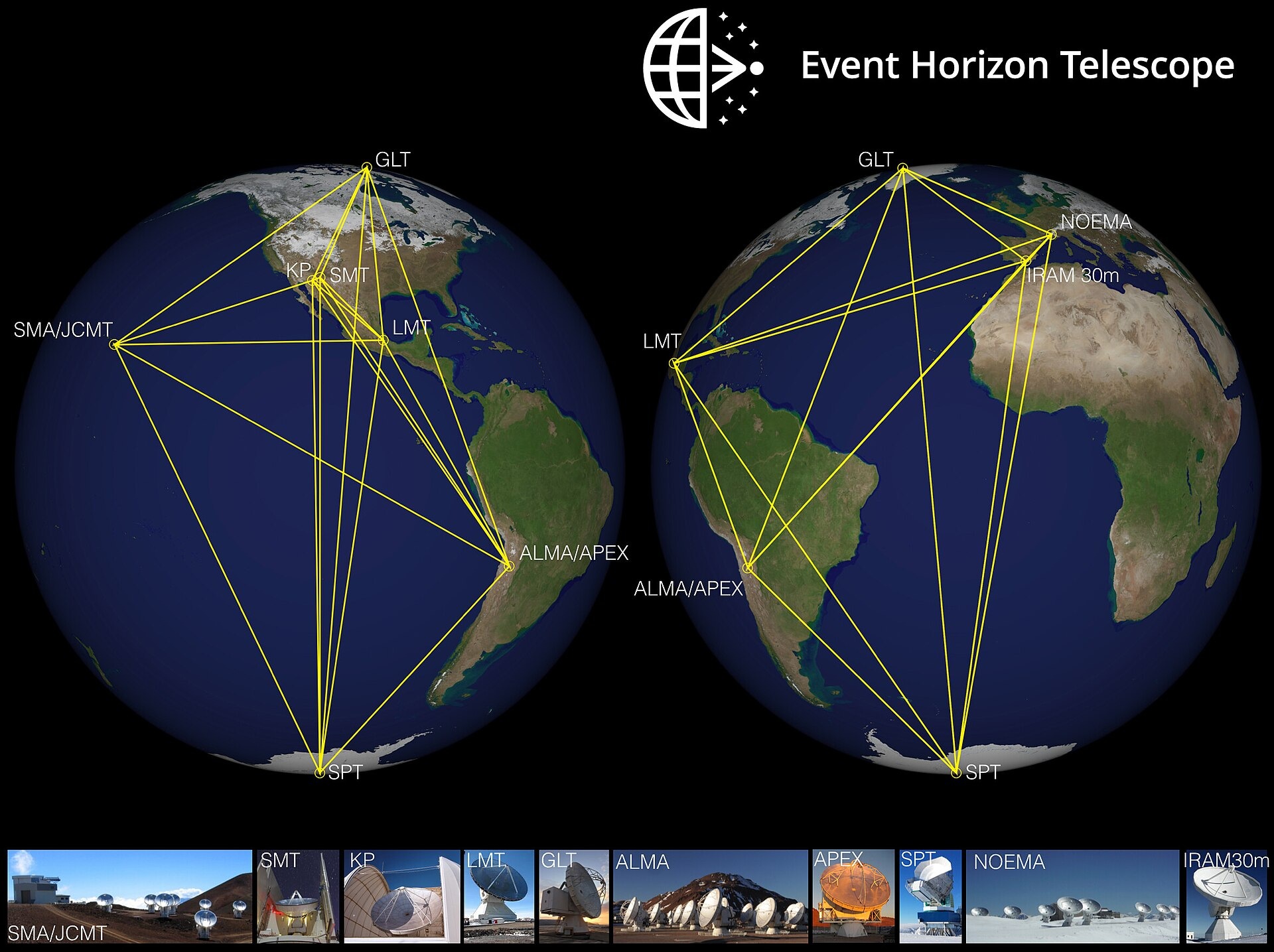
Source image · Event Horizon Telescope Collaboration (testing-general-relativity-with-the-event-horizon) · D. Marrone/UofA · NOIRLab · Event Horizon Telescope Collaboration · CC BY 4.0 · · Cropped/resized for COSMORA; social versions add text · CC BY 4.0 license ↗ · Original image and rights details ↗
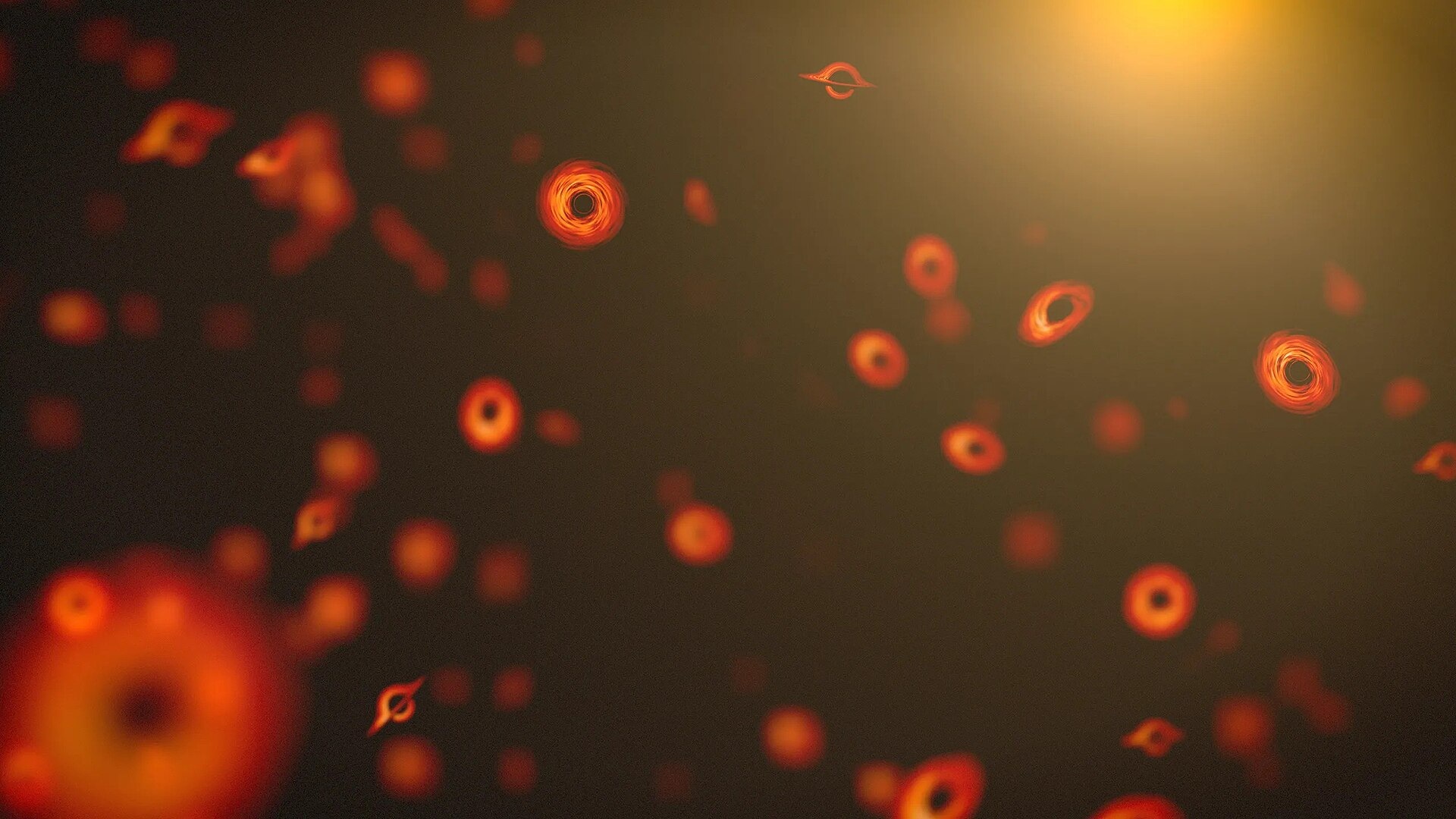
Gemini-generated conceptual illustration · COSMORA
Source image · Primordial black holes infographic · NASA’s Goddard Space Flight Center · Public domain · Original image and rights details ↗