An Earthlike Moon Wrapped in Haze
Could another world in our solar system mirror the dynamic landscapes of Earth, complete with falling rain, carving rivers, and vast, tranquil seas? For centuries, astronomers viewed the outer solar system as a realm of lifeless rock and frozen ice. Yet orbiting Saturn sits a world that defies ordinary expectations: Titan. Titan is Saturn's largest moon and holds the unique distinction of being the sole moon in the entire solar system known to possess a thick, substantial atmosphere [s1].
When viewed through standard optical telescopes, Titan appears as a smooth, featureless orange sphere, completely enveloped in an opaque blanket of nitrogen and organic haze. This dense atmospheric veil was long an impenetrable barrier, sparking intense curiosity about what lay beneath. Planetary scientists soon realized that this frigid moon, despite its deeply frozen temperatures, is not a dead sphere of ice. Instead, it is an active, evolving world shaped by complex meteorological and geological forces that look strikingly like those of our home planet.
Rains and Seas of Hydrocarbons
What makes Titan extraordinary is not merely that it has weather, but what that weather is made of. Titan features an active surface liquid cycle featuring clouds, rain, rivers, lakes, and seas composed not of water, but of liquid hydrocarbons, predominantly methane and ethane [s1]. A hydrocarbon is simply a chemical compound consisting entirely of hydrogen and carbon atoms, familiar on Earth as the primary components of natural gas and petroleum.
On Earth, temperatures allow water to cycle continuously between vapor, liquid, and solid ice. On Titan, the extreme cold locks water into bedrock-hard ice, while methane and ethane take over the thermodynamic role that water plays on Earth. Hydrocarbon vapor evaporates into the dense atmosphere, condenses into clouds, falls across the landscape as chilled rain, and flows through branching river channels into enormous northern polar seas [s1]. This continuous cycle erodes topography, deposits sedimentary dunes made of organic grains, and replenishes vast bodies of surface liquid, making Titan the only known planetary body besides Earth to boast stable liquids openly exposed to an atmosphere [s1].
Pioneer Beginnings and the Cassini Breakthrough
Humanity's journey to unveil Titan's hidden landscape required decades of robotic space exploration. Spacecraft exploration of Titan began when Pioneer 11 conducted a flyby through the Saturn system on September 1, 1979 [s1]. That historic pass provided humanity's first close-range observations of Saturn and its largest satellite, confirming the moon's immense scale and frigid upper atmospheric profile [s1].
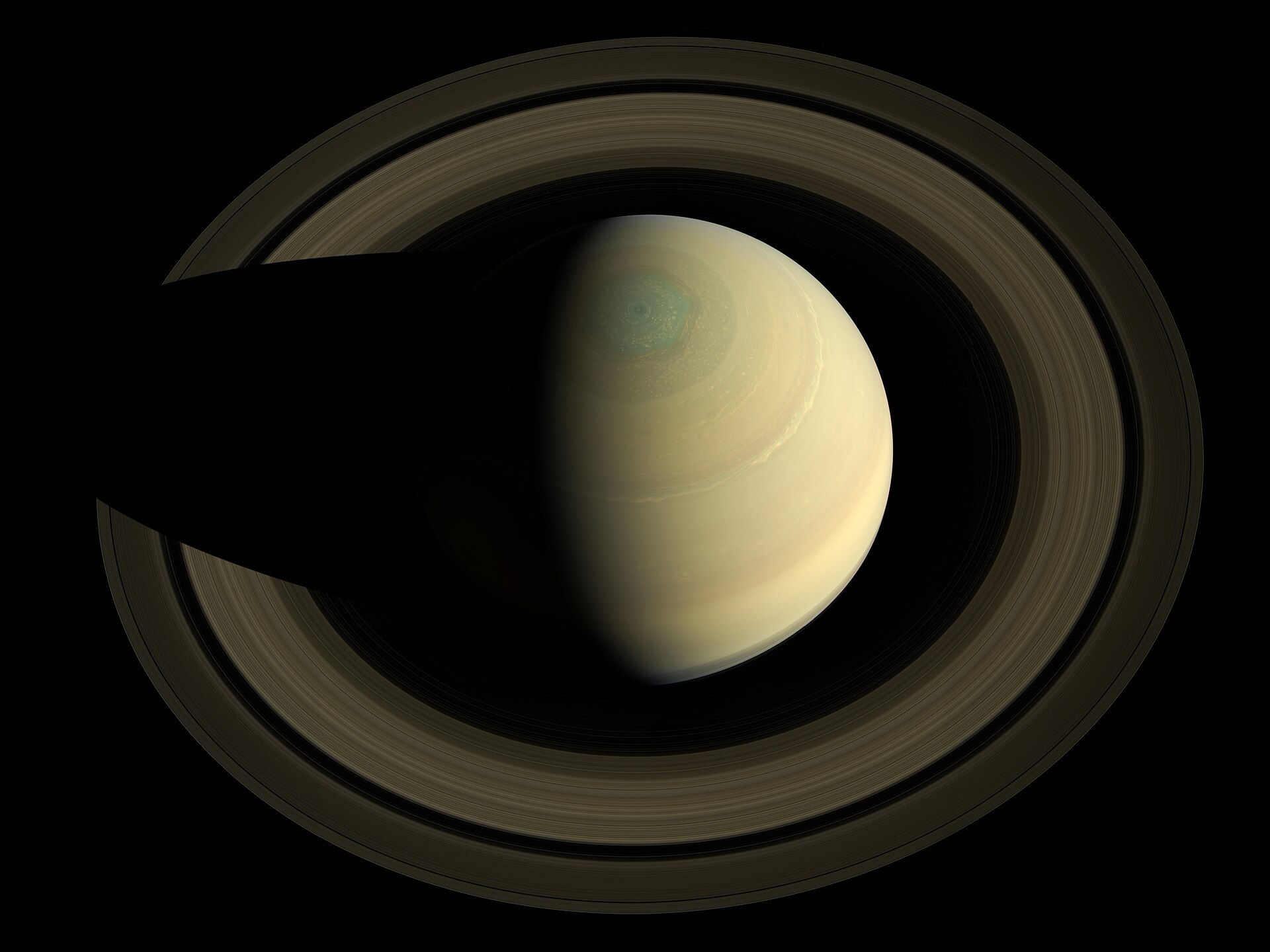
Following Pioneer 11, the Voyager flybys revealed the chemical complexity of Titan's atmosphere, but their optical cameras could not penetrate the pervasive orange smog. Decades later, the Cassini mission transformed our understanding, using radar and infrared instruments to peer straight through the haze, directly mapping liquid hydrocarbon lakes, vast river networks, and rolling equatorial sand seas [s1]. The European Space Agency's Huygens probe detached from Cassini and descended directly through the atmosphere, returning unprecedented photographs of rounded icy pebbles and river valleys carved by liquid runoff. These historical milestones confirmed that Titan's surface is actively shaped by liquids, fulfilling questions raised when Pioneer 11 first sped past Saturn in 1979 [s1].
Chemistry Versus Biology
Because Titan is brimming with carbon-rich compounds and an active cycle of surface liquids featuring methane and ethane [s1], scientists frequently describe it as a natural laboratory for prebiotic chemistry. Prebiotic chemistry refers to the sequence of abiotic chemical reactions and organic formations that occur before the development of living organisms. In the distant past on early Earth, simple atmospheric gases were transformed by solar radiation and geothermal heat into complex organic building blocks, ultimately initiating biological evolution.
Titan preserves an active, planetary-scale version of this early photochemical factory. Solar ultraviolet radiation and energetic particles break apart nitrogen and methane molecules in the upper atmosphere, recombining them into intricate chains of organic molecules that slowly precipitate onto the surface. However, it is vital to distinguish between prebiotic organic chemistry and actual extraterrestrial life. Organic molecules are not living entities, and candidate habitability does not equal biological activity.
Titan is exceptionally cold, and liquid water is absent from its surface, raising significant questions about whether biochemical processes could ever spark in lakes and seas of cryogenic liquid hydrocarbons [s1]. While researchers can simulate exotic hypothetical biochemistries capable of functioning in non-polar liquid hydrocarbons, no observational evidence exists today of biological metabolism, cellular structures, or alien organisms on Titan. The data tells us that Titan is exceptionally rich in organic precursors, but whether those precursors have ever bridged the immense gap toward life remains entirely unknown.
Dragonfly and the Future of Exploration
To definitively answer what happens to organic compounds when they settle on Titan's surface, scientists must return with instruments capable of direct contact and detailed chemical analysis. That is the objective of NASA's planned Dragonfly mission, a groundbreaking rotorcraft scheduled to launch to Titan in 2028 [s1]. Dragonfly will spend three years making multiple landings across diverse environments to investigate prebiotic chemical processes and complex organic compounds that, on Earth, serve as fundamental building blocks of life [s1].
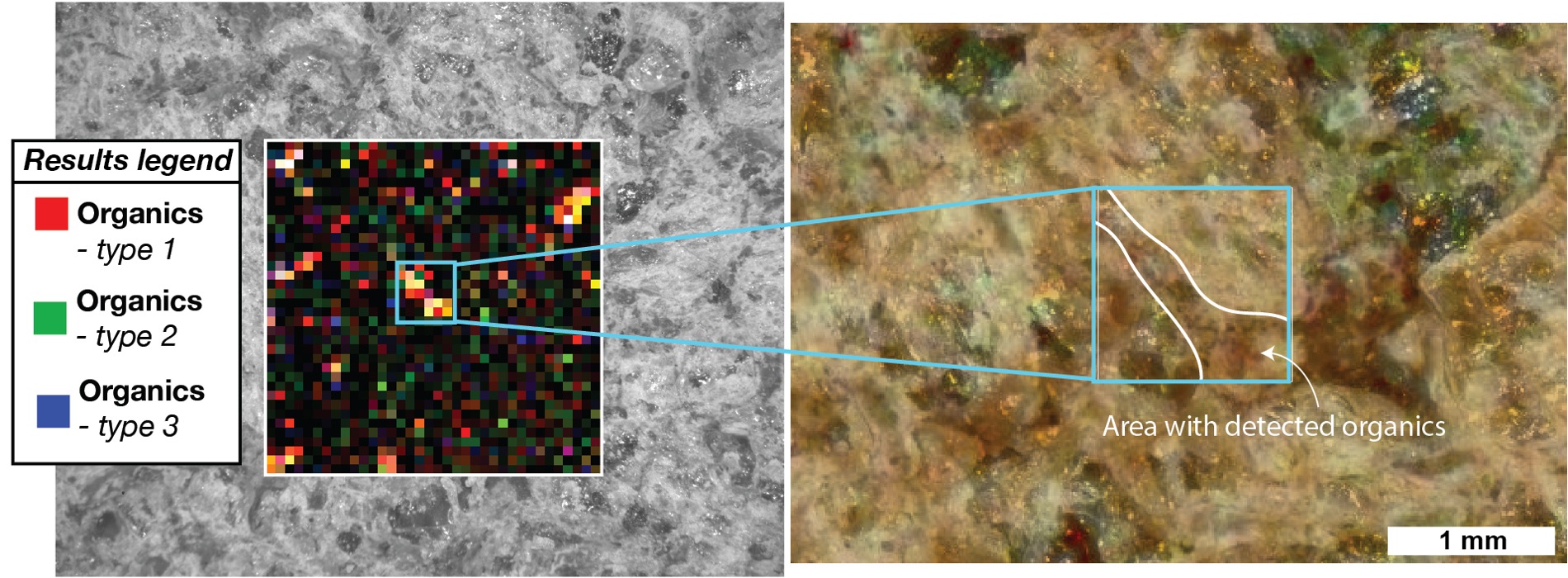
Unlike stationary landers, the Dragonfly rotorcraft will take advantage of Titan's low gravity and thick atmosphere to fly between distinct geological sites. It will sample pristine sand dunes, impact craters where ancient impacts may have temporarily melted water ice in the presence of surface organics, and flat plains. By utilizing onboard mass spectrometers and drill systems, Dragonfly will measure the complexity of organic compounds and search for chemical biosignatures.
Until Dragonfly arrives and completes its direct sampling, planetary scientists must treat habitability and alien biochemistry on Titan as intriguing scientific hypotheses rather than confirmed facts [s1]. What is certain is that Titan represents a unique window into planetary chemistry, showing us how complex a world can become even under the deep freeze of the outer solar system.
Sources & further reading
[s1] Titan ↗science.nasa.gov
Updated 19/10/2026. Report a correction.Image credits
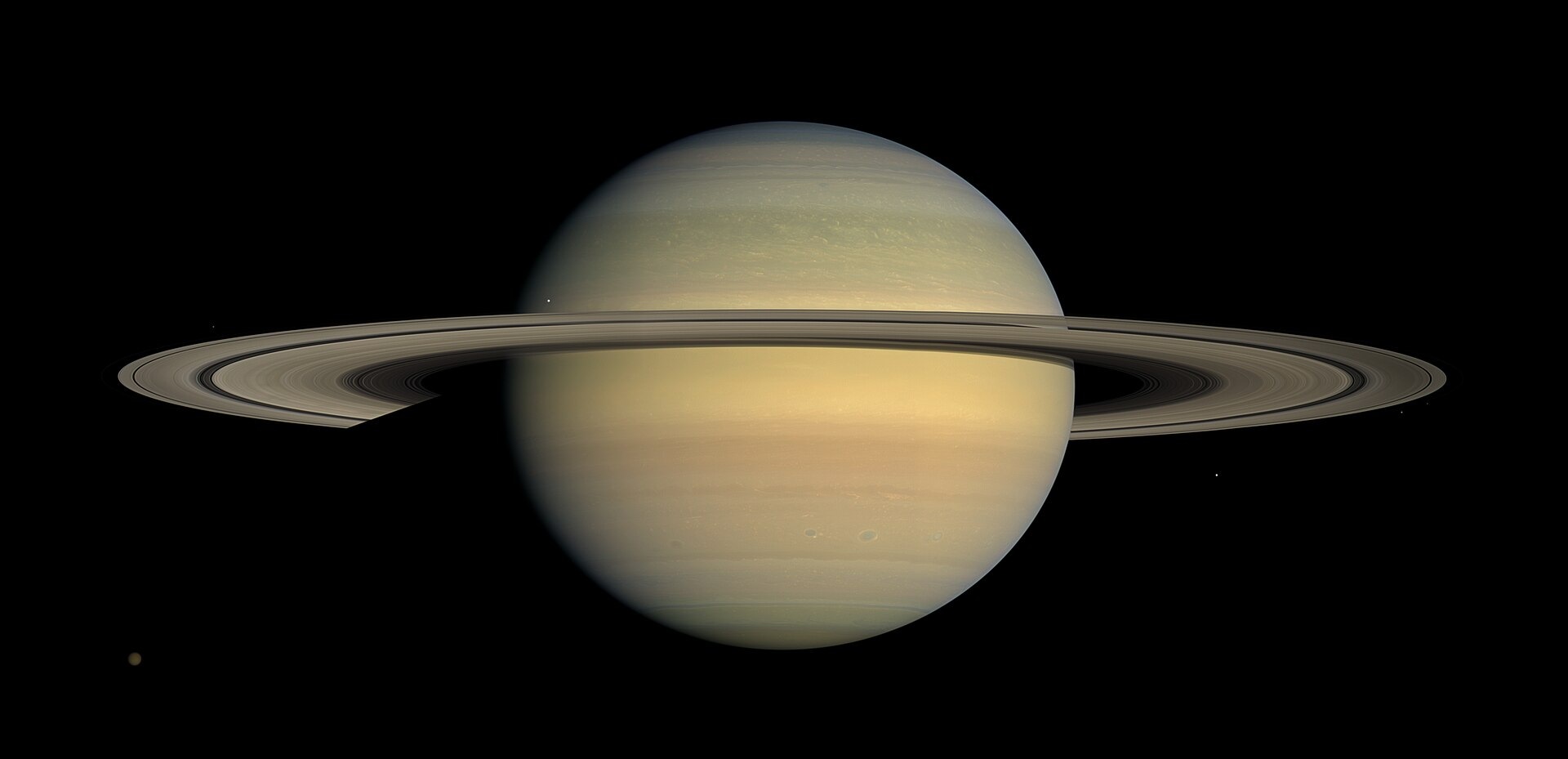
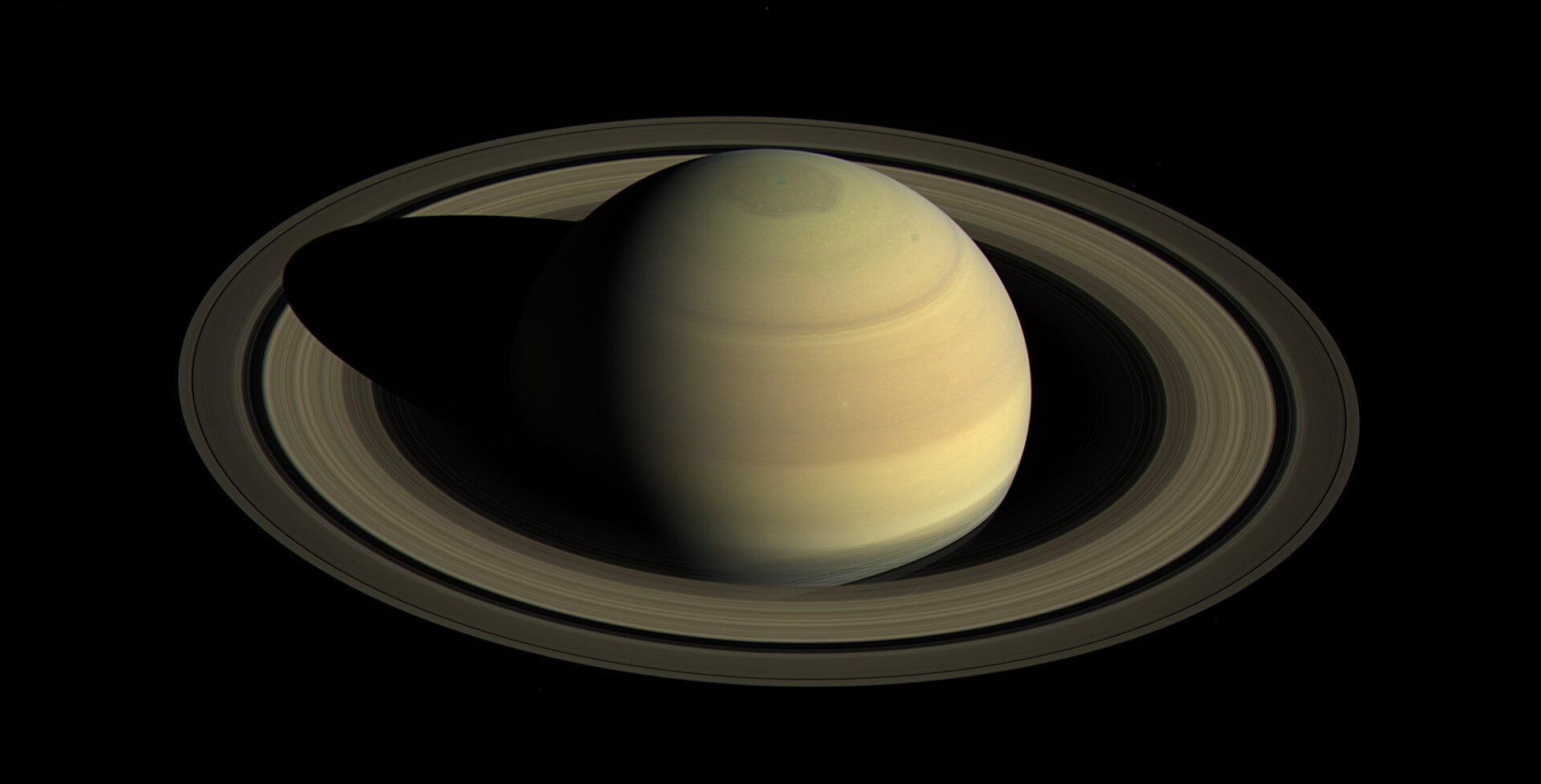
Source image · Saturn global view from Cassini, rings open Better Colour · NASA / JPL-Caltech / SSI / color composite by Gordan Ugarkovic · Public domain · Original image and rights details ↗
Source image · Saturn during Equinox · NASA / JPL / Space Science Institute · Public domain · Original image and rights details ↗
Source image · 8423 20181 1saturn2016 · Credit: NASA/JPL-Caltech/SSI · Public domain · Original image and rights details ↗
Source image · Dragonfly emerging · Lindsay Fox · Public domain · Original image and rights details ↗
Source image · Top view of the rings of Saturn by Cassini - October 10, 2013 · NASA/JPL-Caltech/SSI/Cornell · Public domain · Original image and rights details ↗