The Anatomy of a Biosignature
The scientific search for life beyond our home planet rarely begins with expectations of encountering complex multicellular organisms or technological signals. Because the vast majority of Earth's biological timeline was dominated exclusively by single-celled organisms, astrobiologists anticipate that life throughout the cosmos is far more likely to be microbial. Finding evidence of such organisms across interplanetary distances requires an analytical framework grounded in the concept of biosignatures. In astrobiology, a biosignature is defined as any characteristic, process, or pattern providing scientific evidence of past or present life [s1]. Crucially, an authentic biosignature must represent a phenomenon that cannot be readily accounted for in the absence of biological activity [s1].
Identifying these markers depends fundamentally on scientific inference—the logical deduction of an unseen cause from directly observed empirical clues [s1]. On Earth, everyday inferences connect physical traces to living agents: a shed feather or an abandoned footprint confirms the presence of an animal even when the creature itself is nowhere in sight [s1]. In planetary science and astronomy, researchers apply identical reasoning across cosmic scales. Because no confirmed life or definitive evidence of biological activity has yet been discovered beyond Earth [s1], astrobiologists must establish rigorous criteria to ensure that suspected signatures genuinely reflect metabolic or structural processes rather than lifeless geochemistry.

Rock-Bound Traces and Ancient Stromatolites
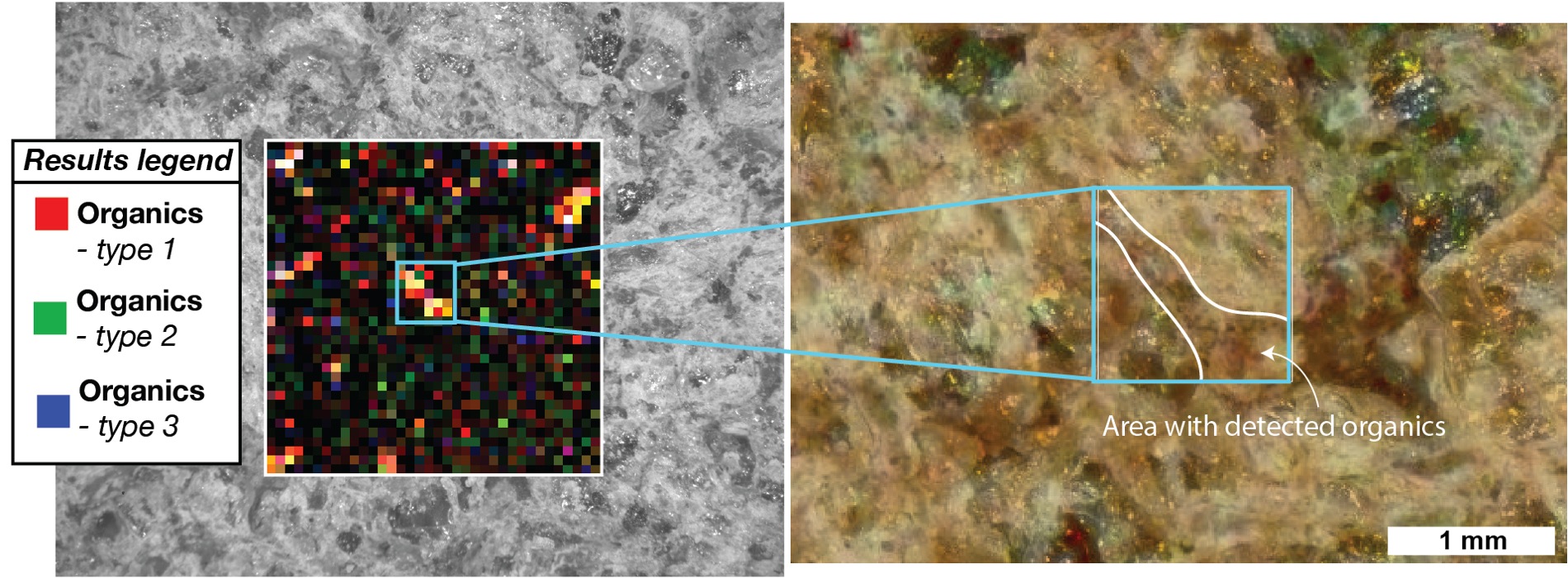
One of the primary repositories of biological history is the planetary crust. On Earth, sedimentary rock formations preserve an extensive chronological archive known as the fossil record. Fossils preserved in sedimentary rock strata can retain both structural morphologies and chemical features that serve as potential biosignatures [s1]. These durable geological archives demonstrate how organic materials and physical remains can survive diagenetic compaction, geochemical mineralization, and immense periods of environmental turnover over billions of years.
Among the most informative macroscopic structures generated by microscopic life are stromatolites. Colonies of microorganisms in shallow water mats can generate distinctive layered mineral formations known as stromatolites [s1]. As these sticky microbial communities grow, they bind and trap fine sediment grains while precipitating carbonate minerals, creating stratified, domed, or columnar structures [s1]. Modern microbial mats continue this process in specialized aquatic habitats today, while fossilized stromatolites dating back billions of years document Earth's earliest thriving biospheres [s1]. If robotic exploratory rovers or sample return missions identify genuine stromatolitic layering in sedimentary formations on other planets, such as Mars, those features would represent prime candidate biosignatures indicating potential ancient biology [s1].
Atmospheric Fingerprints and Planetary Transformation
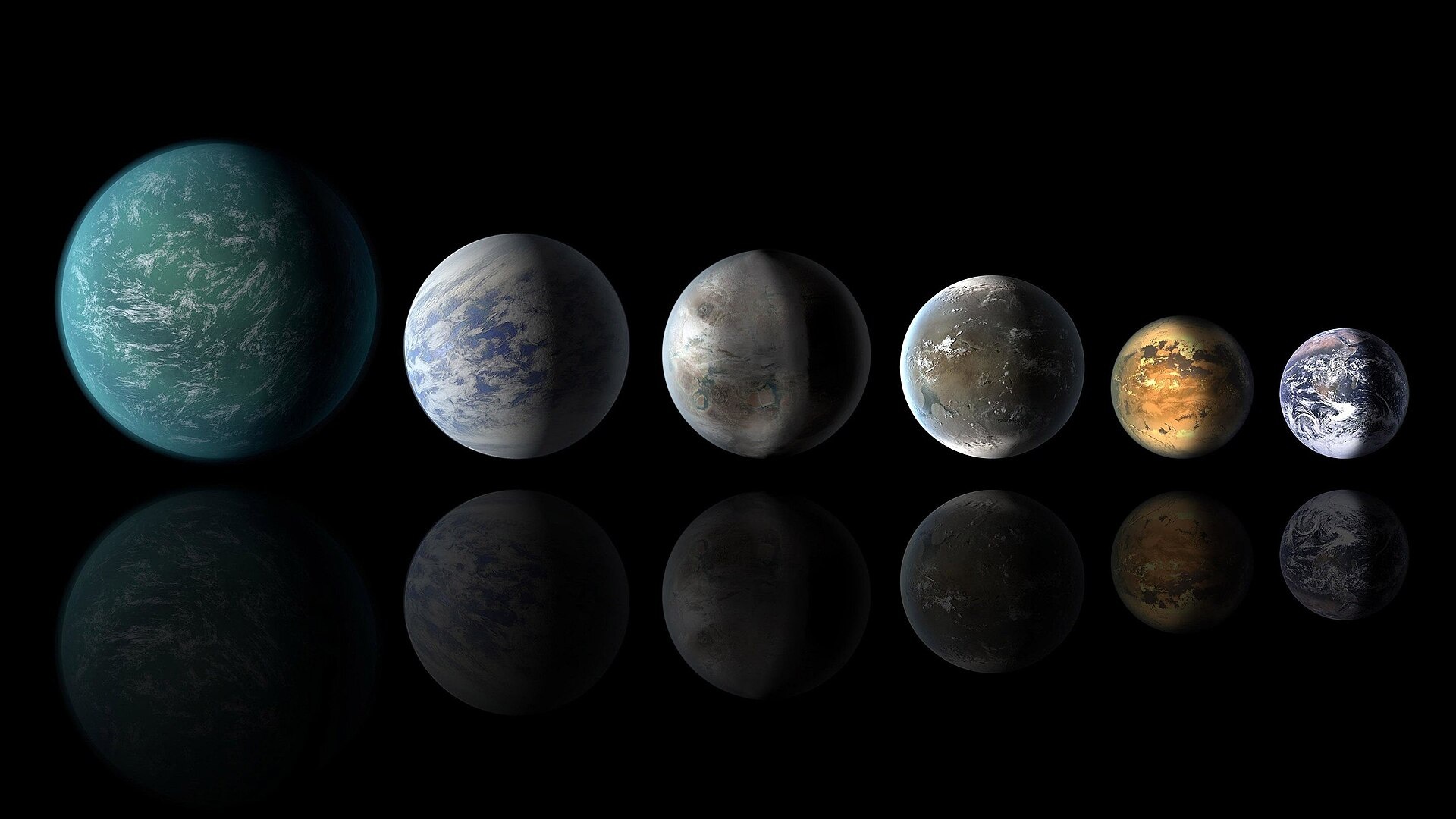
While surface geology offers local, in situ clues, studying worlds outside our Solar System requires global observational methods. When astrobiologists examine exoplanets orbiting distant stars, they look to planetary atmospheres as potential reservoirs of biological activity. Biological processes can alter planetary environments on a monumental scale. On Earth, the modern atmosphere did not initially contain abundant molecular oxygen; photosynthetic organisms that absorbed carbon dioxide and released oxygen over billions of years fundamentally remade the chemical composition of the entire planet [s1].
Because photosynthetic and metabolic cycles persistently replenish reactive gases, atmospheric chemical composition can serve as a potent biosignature [s1]. In an atmosphere left entirely to abiotic geochemical equilibrium, reactive gases tend to combine and disappear. However, persistent chemical disequilibrium—such as the simultaneous presence of an oxidizing gas alongside a reducing agent—suggests that an active source is continually pumping volatile molecules into the atmosphere. Using transit transmission spectroscopy, modern observatories measure how starlight filters through an exoplanet's atmospheric fringes, searching for molecular absorption lines that might betray biological emissions across interstellar voids.
Abiotic Mimics and the Rigor of Proof
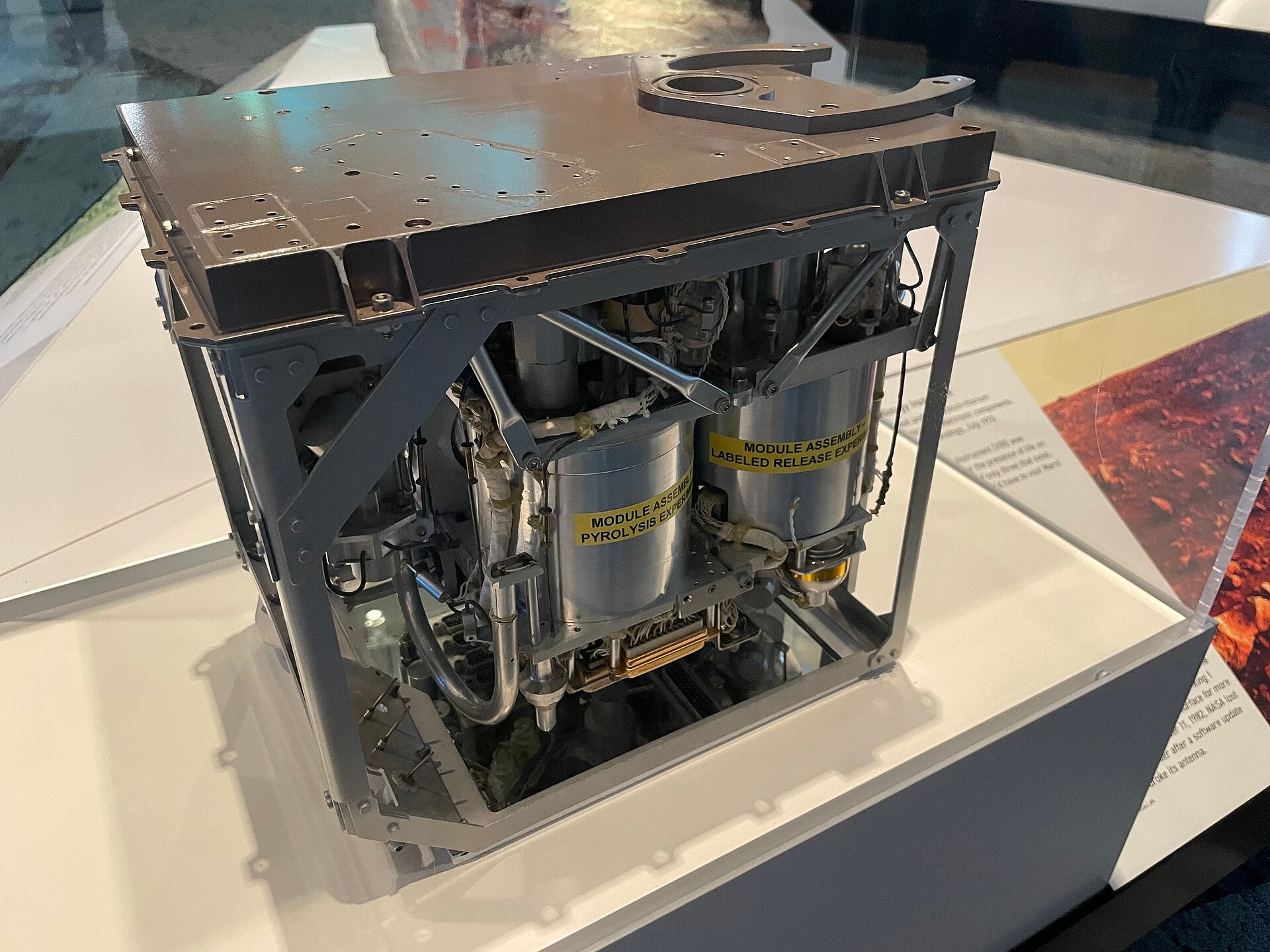
The central challenge in astrobiological detection lies in eliminating false positives generated by abiotic mimics. Non-biological mechanisms in planetary environments can frequently synthesize organic molecules or carve mineral structures that superficially imitate living systems. Hydrothermal Fischer-Tropsch-type reactions, photolytic cleavage of water vapor by ultraviolet stellar radiation, and volcanic outgassing can all generate chemical compounds and atmospheric imbalances without any biological involvement. Similarly, purely abiotic mineral precipitation and physical fluid dynamics can sculpt rhythmic, finely laminated geological textures that closely resemble biogenic stromatolites.
Because extraordinary claims demand comprehensive validation, no single anomaly or unconfirmed molecular trace suffices to confirm extraterrestrial life. Establishing that a candidate marker represents a genuine biosignature requires proving that abiotic models cannot plausibly account for the observation under the host world's specific environmental conditions [s1]. Until scientists uncover an unambiguous signature that defies abiotic explanation, the search remains a deliberate, methodical campaign of exploration, ruling out non-living phenomena step by step as humanity probes the depths of space [s1].
Sources & further reading
[s1] What is a biosignature? - NASA Science ↗science.nasa.gov
Updated 18/10/2026. Report a correction.Image credits
Source image · Around Marshall (0601364) · NASA Marshall Space Flight Center · Public domain · Original image and rights details ↗
Source image · Viking Biology Instrument · Blervis · CC0 · Original image and rights details ↗
Source image · NASA-Exoplanet-WaterWorlds-20180817 · NASA · Public domain · Original image and rights details ↗
Source image · PSO J318.5-22 Rouge 39x27 CMYK-1 · NASA/JPL-CalTech · Public domain · Original image and rights details ↗
Source image · Organics Within Garde Abrasion Patch, sol 207 (PIA25042) · NASA/JPL-Caltech/MSSS/LANL/PhotonSys · Public domain · Original image and rights details ↗