A Miniature Architecture Forty Light-Years Away
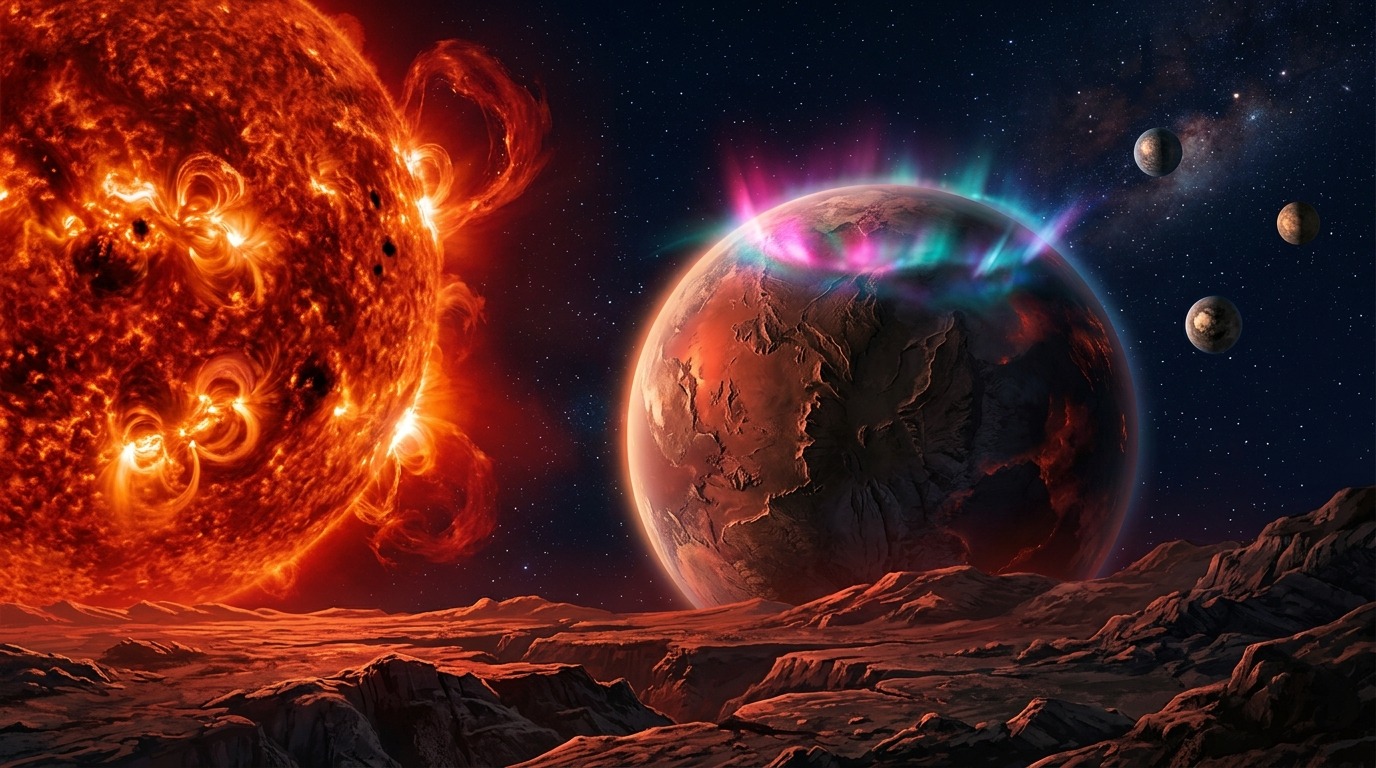
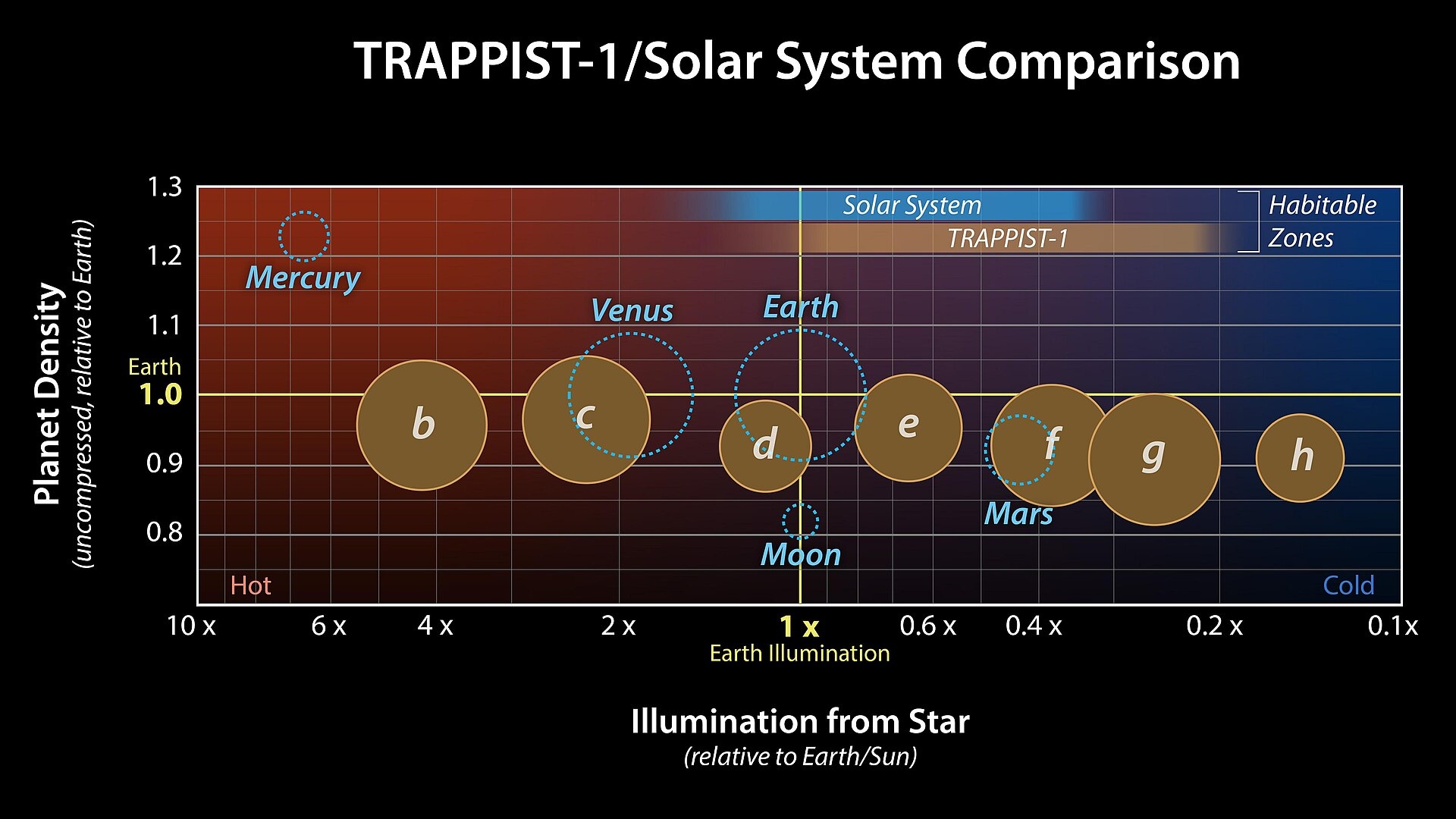
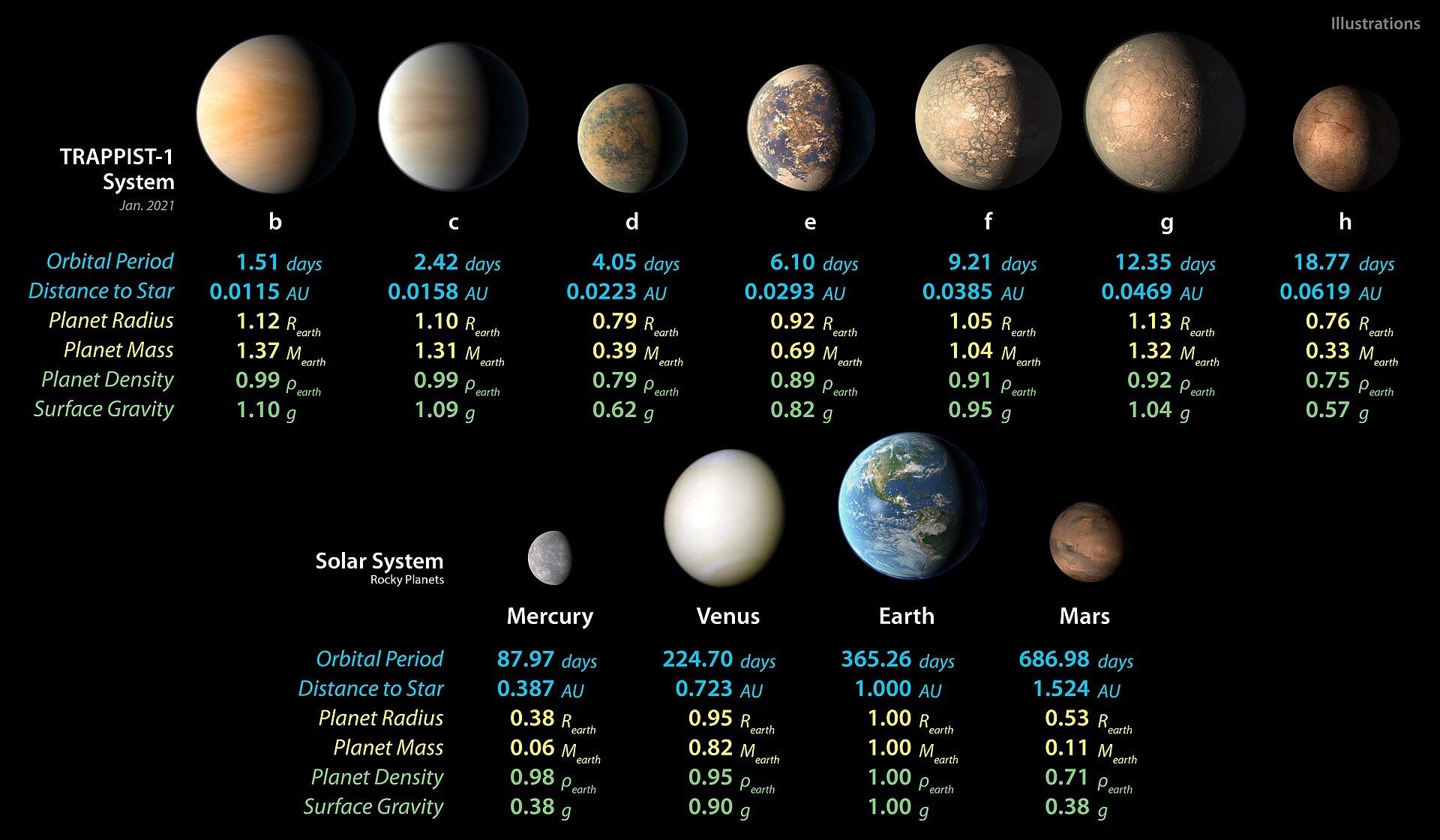
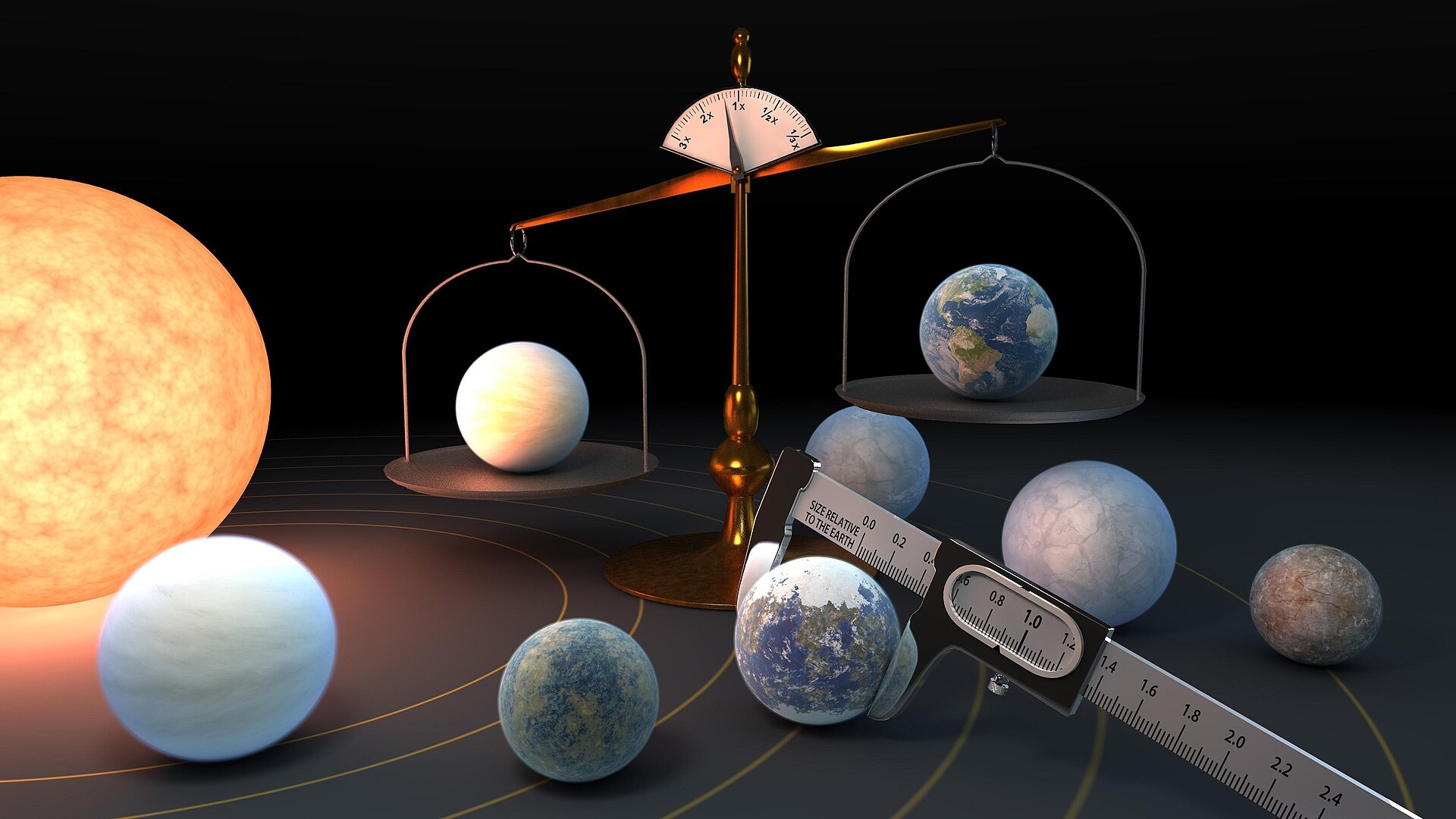
Just 40 light-years from our solar system lies an extraordinary family of terrestrial worlds: the TRAPPIST-1 system [s1]. The story began in 2015 when astronomers using the ground-based Transiting Planets and Planetesimals Small Telescope (TRAPPIST) detected what initially appeared to be three planets circling an ultra-cool red dwarf star [s1]. Follow-up monitoring across multiple wavelengths, particularly using NASA's Spitzer Space Telescope, soon revealed that the system actually hosts at least seven Earth-sized rocky planets, designated alphabetically from b through h [s1]. Spitzer's precise measurements of their masses, radii, and densities confirmed that all seven worlds possess bulk compositions broadly comparable to Earth [s1].
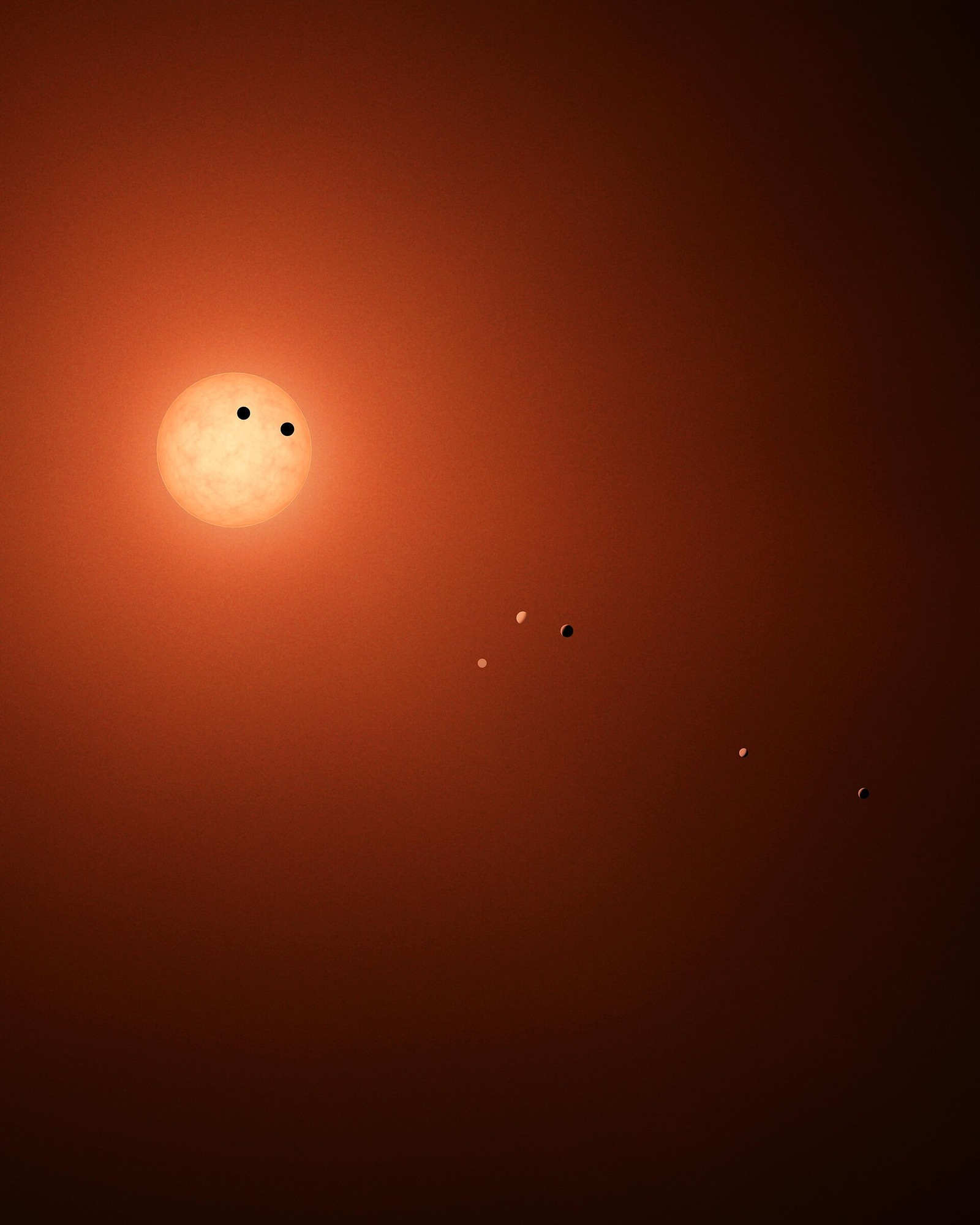
Yet the structural architecture of TRAPPIST-1 differs dramatically from our own solar neighborhood [s1]. The entire planetary system is remarkably compact: all seven rocky exoplanets orbit closer to their host star than Mercury orbits the Sun [s1]. The central host star is an ultra-cool red dwarf whose radius measures approximately 12 percent of the Sun's, rendering it only marginally larger than Jupiter [s1]. Because the star is so dim and compact, its planets complete orbits in lightning-fast timeframes ranging from roughly 1.5 days for planet b to about 19 days for planet h [s1]. This condensed arrangement provides astronomers with frequent, repetitive transits across the face of the star, offering ideal conditions to gather vast observational datasets in relatively brief windows of time [s1].
Webb's Infrared Gaze and the Stripped Inner Worlds
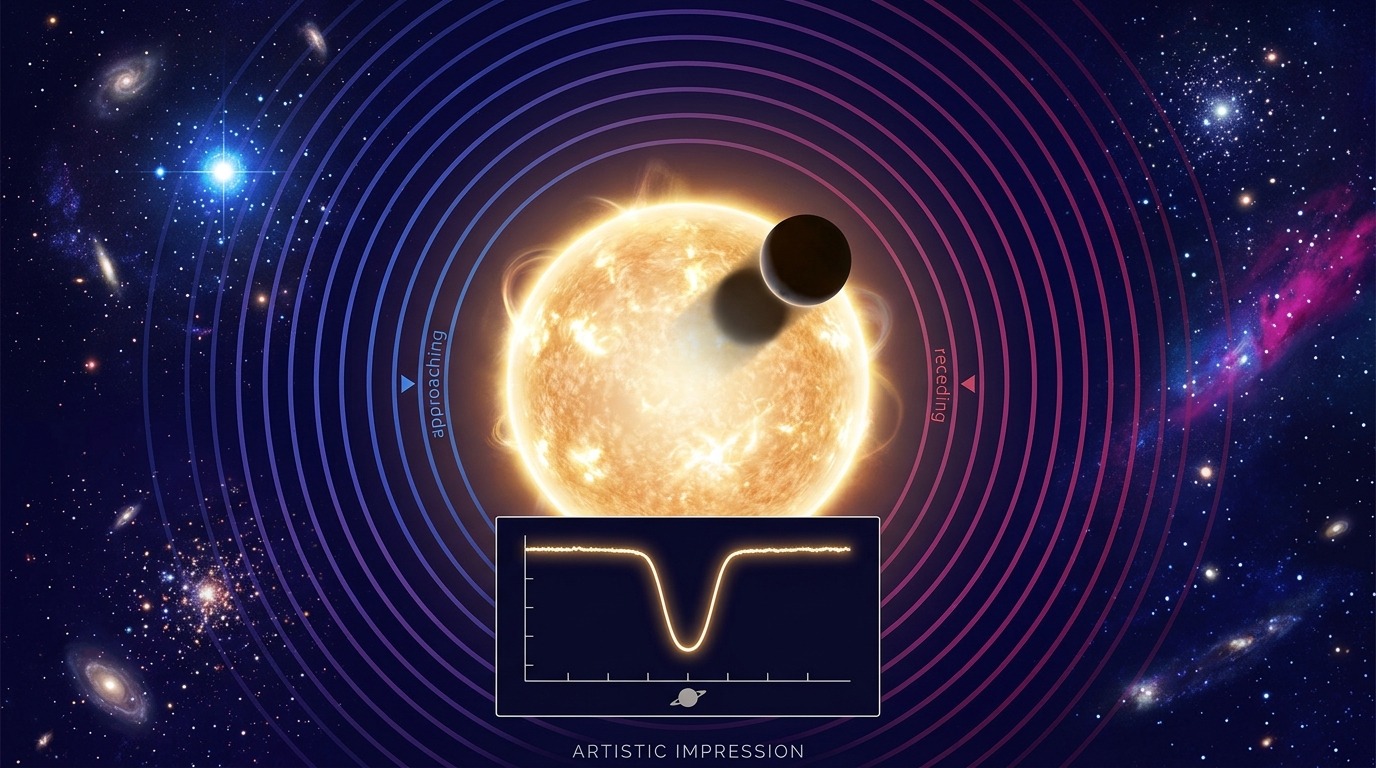
Determining whether any of these rocky worlds harbor atmospheres requires specialized instrumentation far beyond the reach of ground-based observatories or direct imaging techniques [s1]. Because the planets orbit so tightly around their host star, light from the star overwhelms direct planetary views [s1]. Astronomers must instead exploit orbital alignments, relying on three primary methods: primary transit transmission spectroscopy, secondary eclipse photometry, and orbital phase curves [s1].
When NASA's James Webb Space Telescope became operational at the Sun-Earth Lagrange point 2 (L2) in 2021, its massive golden primary mirror and high-precision infrared instruments fundamentally reshaped the field [s1]. Unlike prior observatories such as Hubble and Spitzer, Webb can continuously lock onto distant targets and detect faint infrared flux variations with unprecedented stability [s1].
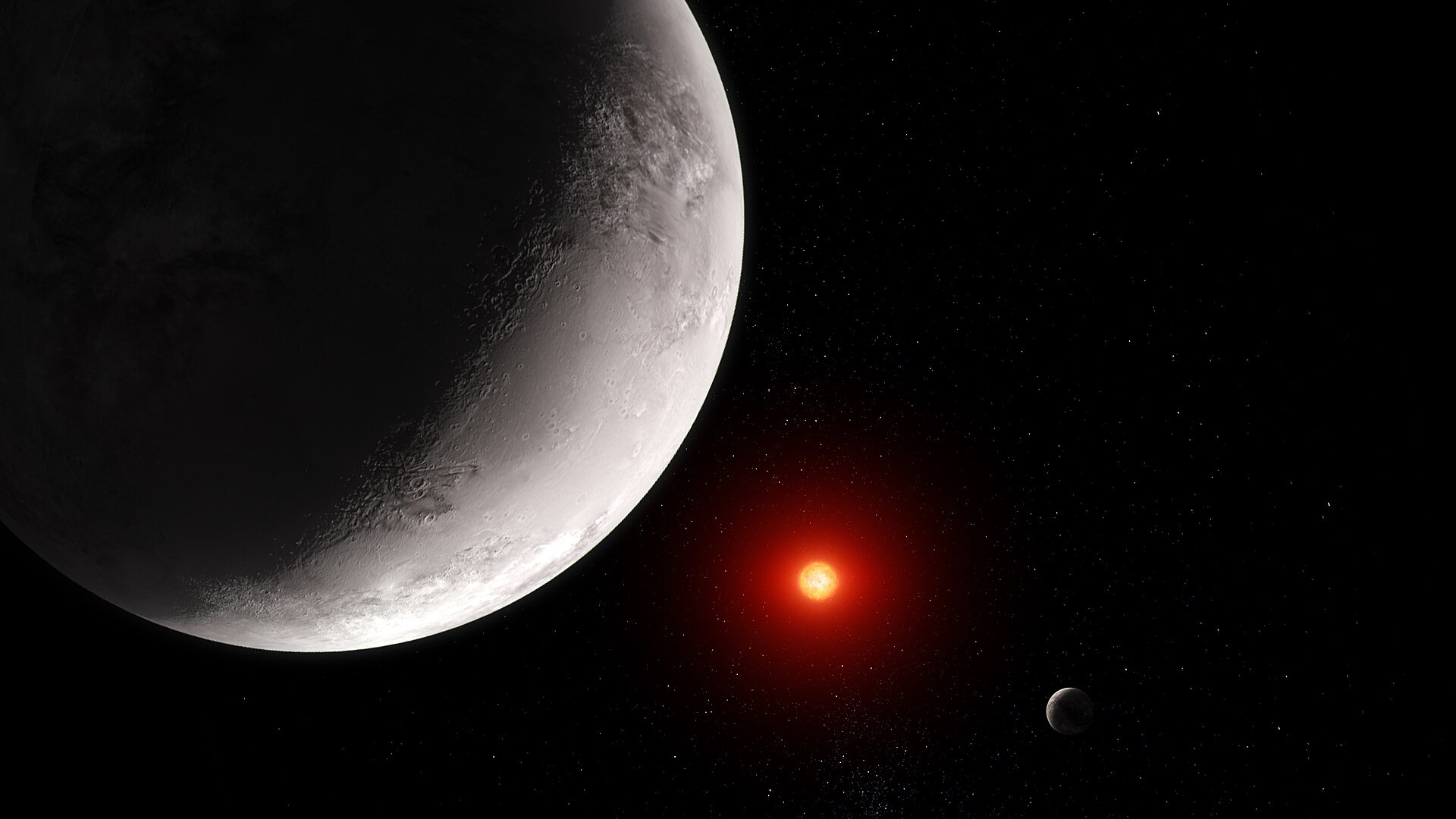
Webb’s earliest observational campaigns focused on the innermost worlds, TRAPPIST-1 b and TRAPPIST-1 c, utilizing the Mid-Infrared Instrument (MIRI) to track their thermal emissions during secondary eclipses [s1]. The findings delivered sobering insights into the fragility of planetary atmospheres under intense irradiation [s1]. So far, Webb observations show no evidence of thick atmospheres on TRAPPIST-1 b or TRAPPIST-1 c [s1]. The thermal data for planet b indicates that it is most likely a bare, airless rock radiating stellar heat directly into space [s1]. For planet c, the observations rule out a thick, Venus-like carbon dioxide atmosphere; if any gaseous envelope remains on planet c, it must be exceptionally thin [s1]. These measurements demonstrate the severe capacity of red dwarf stars to strip volatile gases from planets in tightly bound orbits [s1].
Worlds in the Habitable Zone: The Case of Planets d and e
Beyond the scorched inner pair lie worlds that have garnered intense interest regarding potential habitability: TRAPPIST-1 d, e, f, g, and h [s1]. Most notably, planets e, f, and g reside squarely within the host star’s habitable zone, defined as the orbital corridor where stellar irradiation creates conditions where liquid water could theoretically persist on a rocky surface [s1]. Whether surface water can actually endure, however, hinges directly on whether these planets possess atmospheres capable of stabilizing temperature and providing adequate surface pressure [s1].
Earlier reconnaissance by the Hubble Space Telescope helped narrow the possibilities by ruling out puffy, hydrogen-dominated envelopes resembling miniature gas planets for several worlds in the system [s1]. Building on that baseline, Webb's Near-Infrared Spectrograph (NIRSpec) has focused in on planets d and e [s1]. Although detailed atmospheric analysis of TRAPPIST-1 d and TRAPPIST-1 e remains in progress, researchers have already firmly ruled out thick hydrogen atmospheres for both of these worlds [s1].
Astronomers are currently matching NIRSpec transit transmission data against complex theoretical models of planets with and without atmospheres [s1]. The crucial question is whether these worlds have retained compact secondary envelopes rich in heavier molecular species—such as carbon dioxide, water vapor, or nitrogen—or whether they share the stripped, barren fate of planets b and c [s1]. Parallel evaluations are also underway for the outer planets f, g, and h, whose Webb datasets are currently undergoing rigorous study by the international astronomical community [s1].
Stellar Tantrums, Biosignature Limits, and Future Observatories
While Webb provides extraordinary precision, characterizing the atmospheres of the TRAPPIST-1 worlds has encountered unexpected astrophysical hurdles [s1]. Red dwarfs are notorious for magnetic instability, but TRAPPIST-1's stellar activity has proven substantially more violent than early predictions assumed [s1]. Frequent energetic stellar flares and ubiquitous star spots coat the stellar photosphere, creating spectral variations of their own [s1]. When an exoplanet transits across this active, spotted disk, starlight filtering through the stellar features can mimic or mask genuine atmospheric absorption lines, producing severe stellar contamination [s1].
To disentangle the star's tantrums from subtle planetary signatures, astronomers must execute dozens to potentially hundreds of transit observations with Webb over a span of several years [s1]. Atmospheric characterization is therefore a gradual, painstaking process of statistical refinement rather than a single sudden revelation [s1].
Crucially, scientists caution that while Webb can identify the presence of an atmosphere and constrain its bulk chemical makeup, detecting definitive biosignatures on TRAPPIST-1 planets is unlikely [s1]. Evaluating habitability is a necessary stepping stone, but identifying signs of life exceeds the telescope's designed sensitivity limits for these faint rocky worlds [s1]. Broader multi-observatory initiatives, such as the Rocky Worlds Director's Discretionary Time program pairing Webb and Hubble, continue to investigate atmospheric survival around red dwarfs [s1]. In the decades ahead, proposed facilities like the Habitable Worlds Observatory and the European Southern Observatory's Extremely Large Telescope will build upon Webb's foundational work, further exploring whether these distant rocky worlds could truly support living ecosystems [s1].
Sources & further reading
[s1] What is Webb Revealing About the TRAPPIST-1 System? - NASA Science ↗science.nasa.gov
Updated 18/10/2026. Report a correction.Image credits
Source image · Trappist1 and Solar System Planet Stats · NASA/JPL-Caltech · Public domain · Original image and rights details ↗
Source image · Rocky Exoplanet TRAPPIST-1 c (Artist Concept) · NASA, ESA, CSA, Joseph Olmsted (STScI) · Public domain · Original image and rights details ↗
Source image · Measuring the Masses and Diameters of the TRAPPIST-1 Planets · NASA/JPL-Caltech · Public domain · Original image and rights details ↗
Source image · PIA21429 - Transit Illustration of TRAPPIST-1 · NASA/JPL-Caltech · Public domain · Original image and rights details ↗
Source image · Comparison of TRAPPIST-1 to the Solar System · NASA/JPL-Caltech · Public domain · Original image and rights details ↗