The Cosmic Dance: Reading the Radial Velocity Wobble
Early philosophical musings on other worlds date back to ancient Greece, persisting through the Middle Ages and Renaissance [s3]. Tangible evidence began to emerge in 1917, when Adriaan van Maanen observed a polluted white dwarf whose significance was recognized only in 2014 [s4]. Breakthrough discovery arrived in 1995 with 51 Pegasi b, a half-Jupiter-mass planet orbiting a Sun-like star every four days [s1] [s3]. Its scorching proximity to its parent star challenged prevailing models of planet formation [s3].
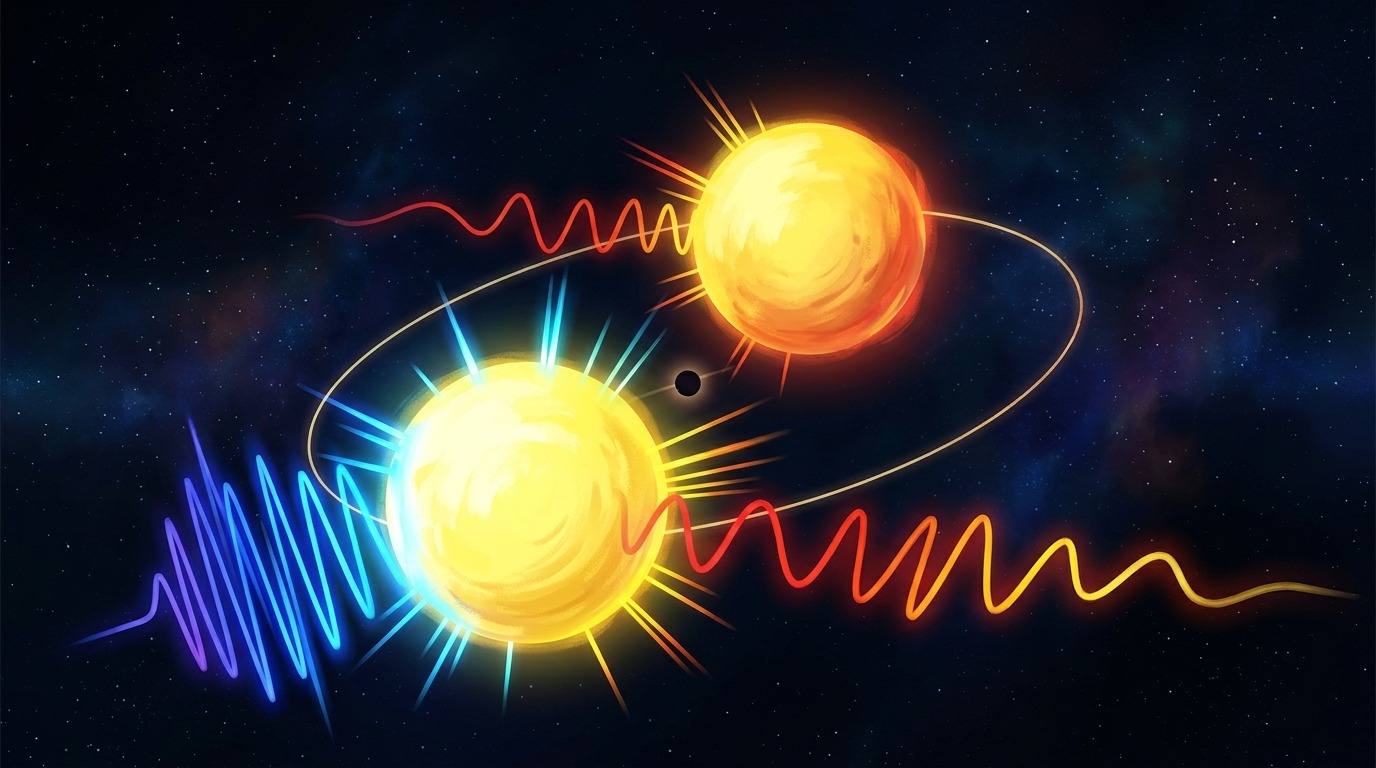
Because exoplanets are distant and lost in stellar glare, direct optical detection is difficult [s1] [s3] [s4]. Instead, astronomers monitor indirect stellar effects [s1] [s3]. The radial velocity method, or wobble method, tracks the shared orbit of a star and planet around their common center of mass [s1] [s3]. This mutual gravitational pull induces a subtle stellar wobble [s1] [s3] [s4].
Viewed edge-on, the star alternately moves toward and away from Earth [s1] [s3]. This motion shifts starlight frequencies via the Doppler effect, squeezing wavelengths toward the blue as the star approaches and stretching them toward the red as it recedes [s1] [s3] [s4]. Ground-based tracking of these radial velocity shifts revealed the first wave of exoplanets, predominantly massive hot Jupiters [s1] [s3].
Shadows in the Starlight: Transit Photometry and Light Curves
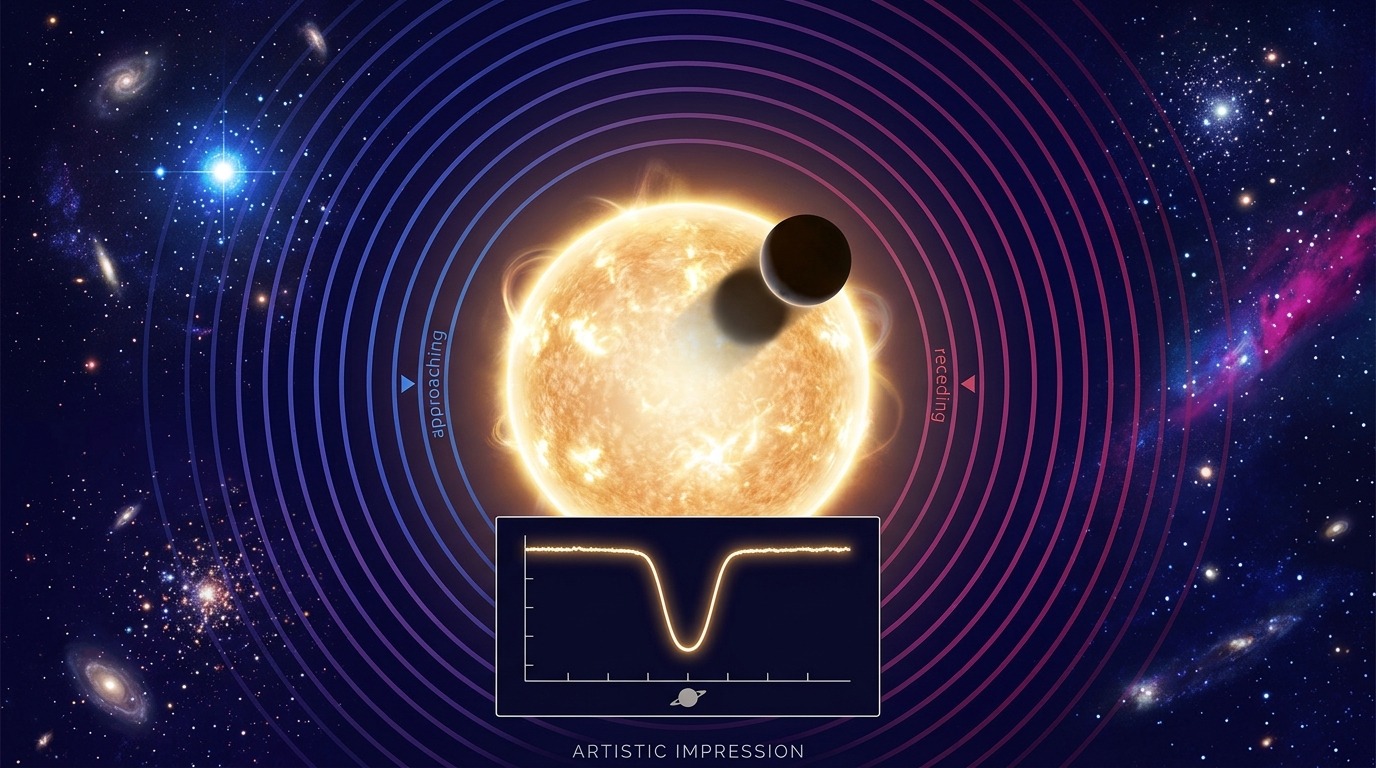
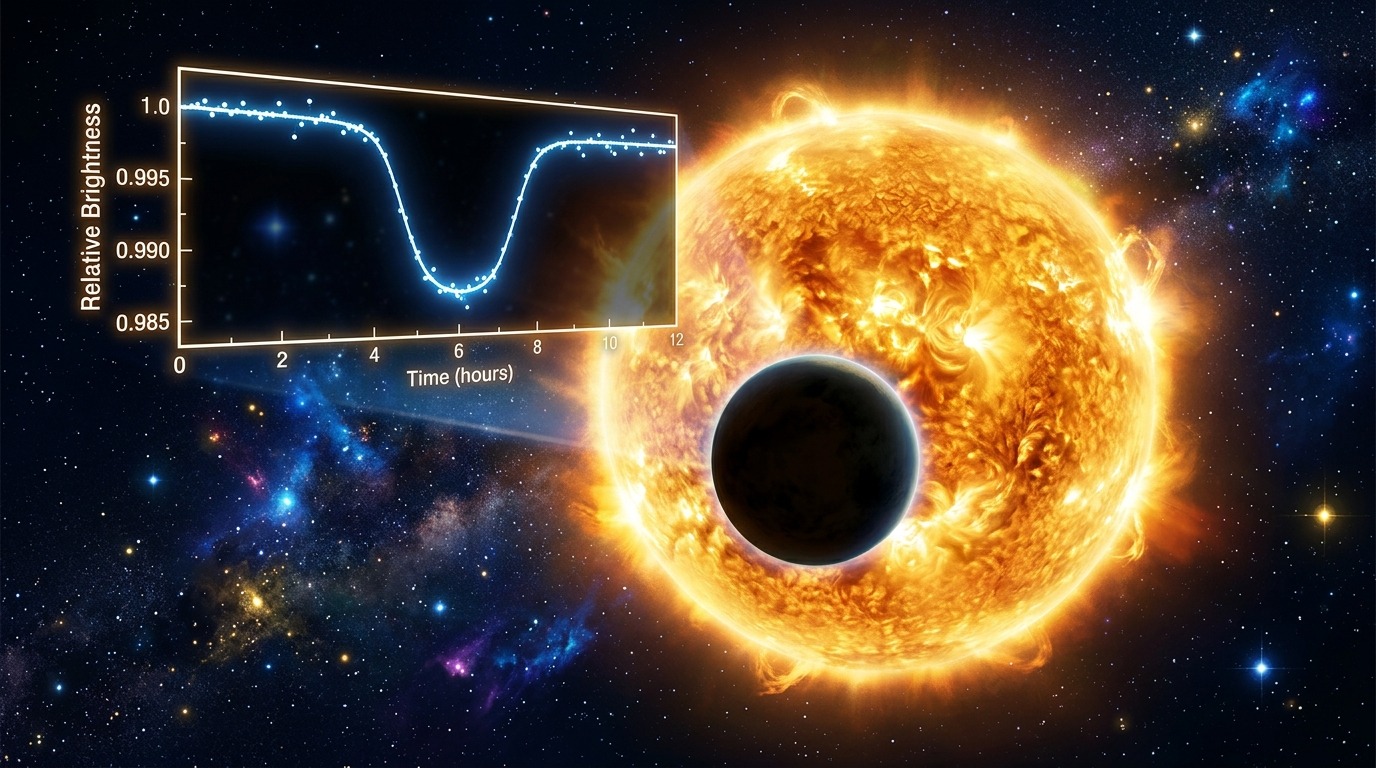
In 1999, astronomers initiated a second discovery epoch using transit photometry [s3]. A transit occurs when an exoplanet crosses directly between a star and an observer, temporarily blocking a small fraction of starlight [s2] [s4]. This phenomenon mirrors transits of Venus and Mercury seen against our Sun [s2].
Astronomers track these events with light curves, which graph observed starlight intensity over time [s2]. When a planet crosses the stellar disk, the light curve registers a shallow dip [s2] [s4]. The interval between dips reveals the planet's orbital period and orbital size, while the depth of the dip indicates the planet's relative diameter [s1] [s2].
Transit photometry enables simultaneous monitoring of thousands of stars [s2] [s3]. By recording periodic stellar dimming, astronomers can reliably uncover worlds down to Earth's size scale without resolving the planet itself [s1] [s2].
Spaceborne Sentinels: From CoRoT and Kepler to TESS
Placing telescopes in space eliminated atmospheric distortions and allowed continuous observation [s3]. The French-led CoRoT satellite (2006–2013) discovered 37 exoplanets, including the first confirmed rocky extrasolar world [s3]. In 2009, NASA launched the Kepler Space Telescope, ushering in modern statistical exoplanet astronomy [s1] [s3].
Kepler observed 150,000 stars in a fixed patch of sky over four continuous years, discovering thousands of transiting exoplanets [s1] [s3]. Its findings demonstrated that small planets are common and that planets outnumber stars across our galaxy [s1] [s4]. Even after mechanical failures prompted its extended K2 mission, Kepler data yielded more than 2,700 confirmed planets [s4].
NASA launched the Transiting Exoplanet Survey Satellite (TESS) in 2018 to survey bright dwarf stars across an area 400 times larger than Kepler's prime field [s2] [s3] [s4]. General-purpose observatories have also contributed; NASA's infrared Spitzer Space Telescope helped discover the seven planets of the TRAPPIST-1 system [s3] [s4].
Atmospheric Barcodes: Reading Light Through Alien Skies
Transits also provide an avenue to study planetary atmospheres through transit spectroscopy [s1] [s2]. As a planet transits, filtered starlight passes through its upper atmosphere on its way to observers [s1] [s2]. Atmospheric molecules absorb characteristic wavelengths, imprinting absorption lines onto the transmitted starlight [s1] [s2].
Spectrographs disperse this light into component colors, enabling scientists to read chemical bands like barcodes [s1]. These spectral features reveal volatile atmospheric elements, weather patterns, and environmental clues relevant to habitability [s1] [s2].
Using transit spectroscopy, the Hubble Space Telescope identified helium and water vapor in exoplanet atmospheres, including escaping helium on WASP-107b [s1]. The James Webb Space Telescope provides deeper atmospheric profiles, while ESA's Cheops characterizes known worlds, preparing for upcoming missions such as Plato and Ariel [s1] [s3].
Bending Spacetime: Gravitational Microlensing and Astrometry
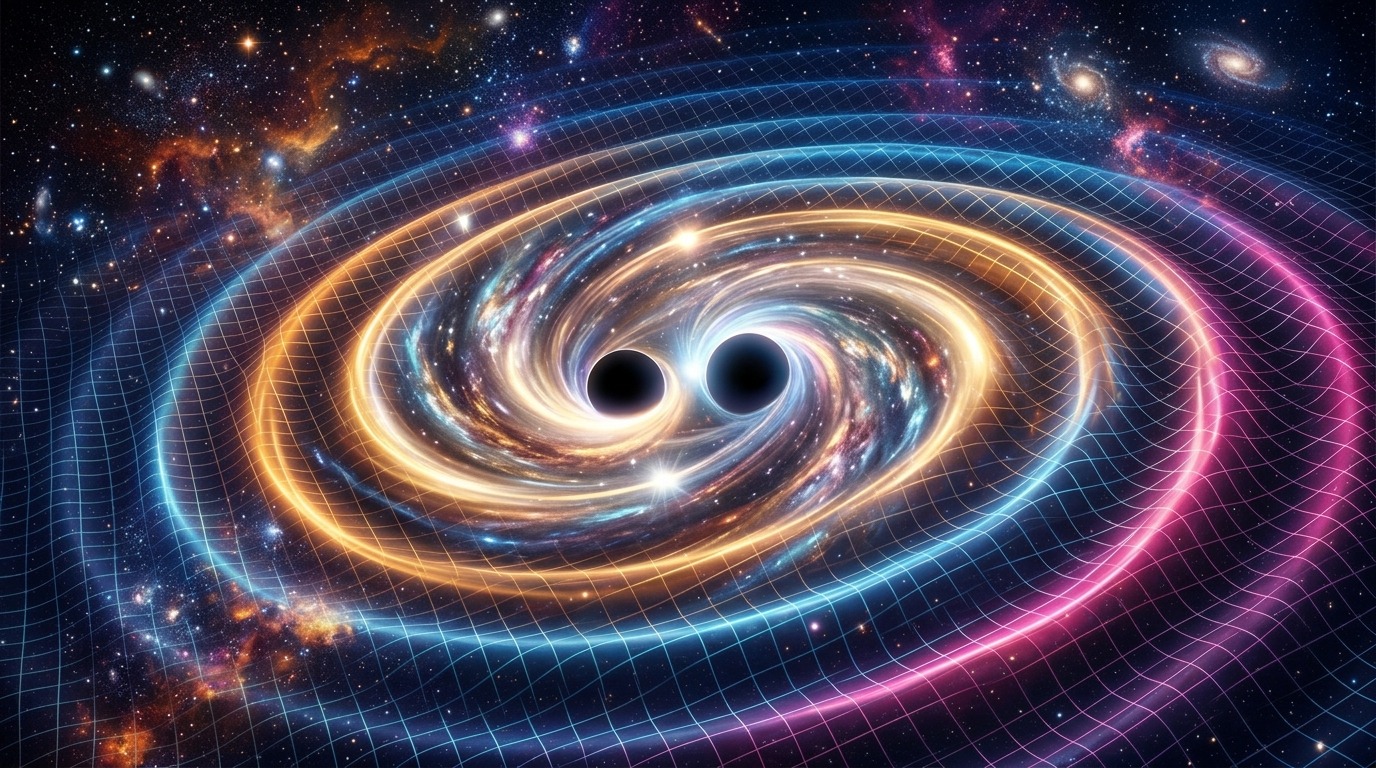
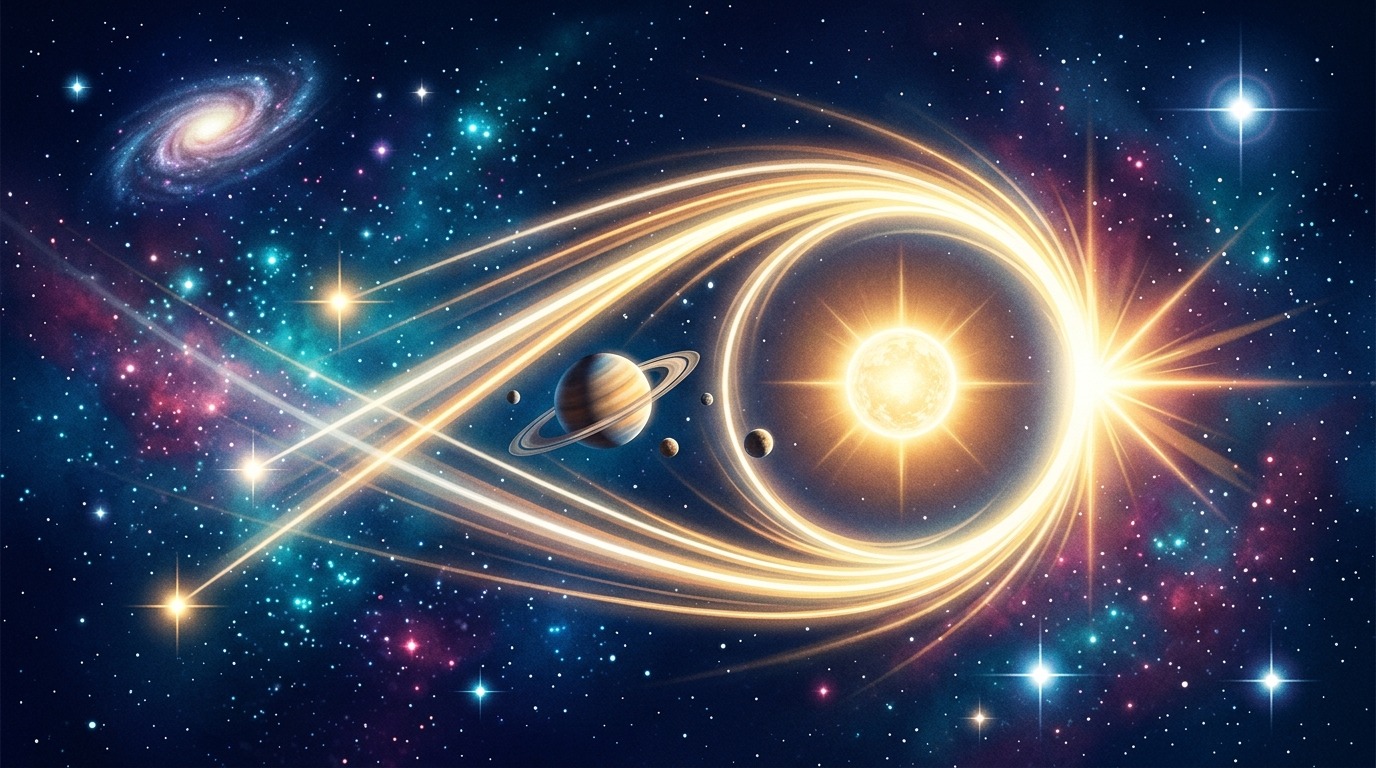
Gravitational microlensing exploits Albert Einstein's finding that gravity bends starlight [s1] [s3]. When a foreground star passes precisely in front of a background star, its gravitational field magnifies the background light into a smooth brightening curve [s1] [s3].
An orbiting planet around the foreground star introduces an additional gravitational deflection, generating a distinct secondary spike on the light curve [s1] [s3]. Over 130 planets have been detected through microlensing, though these events are unrepeatable because the precise stellar alignments never recur [s3]. NASA's Nancy Grace Roman Space Telescope will expand space-based microlensing searches [s1].
In contrast to radial velocity's edge-on view, astrometry tracks stellar wobbles across the two-dimensional plane of the sky [s3]. Requiring extreme precision, astrometry has confirmed only a handful of planets to date, though ESA's Gaia mission is compiling an all-sky dataset expected to reveal tens of thousands of exoplanets [s3].
From Candidate to Confirmation: Validating Hidden Worlds
Initial exoplanet detections are designated as planet candidates rather than confirmed discoveries [s4]. Signals can arise from instrumental noise, stellar activity, or eclipsing binaries, making false positives a persistent risk [s4].
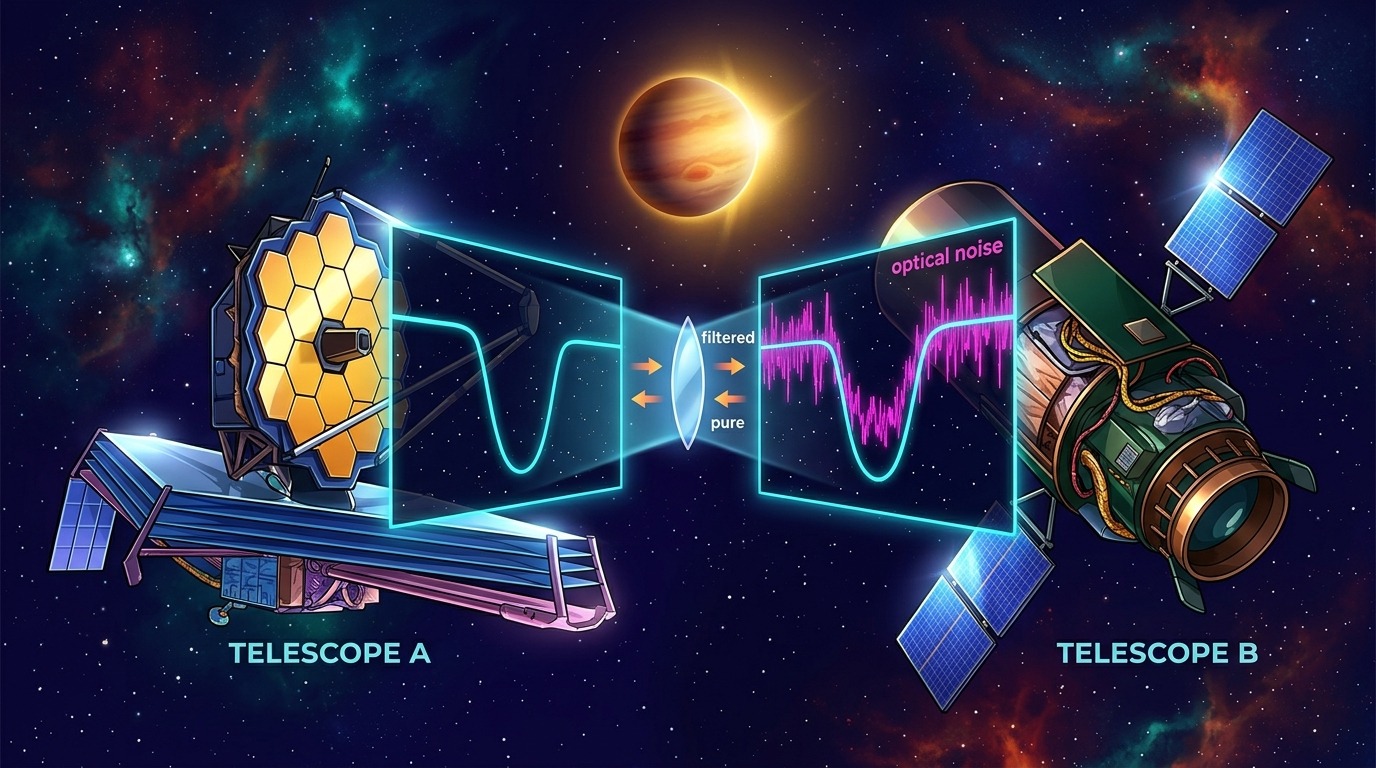
Achieving confirmed status typically requires verification using two other independent telescopes to rule out spurious effects [s4]. Because telescope time is scarce and data volumes are vast, thousands of candidates await follow-up [s4]. Citizen scientists assist in vetting NASA data, visually identifying transit dips that automated algorithms miss [s4].
Confirmed exoplanets receive systematic designations, beginning with the survey name and catalog number, followed by lowercase letters starting with 'b' [s4]. This rigorous pipeline of detection, candidate verification, and naming turns subtle stellar signals into verified worlds [s1] [s4].
Sources & further reading
[s1] How We Find and Characterize - NASA Science ↗science.nasa.gov
[s2] What’s a transit? - NASA Science ↗science.nasa.gov
[s3] ESA - How to find an exoplanet ↗www.esa.int
[s4] In Depth - NASA Science ↗science.nasa.gov
Updated 14/10/2026. Report a correction.