Ripples in the Cosmic Fabric
Albert Einstein proposed in his general theory of relativity that gravity is the physical consequence of mass warping the fabric of spacetime [s1] [s2]. Just as a heavy object sags a trampoline, massive bodies distort the space around them [s2]. When massive objects accelerate, Einstein deduced that they produce ripples in spacetime propagating outward at the speed of light [s1] [s2] [s5]. These gravitational waves squeeze and stretch space and anything along their path as they pass by [s1] [s4].
Because gravity acts weakly across space, signals arrive at Earth dramatically weakened [s1] [s4]. Everyday motion produces negligible disturbances, so detectors can only perceive waves generated by violent cosmic phenomena, such as asymmetric supernovae, spinning non-spherical neutron stars, and merging compact binaries [s1] [s2] [s4]. By the time these ripples reach Earth, the displacement they induce is smaller than a fraction of the width of a proton [s1].
Conventional measuring tools and rulers cannot detect a passing gravitational wave because they compress and expand along with spacetime itself [s3]. To overcome this challenge, scientists rely on the constancy of the speed of light [s3] [s4]. By using laser interferometry to measure how light travels across fixed distances, specialized instruments can detect these minute shifts without being confounded by material contraction [s1] [s3].
Engineering the Ground-Based Interferometer
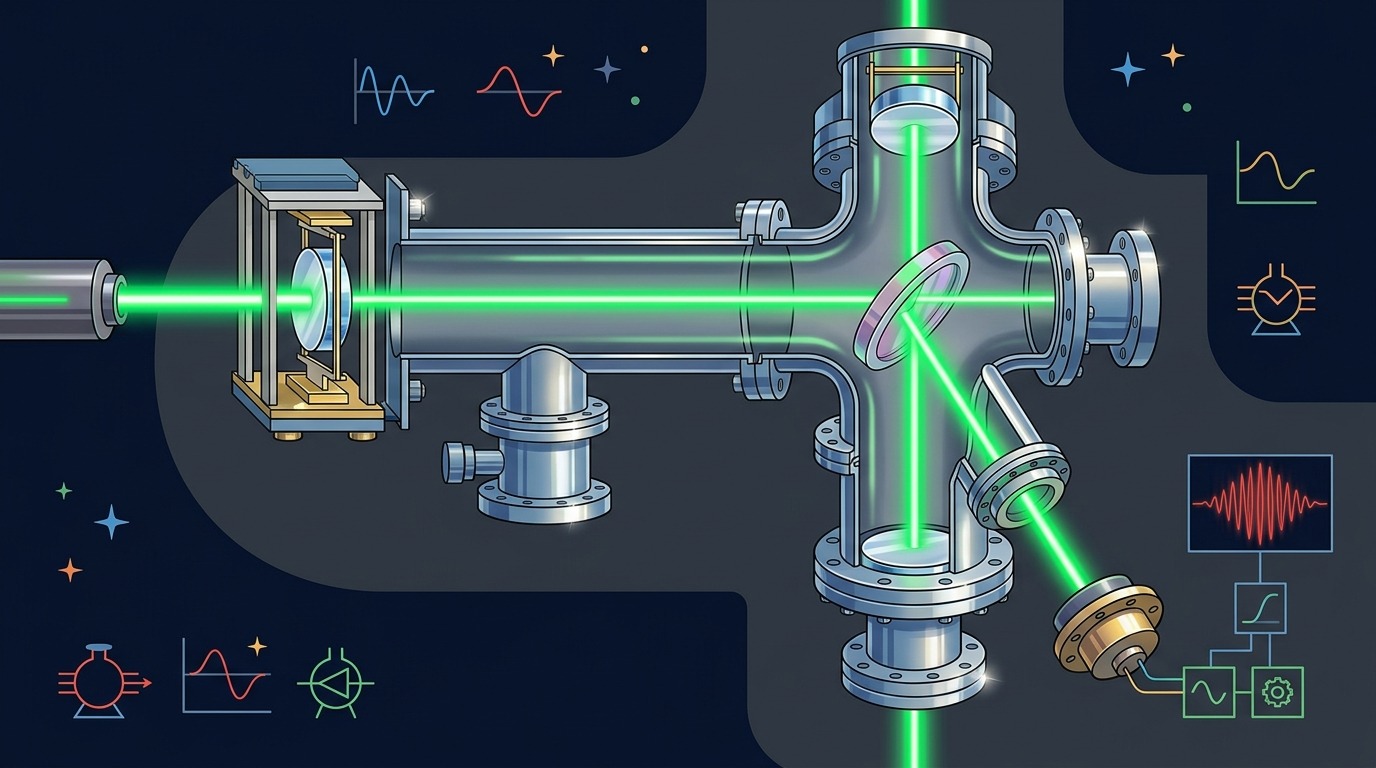
The architecture for measuring spacetime distortions was developed in 1887, when Michelson and Morley designed an interferometer splitting a light beam into perpendicular paths [s3]. Modern ground-based observatories—including the dual Laser Interferometer Gravitational-Wave Observatory (LIGO) facilities in Washington and Louisiana, Virgo in Europe, and KAGRA in Japan—employ scaled versions of this design [s3] [s4]. At each facility, laser beams travel along perpendicular arms extending three to four kilometers [s3] [s4].
If the light beams traversed each corridor only once, the signal would be too small to measure [s3]. To amplify the effect, mirrors reflect the beams back and forth roughly 300 times before combining [s3]. For LIGO, this folding increases the effective travel distance from 4 kilometers to 1,200 kilometers, allowing the combined beams to generate a measurable optical interference pattern [s3].
When undisturbed arm lengths match, the recombined beams yield no interference pattern [s3]. However, when a gravitational wave traverses the detector, it stretches one arm while compressing the other [s3] [s4]. Because light travels at a constant speed, this path difference shifts the beams out of phase, creating an interference pattern [s2] [s3]. In 2015, this mechanism achieved the first direct detection of gravitational waves when LIGO captured the merger of two black holes that collided 1.3 billion years ago, a breakthrough recognized with the Nobel Prize in Physics in October 2017 [s2] [s4] [s5].
The Anatomy of a Compact Binary Merger
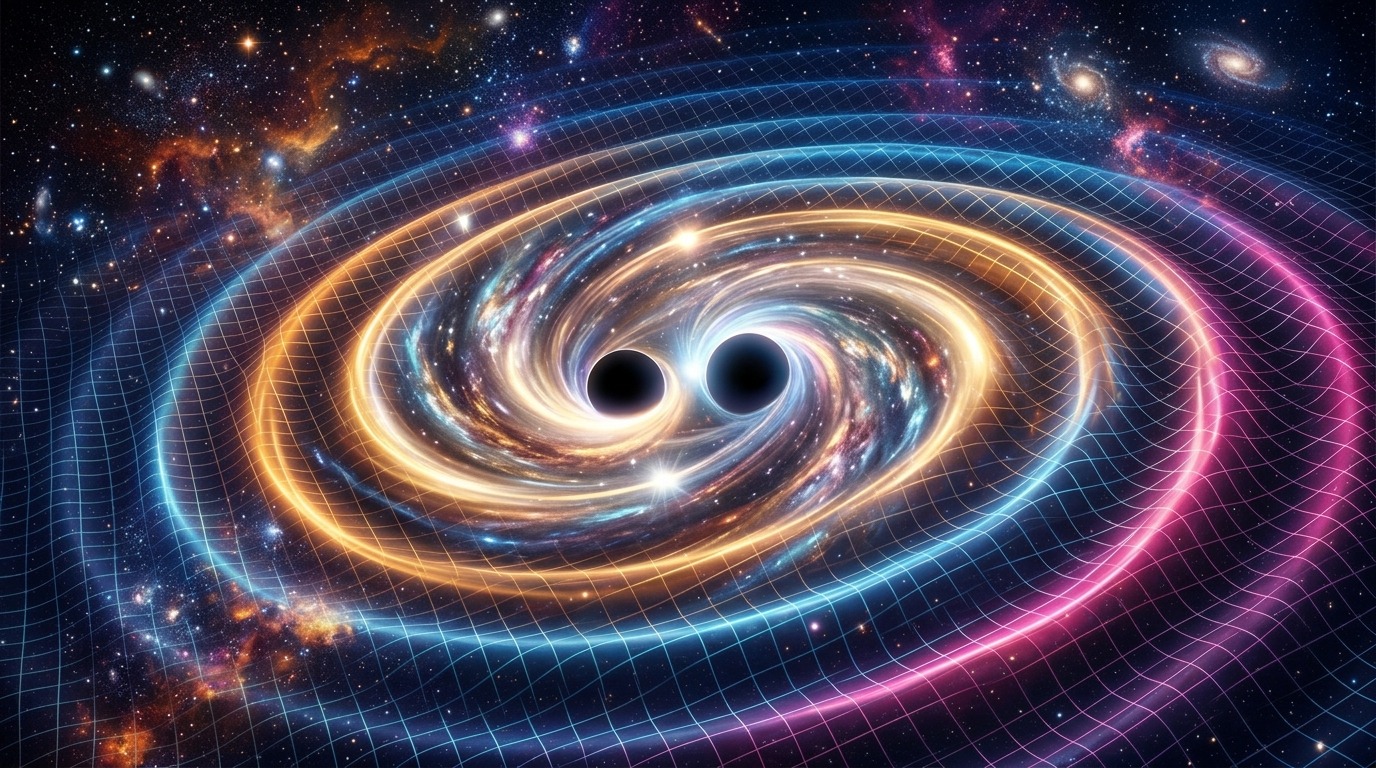
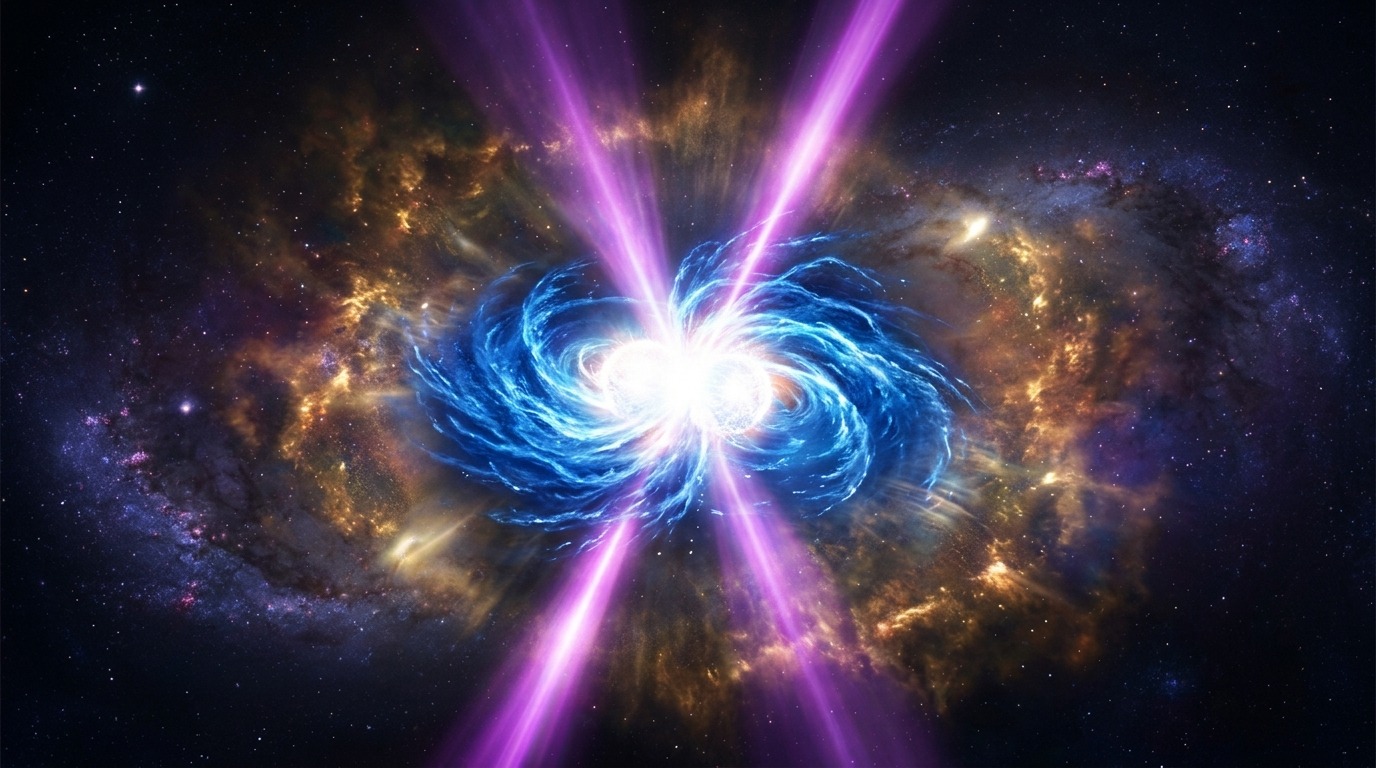
Pairs of compact stellar remnants revolving around each other, known as binary systems, are prime sources of gravitational waves [s1] [s2]. As two black holes or neutron stars orbit, they emit gravitational waves that carry away orbital energy [s2] [s5]. This energy loss causes the objects to draw closer and accelerate in a process called inspiral, raising the frequency and amplitude of the waves as they orbit faster [s1] [s2] [s5].
Eventually, the orbiting bodies collide [s1] [s5]. When two black holes merge, their event horizons form a peanut-shaped boundary before coalescing into a single black hole, emitting a high-frequency wave [s1]. Immediately following the collision, the merged remnant radiates a lower-frequency signal called the ringdown as the disturbance fades away [s1] [s2].
Ground-based interferometers excel at measuring these final collisions, but identifying the exact sky location of the source remains challenging [s1] [s2]. Detecting gravitational waves alone provides broad directional data, making precise localization difficult unless multiple observatories coordinate or the merger emits accompanying light [s1] [s5].
GW170817 and Multi-Messenger Astronomy
On August 17, 2017, LIGO and Virgo detected gravitational waves from the collision of two neutron stars in galaxy NGC 4993, located 130 million light-years away [s1] [s5]. Unlike black hole mergers that emit little light, colliding neutron stars eject vast amounts of material [s5]. Just 1.7 seconds after the gravitational waves arrived, NASA's Fermi satellite observed a short gamma-ray burst from the same event [s5].
This detection inaugurated multi-messenger astronomy by combining gravitational waves with electromagnetic observations [s1] [s5]. Within twelve hours, observatories located the optical counterpart: a kilonova, an explosion more energetic than a nova and less energetic than a supernova [s1] [s5]. Observatories including Hubble, Swift, and Spitzer tracked the glowing debris, with Hubble monitoring visible and infrared light over six days to examine its motion and chemical composition [s1] [s5].
Nine days later, the Chandra X-ray Observatory detected an X-ray afterglow as jets expanded into view [s5]. Coordinating gravitational-wave detectors with space telescopes directly confirmed that colliding neutron stars generate short gamma-ray bursts, demonstrating how matter behaves in extreme environments [s5].
Pulsar Timing Arrays and Low-Frequency Waves
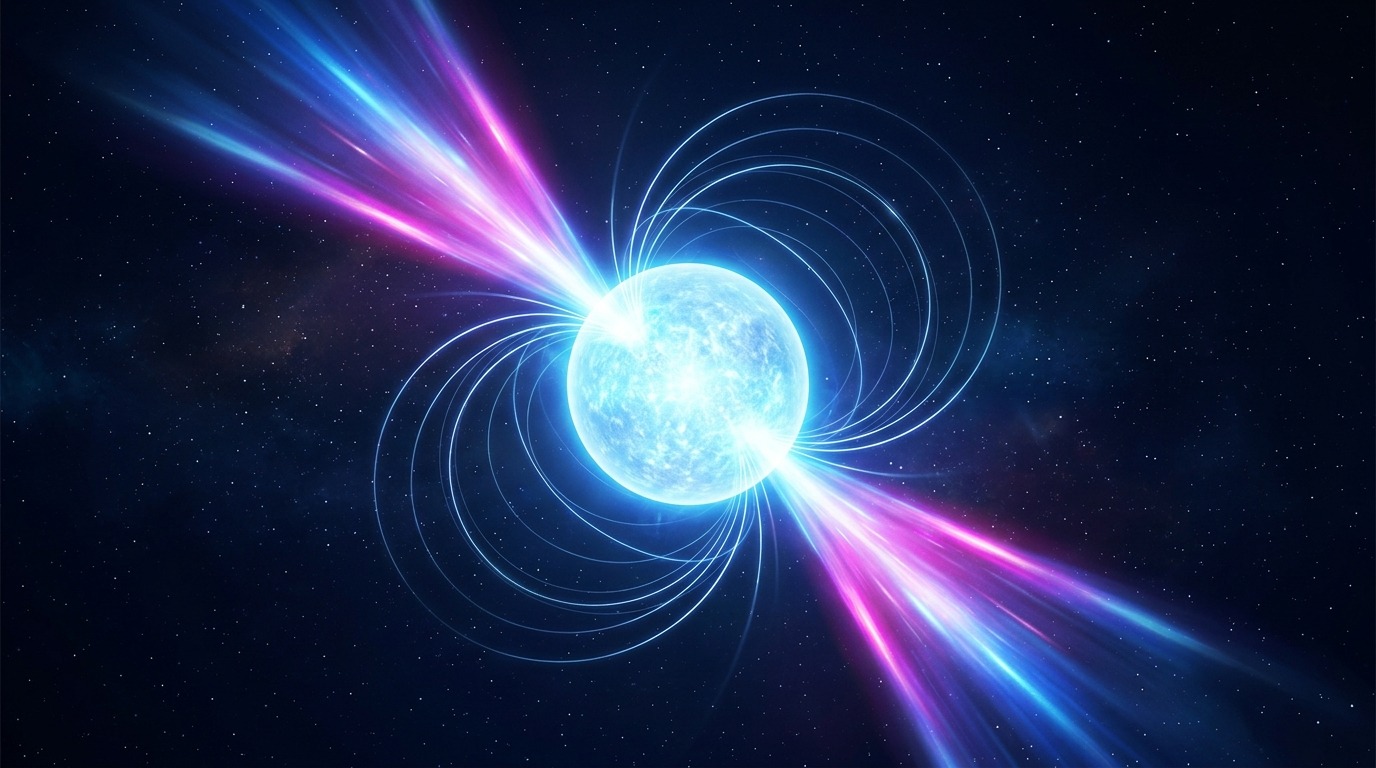
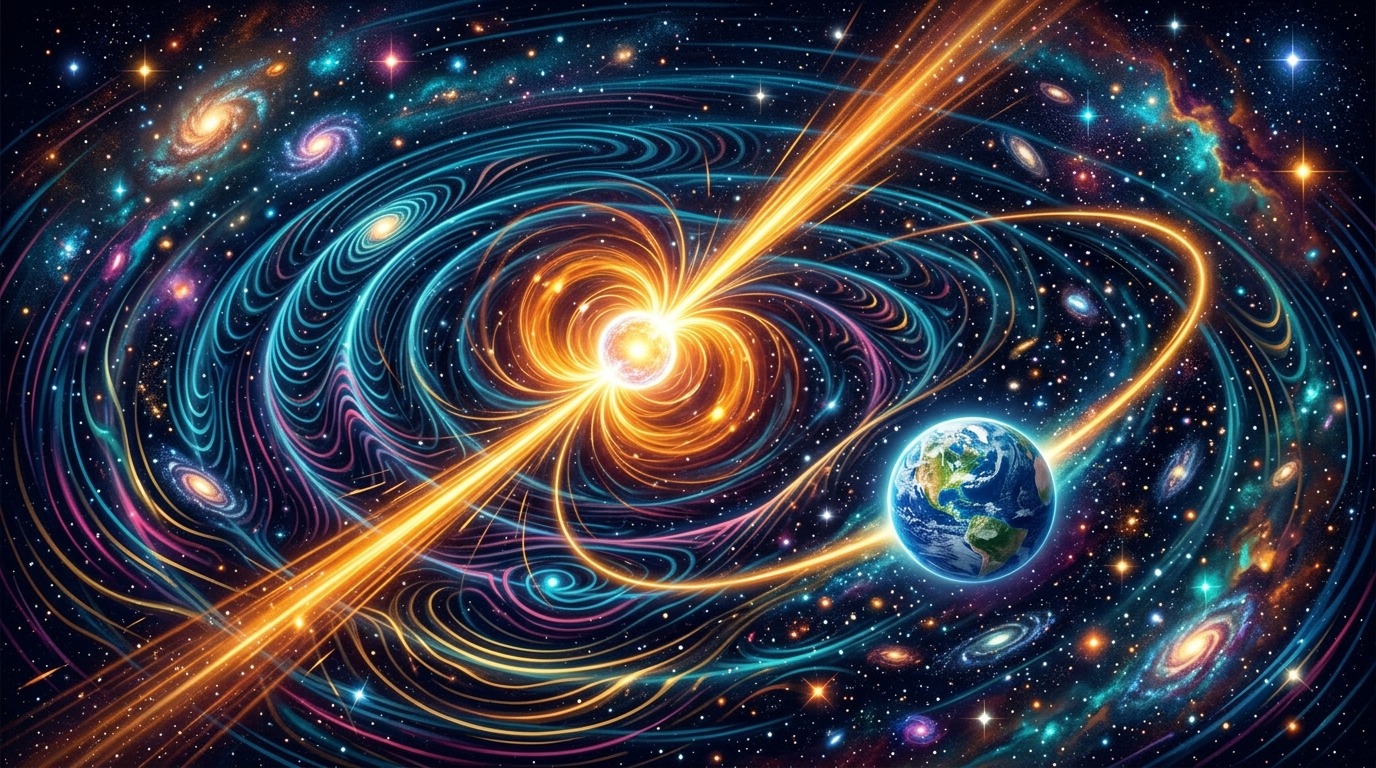
While ground-based interferometers detect high-frequency ripples from stellar-mass collisions, other cosmic phenomena emit gravitational waves at lower frequencies [s2] [s3]. In June 2023, observatories discovered gravitational waves using pulsar timing arrays [s3]. Pulsars are rotating neutron stars formed in supernovae that emit beams of light from their magnetic poles like lighthouses [s3]. Because their rotation is exceptionally regular, radio telescopes receive pulses at steady intervals [s3].
When gravitational waves cross space between a pulsar and Earth, they stretch and contract spacetime, lengthening or shortening the path of the pulses [s3]. Four active arrays—the Parker Pulsar Timing Array, the European Pulsar Timing Array, the North American Nanohertz Observatory for Gravitation Waves, and the Indian Pulsar Timing Array—monitor pulse arrival times [s3]. These arrays detect combined signals from merging supermassive black holes at galactic centers, each weighing over a hundred times the Sun [s3].
LISA: The Space-Based Laser Frontier
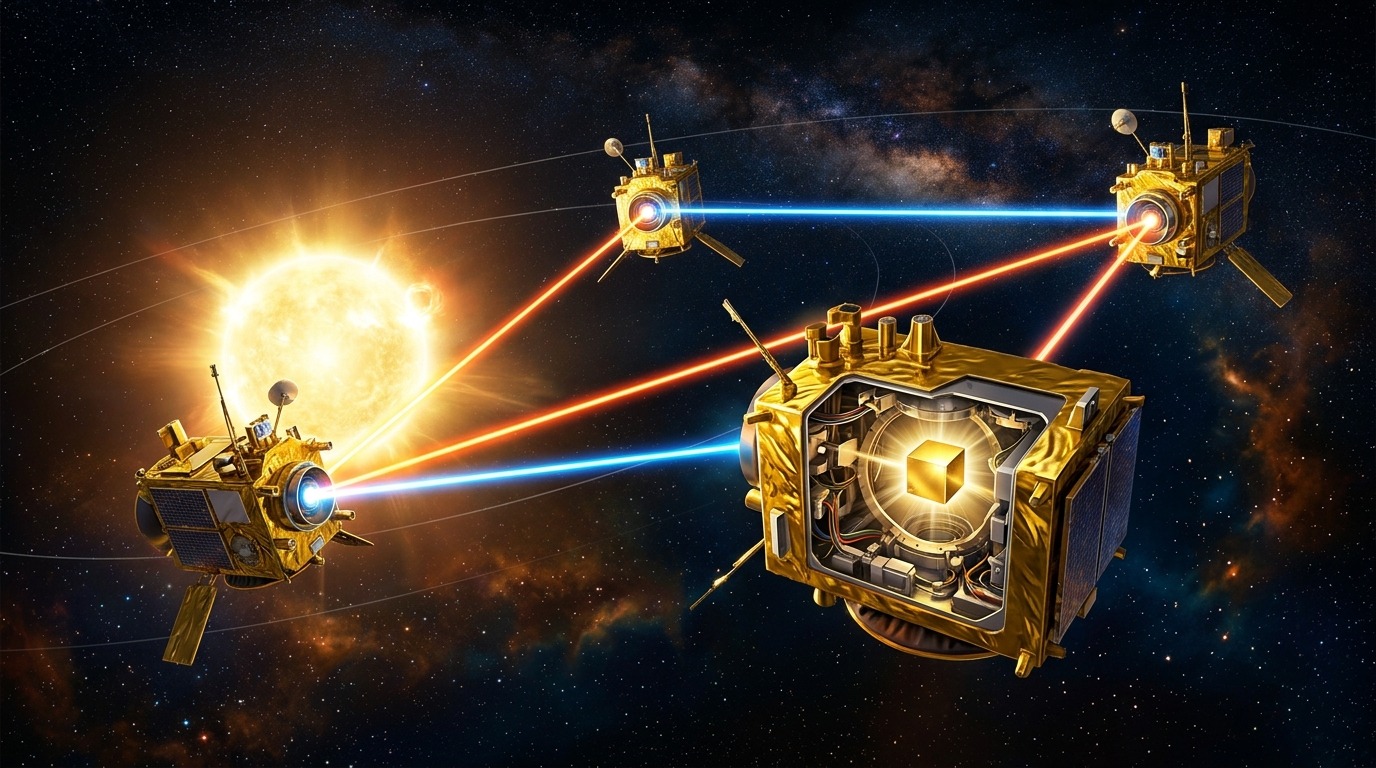
ESA is developing the first designated space mission to observe gravitational waves, the Laser Interferometer Space Antenna (LISA), scheduled for launch in the 2030s [s2] [s3]. LISA will comprise three spacecraft flying in a triangular formation with arms separated by 2.5 million kilometers [s2] [s3]. Using lasers, the observatory will continuously monitor the distances between the spacecraft [s2] [s3].
Each spacecraft houses two golden cubes, slightly smaller than Rubik's cubes, that float freely and are shielded from external forces by the spacecraft housing [s3]. When gravitational waves cross the Solar System, they alter the distances between the cubes in different spacecraft, enabling precise detection [s2] [s3].
LISA will measure gravitational waves at different frequencies than ground-based observatories [s2]. While terrestrial detectors capture final collisions, LISA will detect binary systems of white dwarf stars, neutron stars, and black holes while they orbit, long before their eventual collision [s2] [s3]. The mission will also detect supermassive black holes merging at galaxy centres and compact objects falling into them [s2] [s3]. Together with ground-based interferometers and pulsar arrays, LISA will cover a vast range of gravitational signals across the cosmos [s2] [s3].
Sources & further reading
[s1] Hubble Gravity Waves - NASA Science ↗science.nasa.gov
[s2] ESA - Gravitational waves: ripples in spacetime ↗www.esa.int
[s3] ESA - Measuring gravitational waves ↗www.esa.int
[s4] What Is a Gravitational Wave? | NASA Space Place – NASA Science for Kids ↗spaceplace.nasa.gov
[s5] When Dead Stars Collide! - NASA Science ↗science.nasa.gov
Updated 14/10/2026. Report a correction.