An invisible ingredient, an unfinished identity
A photograph is a record of light, rather than a complete inventory of everything that can influence a galaxy. Dark matter names an unseen ingredient inferred from gravity. In the usual picture, it does not emit, absorb or reflect light in the way ordinary material does. That makes its influence easier to investigate than its appearance. The crucial distinction is between evidence that extra gravitating matter is present and evidence identifying what that matter actually consists of. [s1]
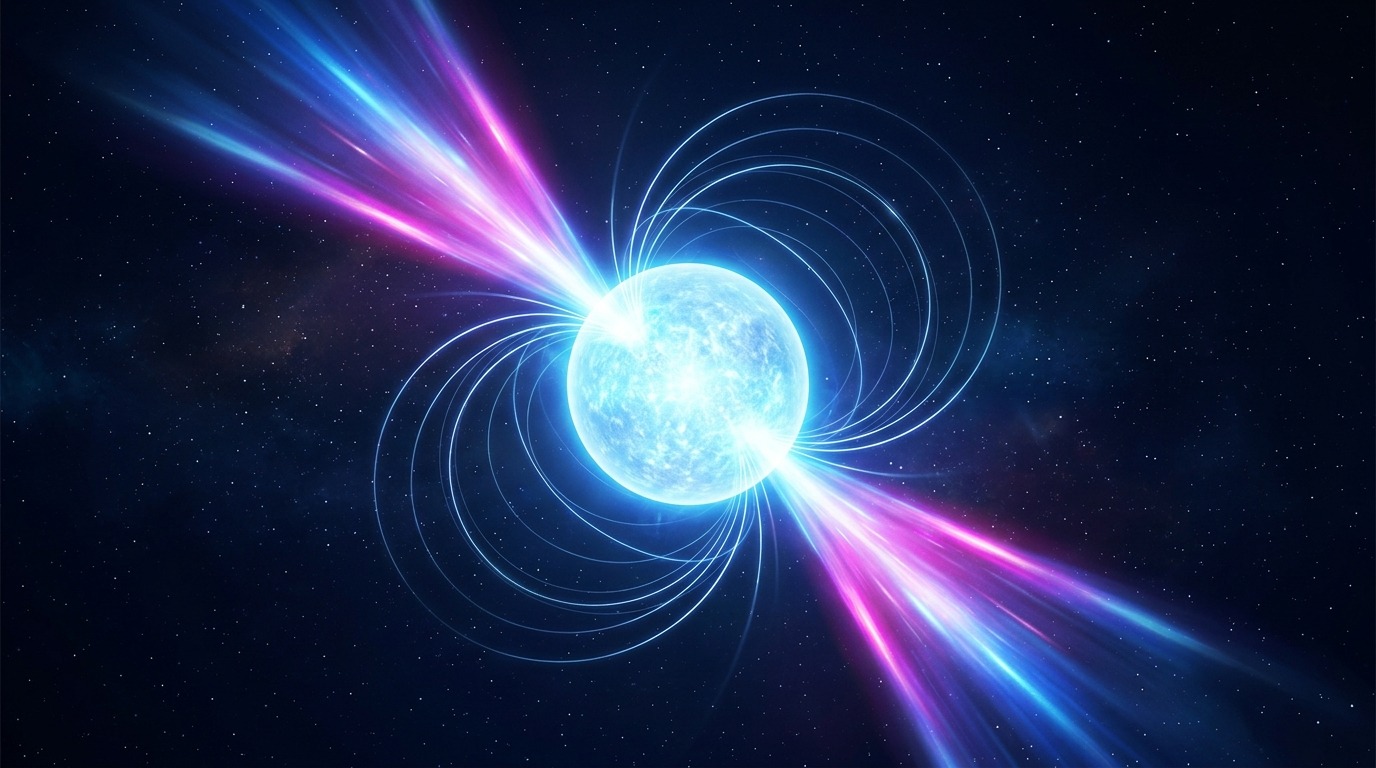
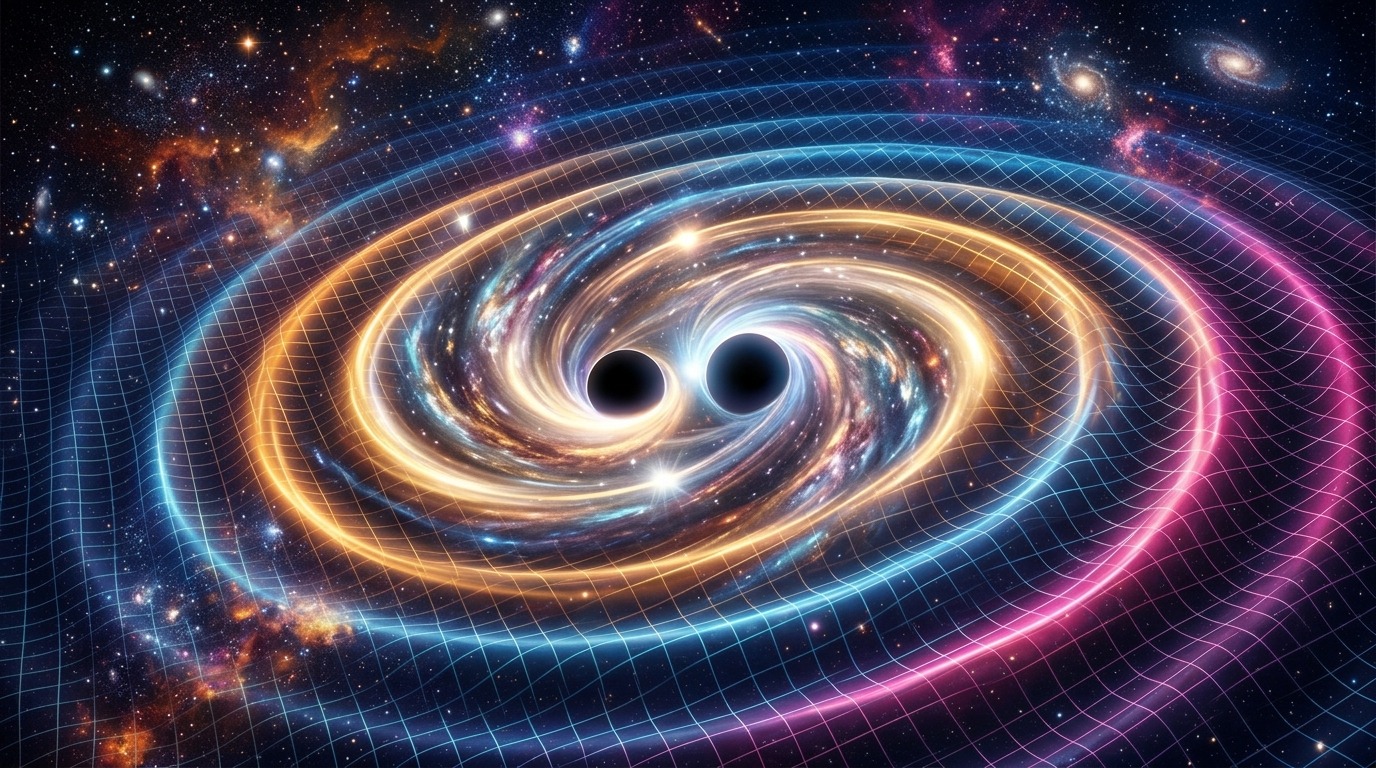
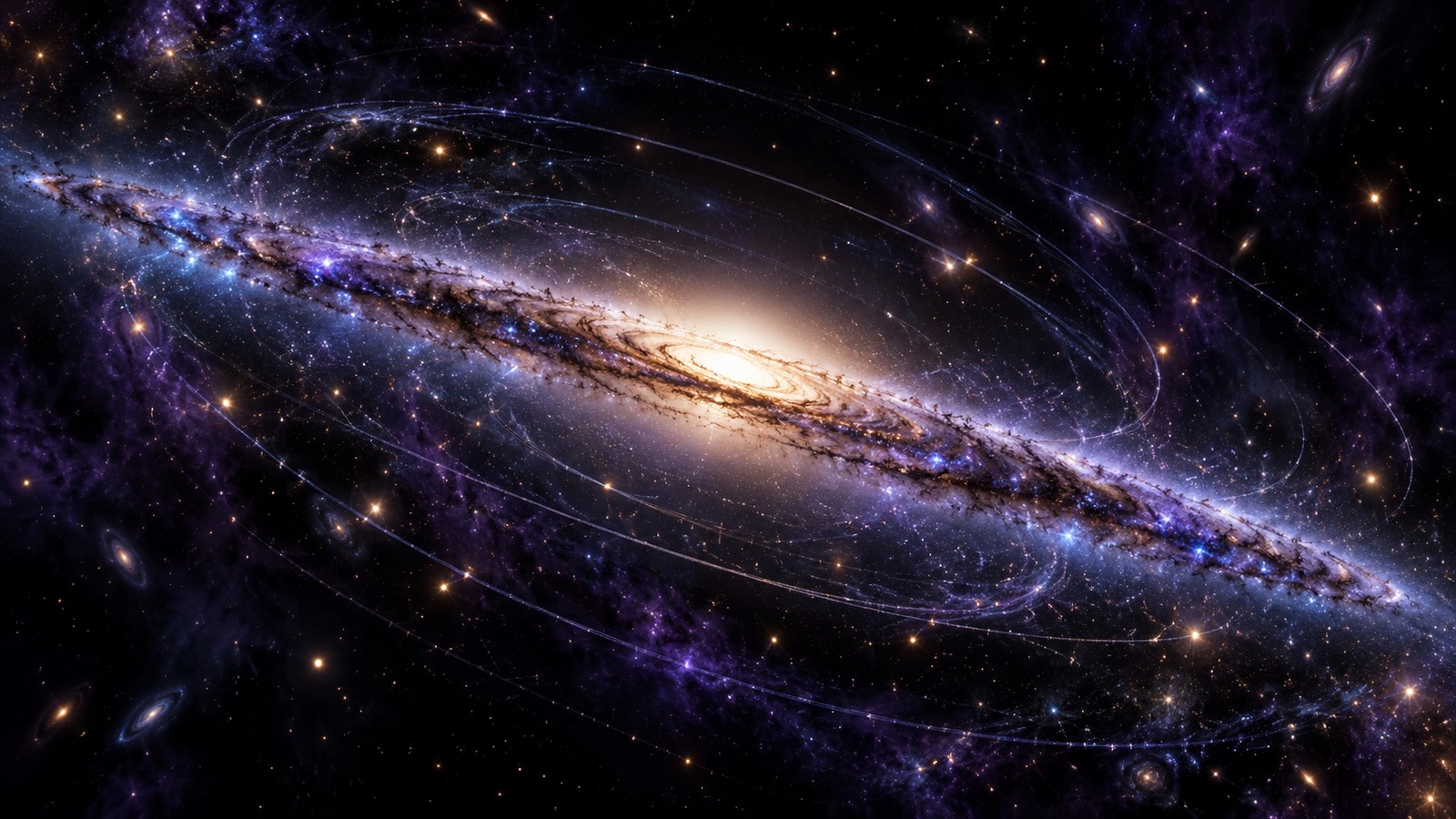
NASA describes several proposed candidates, while emphasizing that none has been confirmed as the answer. It is therefore possible to have a strong scientific case for a gravitational component and an unfinished account of its microscopic nature. Saying that researchers study dark matter does not mean a telescope has photographed a known dark particle. The illustrations here visualize ideas; their colors and shapes are artistic choices, rather than measurements of an invisible substance. [s1]
Galaxies provide a gravitational clue
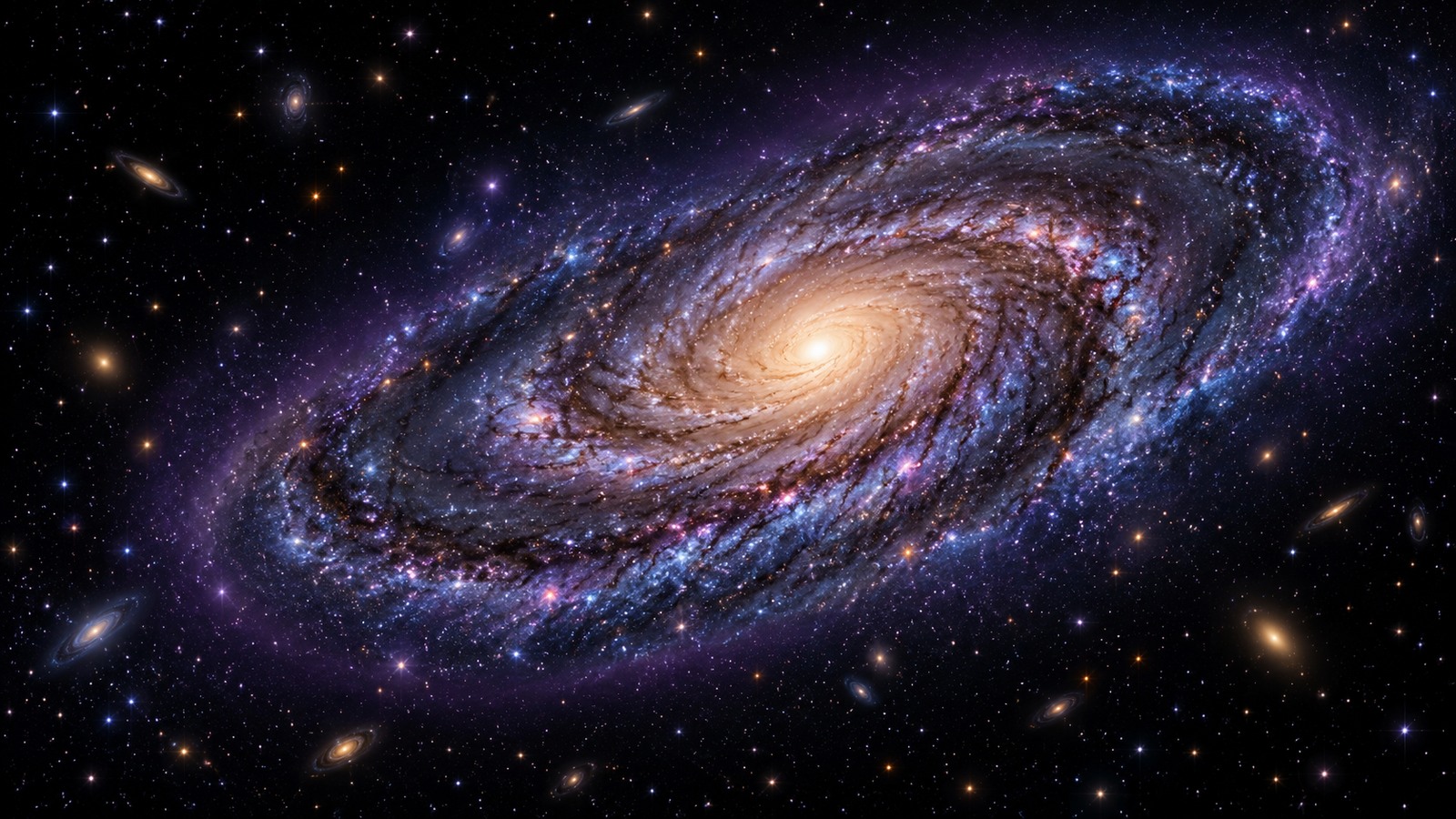
CERN explains one motivation through the motion of galaxies. Their observed rotation, and the motion of galaxies inside clusters, require more gravitational influence than their observable material alone appears to provide. An additional mass component offers an explanation. The reasoning starts with measurements of things we can observe, then asks which physical account can explain their behavior. The extra ingredient is inferred through its effects, rather than spotted as a bright object beside the stars. [s2]
Think of the distinction between watching a system move and listing every ingredient inside it. Motion can constrain the inventory, but it does not label each component for us. That is an analogy for the logic of inference, not a replacement for astronomical measurements. Researchers must still evaluate observations and physical models quantitatively. A convincing explanation has to account for the measured behavior; calling an ingredient invisible does not, by itself, establish that explanation. [s2]
Gravitational lensing reveals a mass distribution
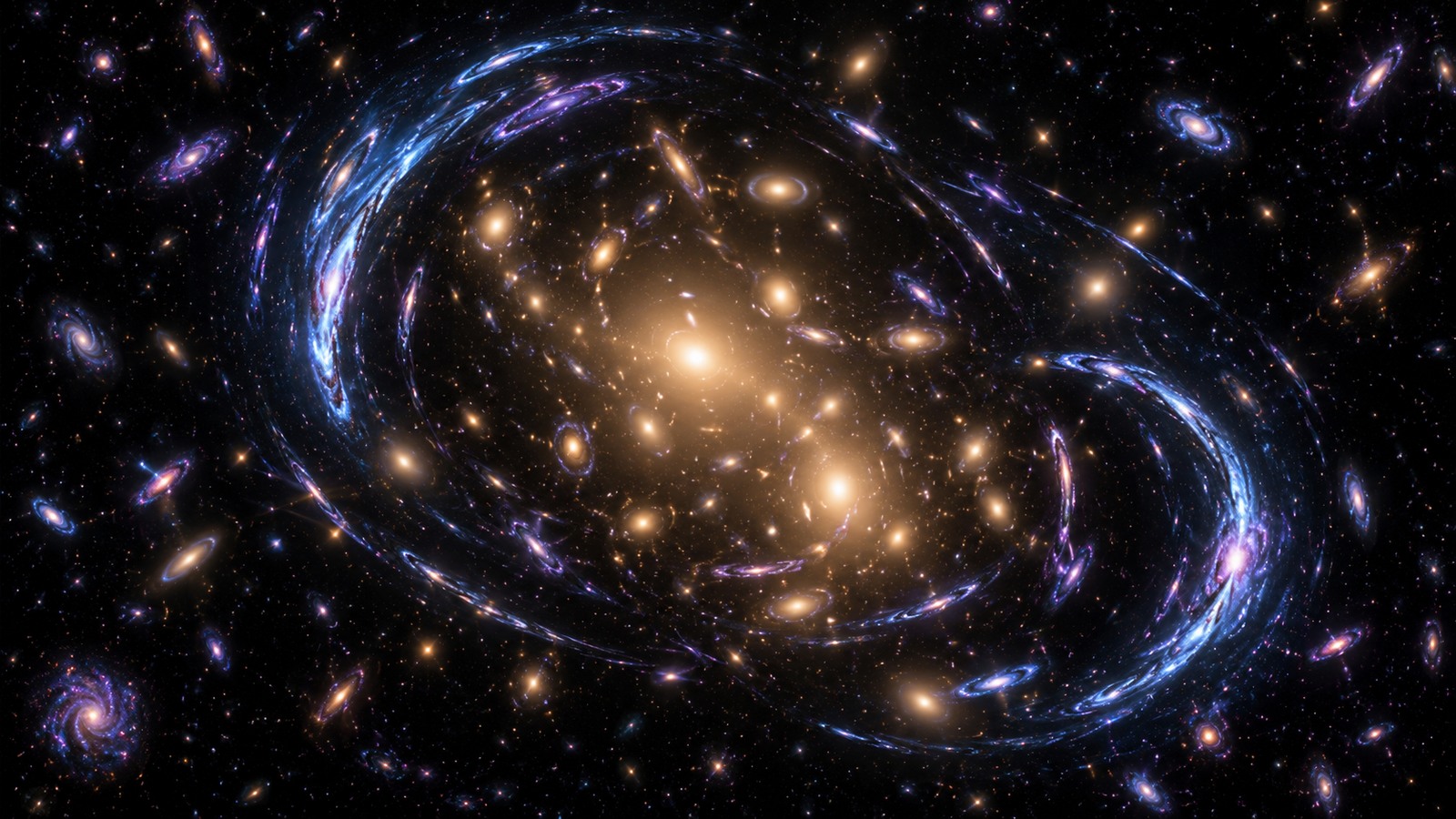
Gravity also changes the paths of light. Fermilab describes a Bullet Cluster image in which the inferred dark matter distribution is shown in blue, using gravitational effects on background galaxies. The blue is a visualization of an inference, not the natural color of dark matter. This is why an astronomical image can contain information about something that does not shine: its gravity changes an observable signal arriving from farther away. [s3]
Such a map answers a question about where gravitating mass appears to be distributed. It does not automatically determine the mass or interactions of a particular particle. Fermilab's account separates those unknown properties from the gravitational evidence and describes experiments designed to investigate them. Reading a visualization carefully means asking what each layer represents, which observations constrain it and which conclusions remain outside the measurement. A useful scientific picture can reveal structure while leaving the underlying identity unresolved. [s3]
Experiments ask different questions
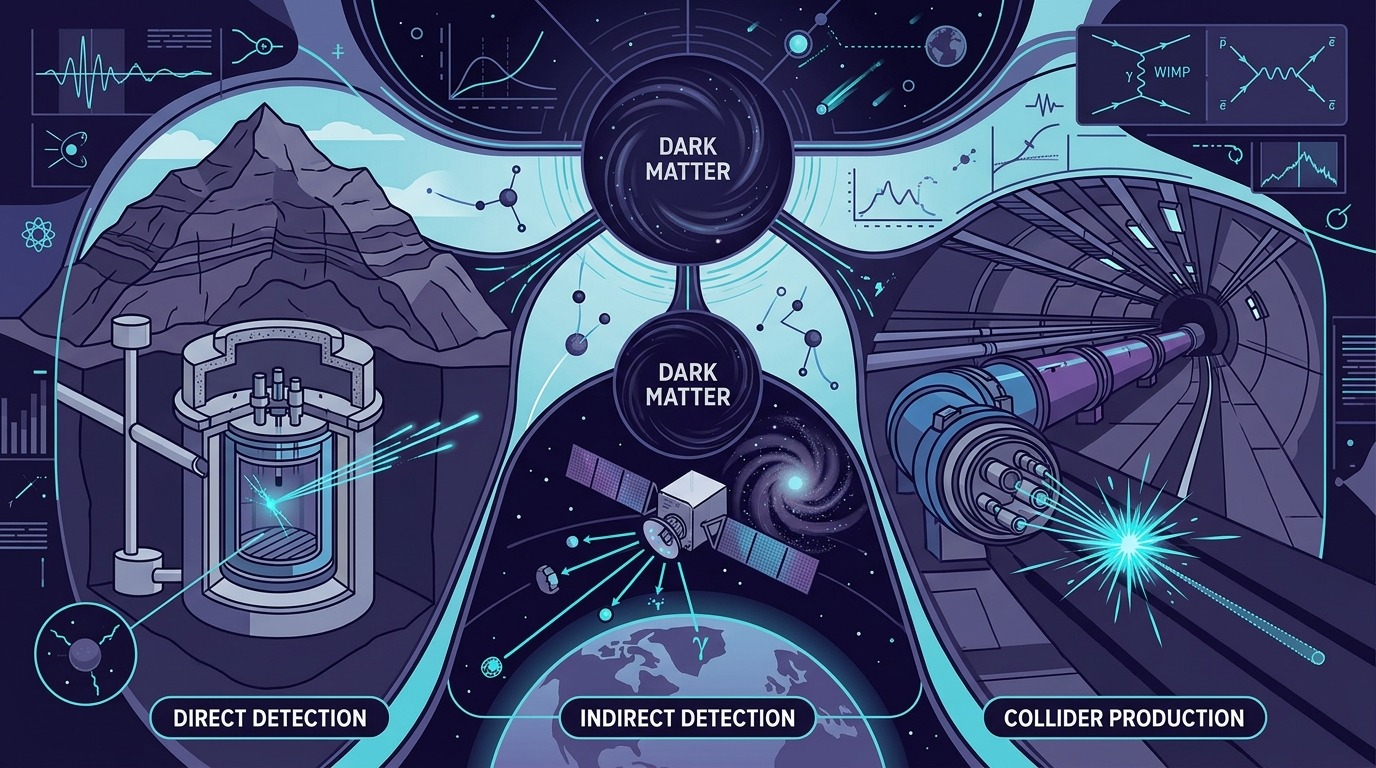
The U.S. Department of Energy describes complementary ways to investigate dark matter. Sensitive underground detectors look for possible interactions with ordinary material. Other searches examine potential signatures in cosmic rays or gamma rays. Accelerator experiments investigate whether new particles could be produced in collisions. These approaches test different possibilities, so the word search does not describe one universal instrument or a single measurement that would answer every question at once. [s4]
Particle candidates remain proposals whose properties have to be tested. An experiment's interpretation depends on the kind of interaction and mass range it can investigate. This is why the identity question cannot be settled by a colorful halo illustration, or by treating every new detector as a guaranteed discovery machine. The scientific task is to connect a possible signal with a specific physical explanation and evaluate alternatives. Gravitational evidence motivates that work; it does not remove the need for careful experimental interpretation. [s4]

Mapping the mystery without overstating the answer
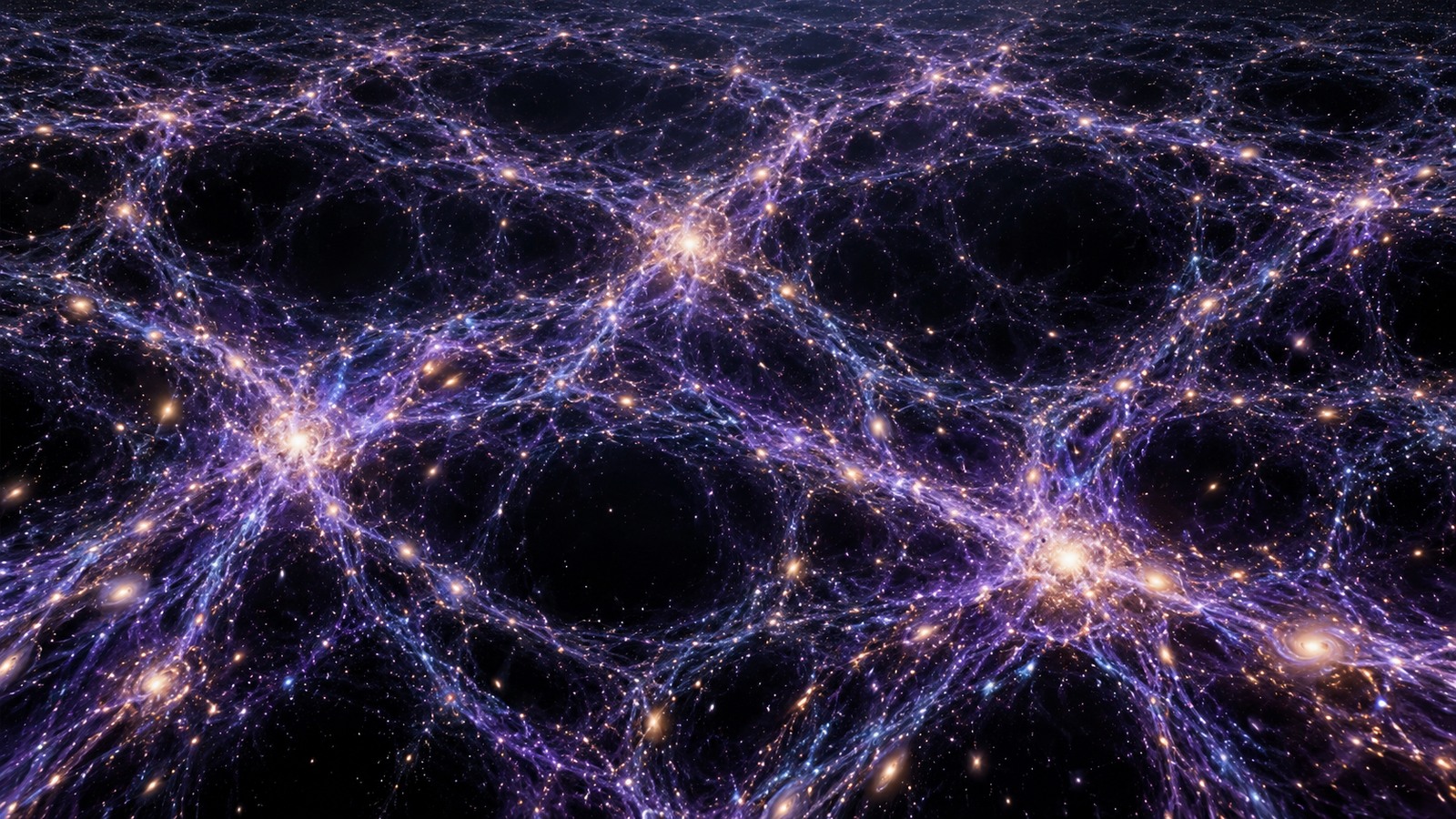
ESA describes galaxy-shape measurements as a central part of Euclid's effort to map the distribution of dark matter across cosmic history. Its survey began in 2024. The goal illustrates how progress can come from measuring a pattern more precisely, even before researchers identify the substance responsible for it. Large surveys turn many observations into a broader picture; an individual image and a statistical map are related tools, but they are not identical kinds of evidence. [s5]
For readers, the useful question is what a result actually establishes. Does it improve a map, constrain an explanation or identify a physical ingredient? Those achievements should not be collapsed into one headline. A map of dark matter's inferred distribution can be valuable without announcing a confirmed particle. Keeping that distinction visible makes the mystery more interesting, because it shows both the reach of observation and the work still required to connect cosmic structure with a deeper physical account. [s5]
Sources & further reading
[s1] Dark Matter - NASA Science ↗NASA Science
[s2] Dark matter – Home | CERN ↗CERN
[s3] Dark Matter | Fermilab Cosmic Physics Center ↗Fermilab
[s4] DOE Explains...Dark Matter | Department of EnergyLock ↗U.S. Department of Energy
[s5] ESA - Ready, set, go! Euclid begins its dark Universe survey ↗ESA
Updated 13/10/2026. Report a correction.