Deep Underground Direct Detection of Nuclear Recoils
Dark matter accounts for roughly 85% of all matter in the universe, heavily outweighing visible matter while remaining completely undetectable across the electromagnetic spectrum [s1] [s4]. While astronomical observations establish that dark matter interacts gravitationally, alternative models invoking modifications to gravity or unseen compact objects made of normal baryonic matter fail to match observational data [s4]. Consequently, physicists interpret dark matter as one or more new species of fundamental particles [s4]. Chief among the theoretical candidates are Weakly Interacting Massive Particles, or WIMPs, which are hypothesized to possess masses between 1 and 1,000 times that of a proton and interact only through gravity and possibly other faint forces [s1] [s4].
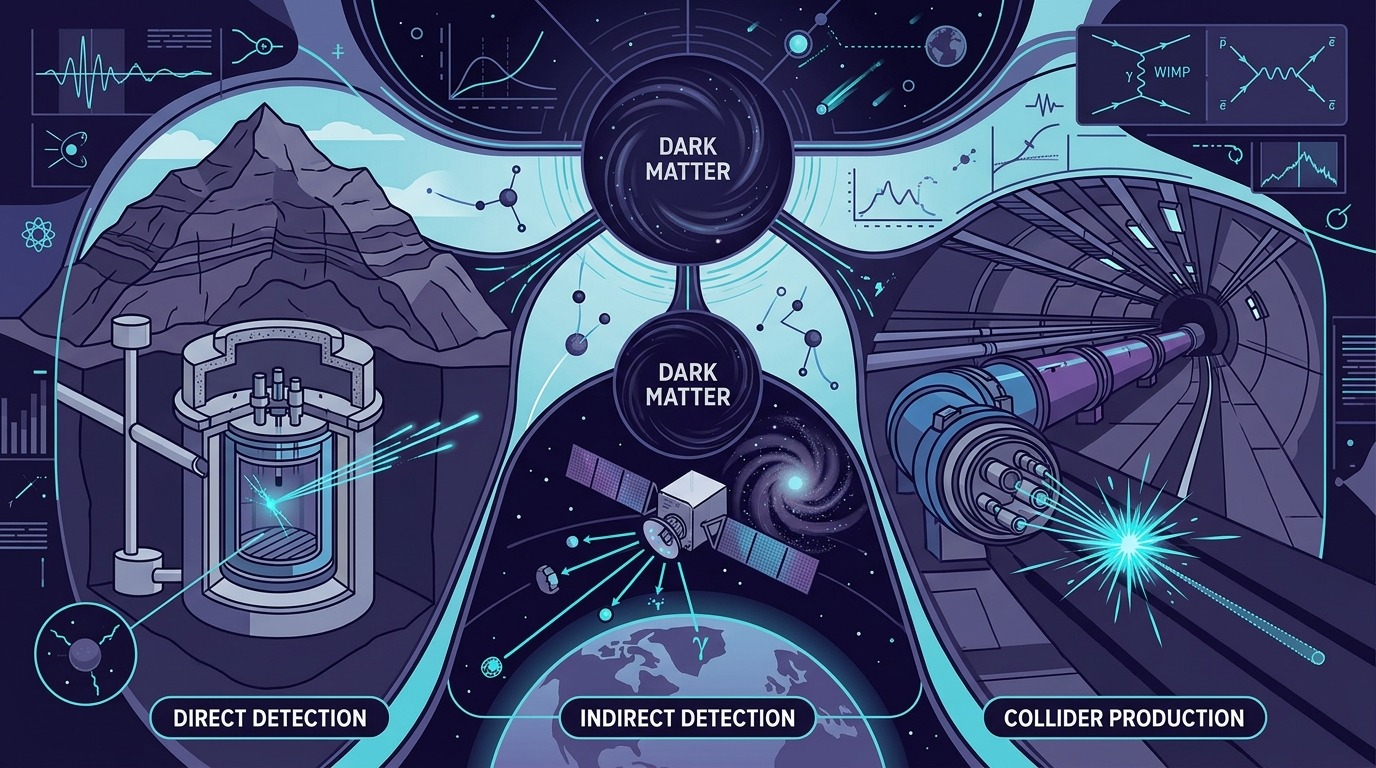
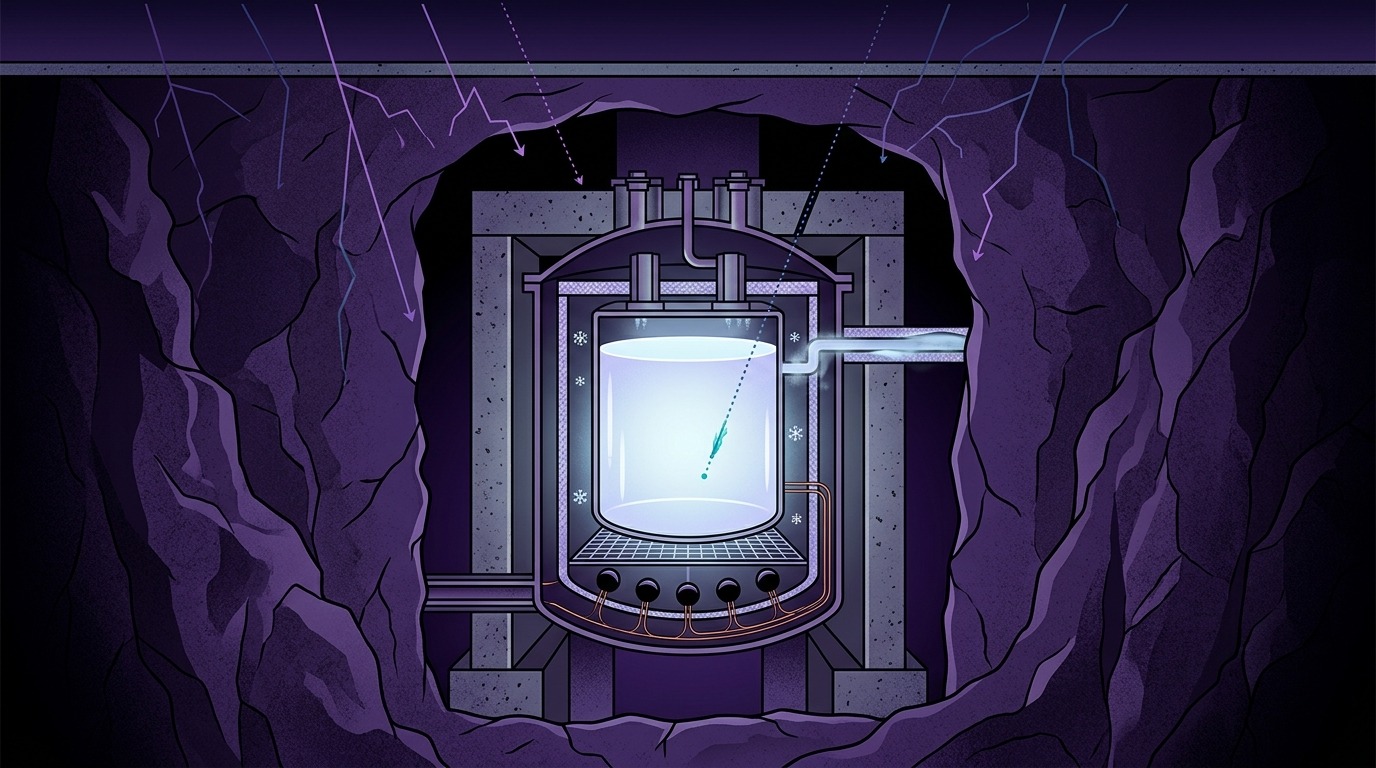
Because dark matter particles are hypothesized to pass continuously through the Earth, researchers construct sensitive direct detection experiments deep underground [s3] [s4]. Locating detectors thousands of feet beneath the surface provides vital shielding against cosmic ray backgrounds that would otherwise swamp rare interaction signals [s3] [s4]. Within these subterranean laboratories, detectors search for the minute recoil of atomic nuclei caused by rare collisions with passing dark matter particles [s3] [s4]. These experiments test the hypothesis that dark matter consists of relic particles surviving from the hot early stages of the Big Bang [s3].
Direct detection programs deploy diverse target materials and sensing technologies to probe different interaction possibilities [s3]. The LZ (LUX-ZEPLIN) experiment operates a liquid xenon target nearly one mile underground at the Sanford Underground Research Facility in Lead, South Dakota [s4]. At the Gran Sasso laboratory in Italy, the Darkside experiment utilizes liquid argon as its active detection medium [s3]. Meanwhile, the Cryogenic Dark Matter Search (SuperCDMS) cools germanium and silicon detectors to near absolute zero at Minnesota's Soudan mine, and the PICASSO-COUPP (PICO) experiment at SNOLAB in Canada uses bubble chambers to identify recoiling nuclei [s3]. Current Generation 2 experiments and planned future facilities continue pushing detector sensitivity down toward the neutrino floor, where coherent neutrino scattering presents a natural background limit [s3].
Indirect Detection of Cosmic Annihilation Signatures
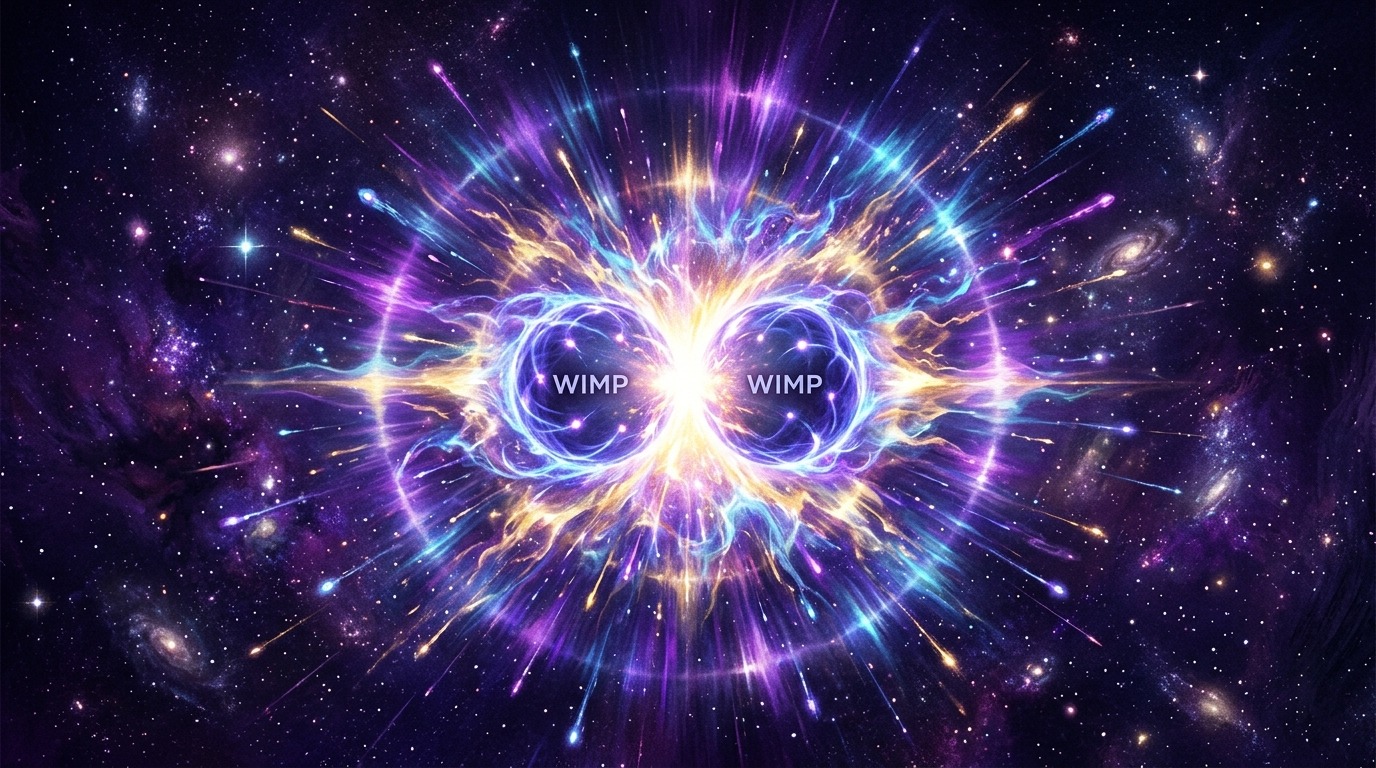
While direct detection waits for dark matter to strike targets on Earth, indirect detection searches the cosmos for the observable aftermath of dark matter interactions [s1] [s4]. Theoretical models predict that when pairs of WIMPs encounter one another within high-density cosmic environments, they may mutually annihilate [s1] [s4]. This self-destruction process is expected to produce energetic Standard Model particles, most notably gamma rays, which represent the most energetic form of electromagnetic radiation [s1] [s4].
Astrophysicists analyze data from space-based and ground-based observatories to scan the sky for these characteristic annihilation signatures [s1] [s4]. Researchers have utilized data from NASA's Fermi Gamma-ray Space Telescope to search for gamma-ray excesses that could signal WIMP annihilation within galactic halos [s1]. Fermi observations are also evaluated for other candidate phenomena, such as gamma rays produced by the evaporation of hypothetical primordial black holes [s1]. In addition to gamma-ray observations, ground- and space-based instruments search cosmic rays for distinct signatures that cannot be explained by standard astrophysical acceleration mechanisms [s4].
Cosmological models and computer simulations reinforce these astrophysical searches by establishing that dark matter particles must be cold and slow-moving [s1]. Simulations demonstrate that warm or hot dark matter would have prevented galaxies and cosmic structures from coalescing into the arrangements observed today [s1]. By combining gamma-ray and cosmic ray surveys with gravitational observations of massive structures, indirect detection experiments continue placing stringent limits on WIMP annihilation rates [s1] [s4].
Particle Collider Production and Missing Momentum
A complementary experimental avenue attempts to synthesize dark matter particles directly in terrestrial laboratories using high-energy particle accelerators [s2] [s4]. Facilities such as the Large Hadron Collider (LHC) at CERN accelerate beams of protons to relativistic velocities and collide them at high energies [s2]. Theoretical frameworks beyond the Standard Model, including supersymmetry and extra dimensions, suggest that candidate dark matter particles could be sufficiently light to be created in these energetic collisions [s2].
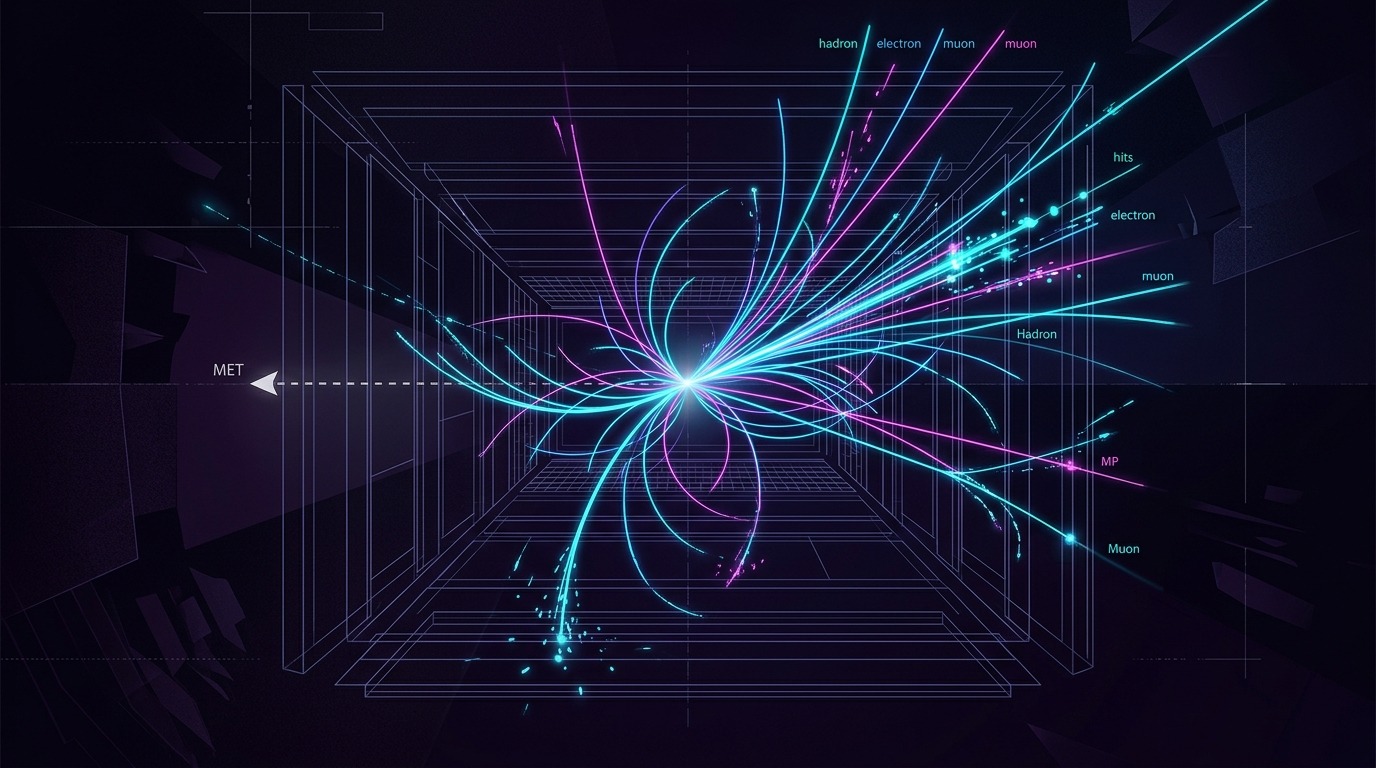
Because dark matter does not interact with the electromagnetic force, any dark matter particles produced in collider collisions would traverse detector hardware without leaving tracks or depositing energy in calorimeters [s2]. Physicists cannot observe these neutral particles directly as they escape the collision chamber unnoticed [s2]. Instead, researchers rely on fundamental conservation laws, measuring the energy and momentum of all visible particles produced in the collision to determine whether momentum balance is preserved [s2].
If an escaping particle carries away energy and momentum, the reconstructed collision displays an apparent imbalance known as missing energy and momentum [s2]. By identifying collisions with significant missing momentum, physicists can infer the creation of invisible particles, such as supersymmetric partners or states belonging to a parallel Hidden Valley [s2]. Accelerator searches supported by the DOE Office of Science and CERN continue examining collision data to discover whether dark matter can be produced through these missing momentum signatures [s2] [s4].
Axion Searches and Resonant Photon Conversion
In addition to heavy WIMPs, physicists actively search for ultra-low-mass dark matter candidates, prominent among which is the axion [s1] [s4]. First theorized in 1977 as a solution to the strong CP problem in quantum chromodynamics, axions are hypothetical subatomic particles with exceptionally low mass and energy [s1]. Theoretical estimates suggest an axion may have a mass roughly one ten-trillionth that of an electron [s4]. Despite their microscopic individual mass, axions could exist in vast quantities, providing the non-relativistic mass density required to account for cold dark matter [s1] [s4].
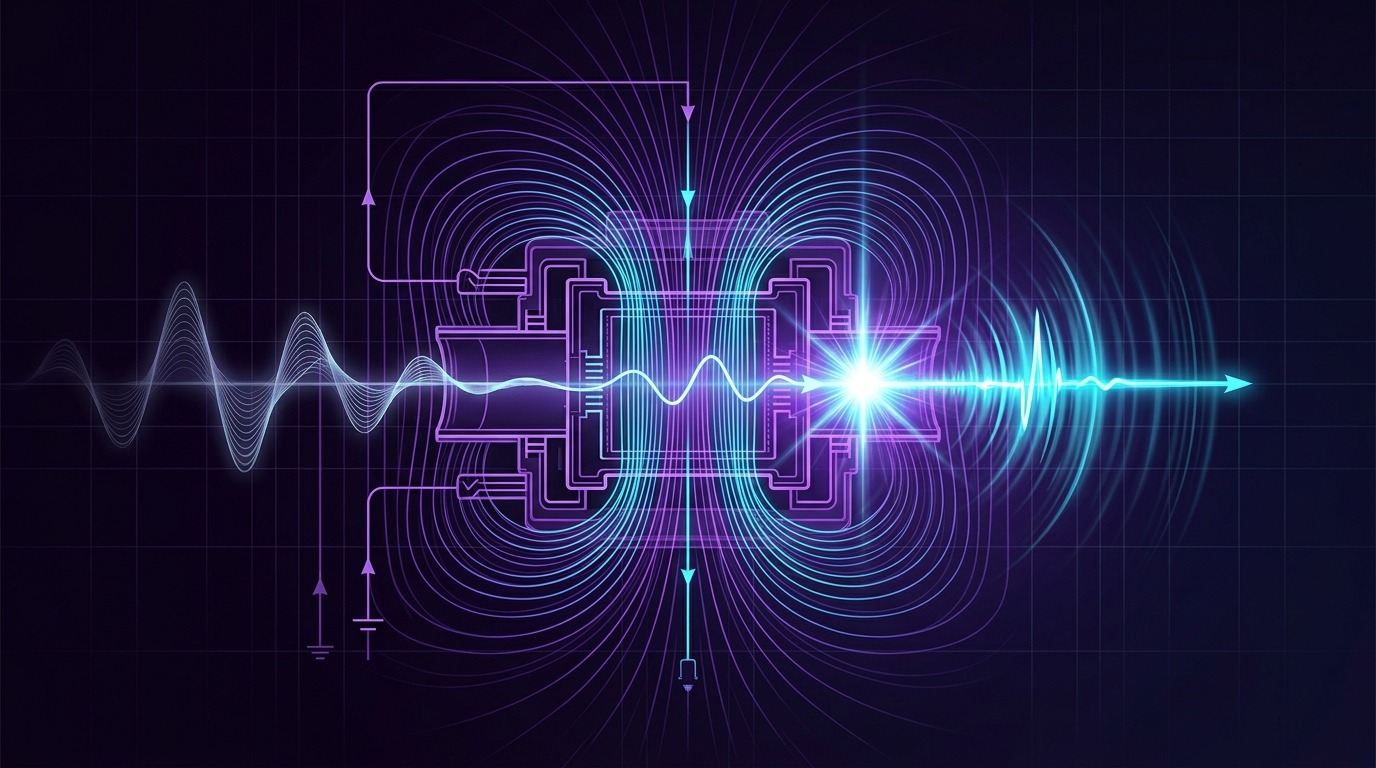
Searching for axions requires experimental methods distinct from nuclear recoil detection [s3] [s4]. In theory, axions are predicted to convert into detectable photons of light when exposed to strong magnetic fields [s4]. Specialized resonant cavity searches, such as the Axion Dark Matter eXperiment (ADMX), deploy intense magnetic fields to induce this conversion and measure the resulting faint electromagnetic signals [s3] [s4]. Advanced experimental programs aim to extend axion detection sensitivity to higher mass thresholds up to 10^3 eV [s3].
Astronomers also investigate potential axion signals across cosmic environments by examining data from space telescopes [s1]. Observations from Fermi, Chandra, and the NuSTAR observatory are analyzed to search for signatures of axion-photon oscillations in high-energy X-ray and gamma-ray emissions from distant astrophysical sources [s1]. Through subterranean cavities, space telescopes, and accelerator experiments, physicists continue probing whether dark matter consists of axions, WIMPs, or an intricate multi-particle Dark Sector [s1] [s2] [s4].
Sources & further reading
[s1] Dark Matter - NASA Science ↗NASA Science
[s2] Dark matter – Home | CERN ↗CERN
[s3] Dark Matter | Fermilab Cosmic Physics Center ↗Fermilab
[s4] DOE Explains...Dark Matter | Department of EnergyLock ↗U.S. Department of Energy
[s5] ESA - Ready, set, go! Euclid begins its dark Universe survey ↗ESA
Updated 13/10/2026. Report a correction.