Resupplying Science: SpaceX CRS-35 Heads to Orbit
SpaceX's 35th Commercial Resupply Services (CRS-35) mission for NASA launches from Cape Canaveral Space Force Station in Florida, delivering critical supplies and cutting-edge laboratory research to the International Space Station [s1]. Overseen by NASA's Biological and Physical Sciences division, the manifest includes four major scientific investigations engineered to explore how living systems respond to extreme extraterrestrial environments [s1]. These investigations probe key facets of human health, agricultural viability, molecular diagnostics, and microbial behavior in microgravity [s1].
Operating in low Earth orbit allows researchers to isolate gravity as a biological variable, exposing cells, pathogens, and crops to conditions impossible to reproduce on the ground for prolonged durations [s1]. By deploying advanced biotechnology—ranging from three-dimensional cellular constructs to compact diagnostic instrumentation—CRS-35 seeks to resolve fundamental physiological questions [s1]. The insights gained aim to protect crews on upcoming deep-space journeys to the Moon and Mars while offering tangible biomedical and agricultural benefits for life on Earth [s1].

Microscopic Neuropathology: 3D Brain Models Under Microgravity Stress
Extended space missions subject the human body to substantial physiological stress, including fluid shifts, altered intracranial pressure dynamics, and altered cellular mechanics. To clarify how spaceflight affects the central nervous system without putting astronauts through invasive testing, a new precision health investigation on CRS-35 sends lab-grown 3D human brain models to the orbiting outpost [s1]. These organoid tissue cultures will remain aboard the space station for five weeks, during which they will experience the sustained microgravity of low Earth orbit [s1].
Throughout the study, researchers will compare the orbital 3D brain models directly with identical control cultures kept in laboratories on Earth [s1]. By analyzing differences at the cellular and molecular levels, scientists seek to evaluate how short-term spaceflight influences cellular stress pathways, structural morphology, and neuronal signaling [s1]. Understanding these microgravity-induced stress responses provides a foundation for designing targeted countermeasure therapies, mitigating potential risks to astronaut brain health as human exploration targets long-duration destinations including the Moon and Mars [s1]. Furthermore, revealing how neural tissues respond to acute external stress can inform terrestrial neuropathology research into cellular degeneration and stress resilience [s1].

Defending Orbital Agriculture: Plant Pathology and Fungal Virulence in Orbit
As space exploration transitions toward self-sustaining missions that travel beyond rapid resupply range, orbital agriculture becomes an indispensable component of life-support infrastructure. Space-grown crops provide essential macro- and micronutrients, introduce dietary variety, and provide measurable psychological well-being for crew members during prolonged confinement [s1]. Furthermore, cultivated plants contribute directly to environmental control by consuming carbon dioxide, generating breathable oxygen, and facilitating the recycling of water aboard spacecraft [s1].
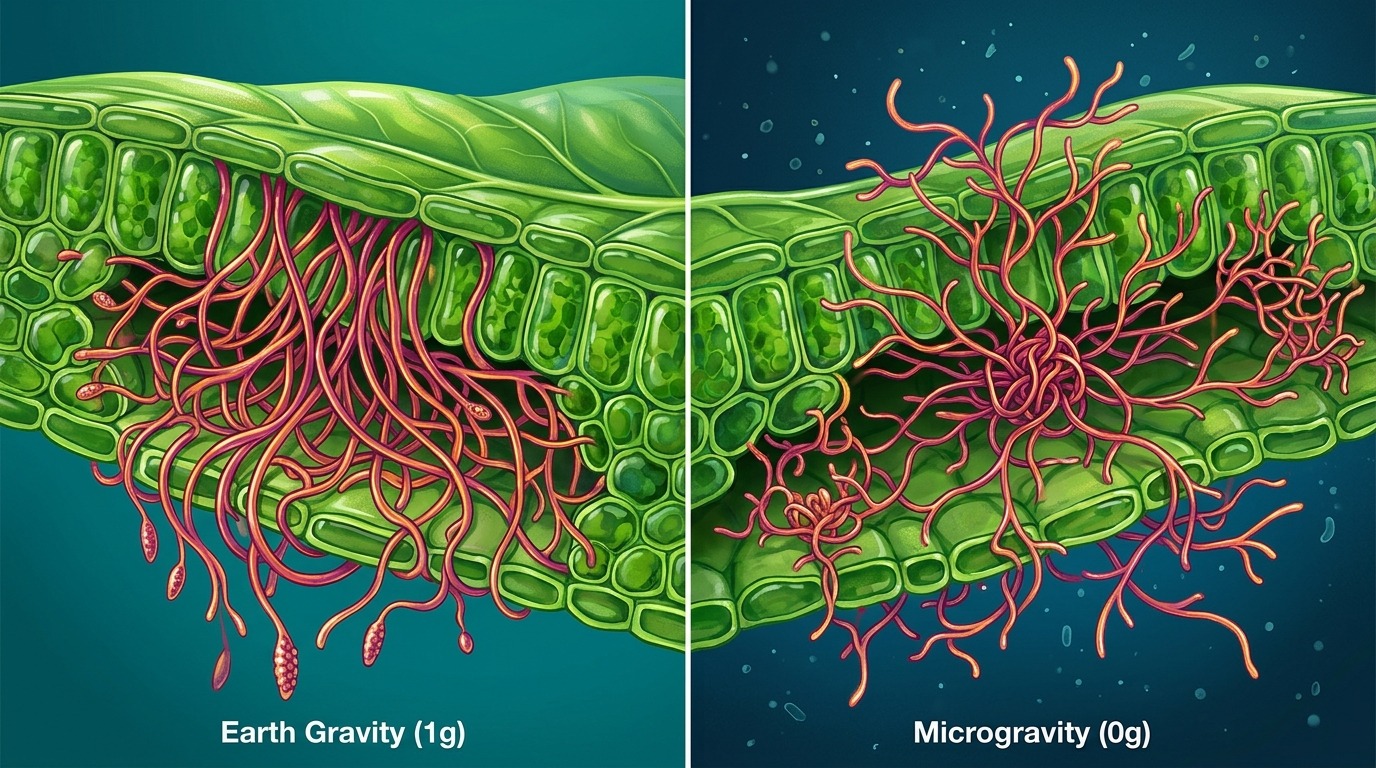
However, the survival and yield of these vital closed-loop food systems depend on their ability to resist plant diseases. A space crops study aboard CRS-35 specifically investigates whether crop diseases develop faster and display greater severity in microgravity [s1]. The experiment evaluates molecular and structural modifications by comparing space station-grown plants infected with a pathogenic fungus against infected control plants cultivated on Earth [s1]. Microgravity can fundamentally alter fluid transport, gas exchange boundaries, and cellular stress signaling in vegetation. Determining whether fungal virulence increases or plant immune defenses become compromised under these conditions will assist agronomists in breeding disease-resistant crop strains for Earth and engineering resilient agricultural architectures for future space outposts [s1].
Rapid Diagnostic Capabilities: Validating On-Orbit Biomarker Detection
In deep-space operations where resupply flights and rapid sample return to Earth are physically impossible, crew autonomy depends on in-flight clinical diagnostic tools. CRS-35 features the first functional test of a compact microplate reader, an automated analytical instrument that arrived aboard the International Space Station earlier in the year [s1]. Developed under NASA's Commercially Enabled Rapid Space Science initiative, the experiment evaluates the miniature instrument's ability to identify and quantify specific biomarkers, including proteins, antigens, and antibodies [s1].
Terrestrial laboratories routinely rely on microplate readers for enzyme-linked immunosorbent assays and fluorescence spectroscopy. Adapting this capability into a rugged, compact microplate reader operable in weightlessness removes the chronic lag associated with freezing biological specimens and awaiting terrestrial post-flight recovery [s1]. On-orbit detection enables crew members and scientists to assess biological samples in real time, dramatically accelerating scientific workflows aboard the station [s1]. Most critically, the device provides an operational foundation for the early diagnosis of infectious illnesses and emergent physiological conditions, empowering autonomous medical intervention on future interplanetary voyages [s1].

Superbugs in Space: Tracking Antimicrobial Resistance in Microgravity
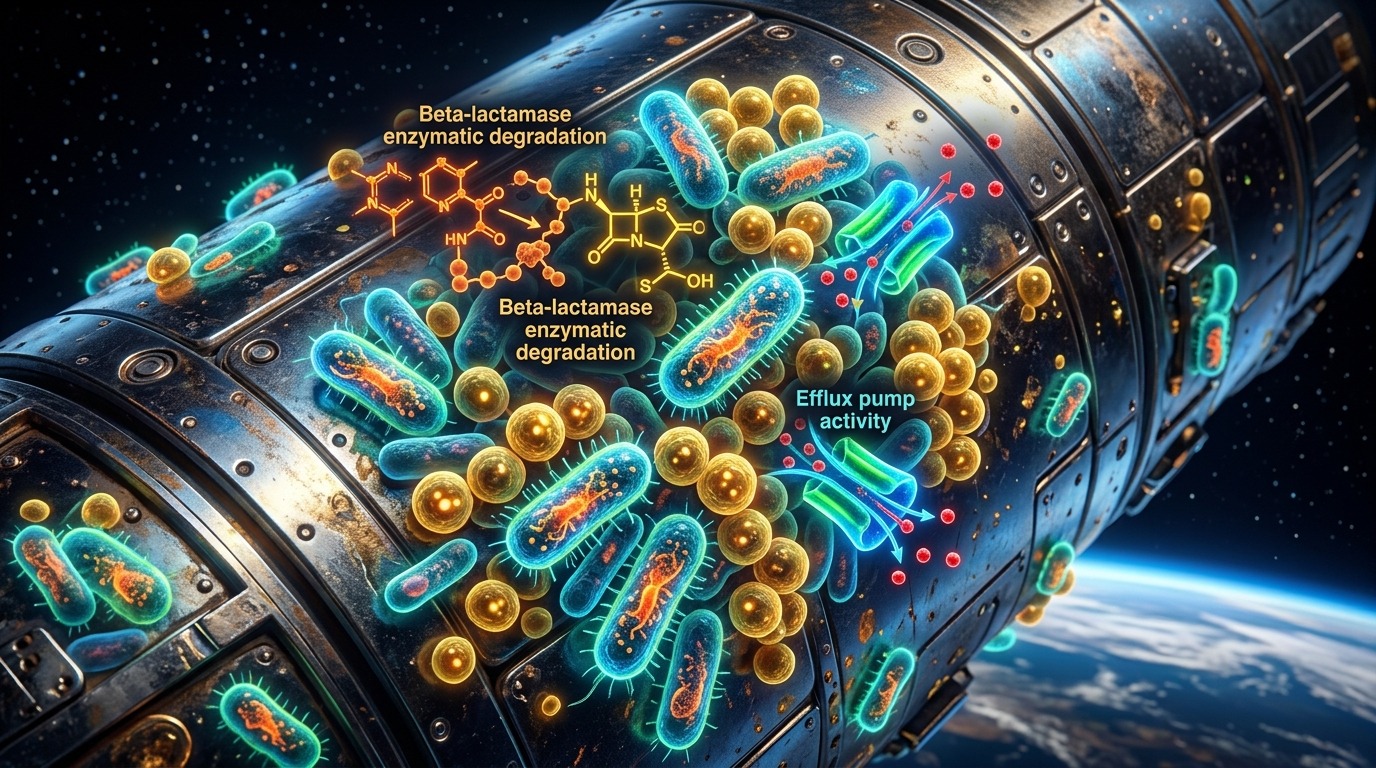
Microbial populations adapt rapidly to selective pressures, and the closed environment of the International Space Station creates a distinct evolutionary arena characterized by microgravity and constant human occupancy. CRS-35 marks the fourth and final scheduled research deployment of an ongoing precision health investigation dedicated to understanding how antibiotic-resistant bacteria survive, persist, and evolve in space [s1]. Over the course of the mission, astronauts repeatedly swab and sample surface touchpoints across the space station modules to identify and monitor the development of drug-resistant microorganisms [s1].
Understanding the mechanisms that govern bacterial virulence and resistance mechanisms in microgravity is vital for securing crew safety during long-duration voyages, where compromised immune function and confined living quarters heighten infection risks [s1]. Tracking genetic and phenotypic adaptations across these four research phases will help scientists develop proactive microbial management strategies and novel hygiene countermeasures for future space habitats [s1]. At the same time, observing how superbugs evolve under orbital conditions yields invaluable insights into the emergence of drug resistance on Earth, potentially pinpointing molecular pathways that can be targeted to combat resilient hospital-acquired bacterial strains [s1].
Sources & further reading
[s1] NASA’s SpaceX CRS-35 Mission to Launch Health Research - NASA Science ↗science.nasa.gov · 2026-10-12
Updated 14/10/2026. Report a correction.