An Edge-On Perspective in Columba
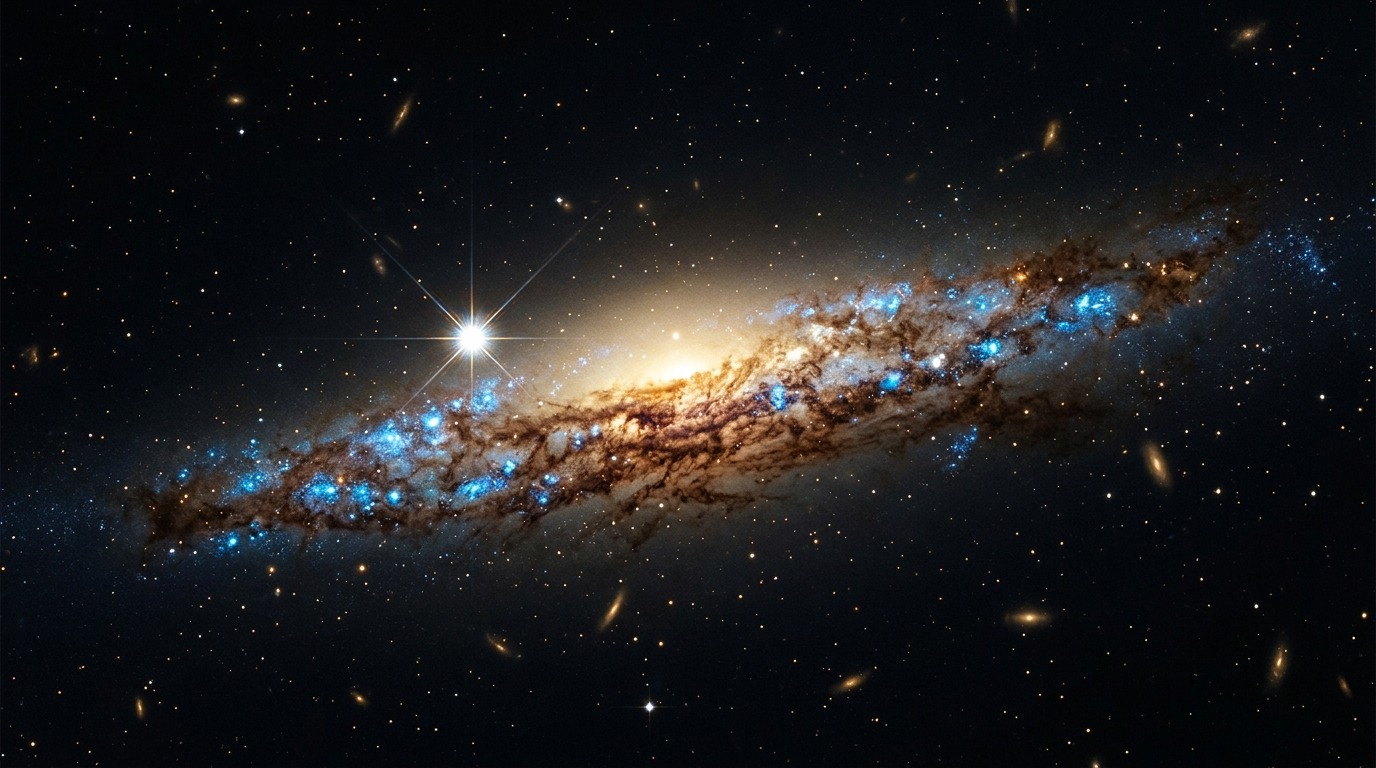
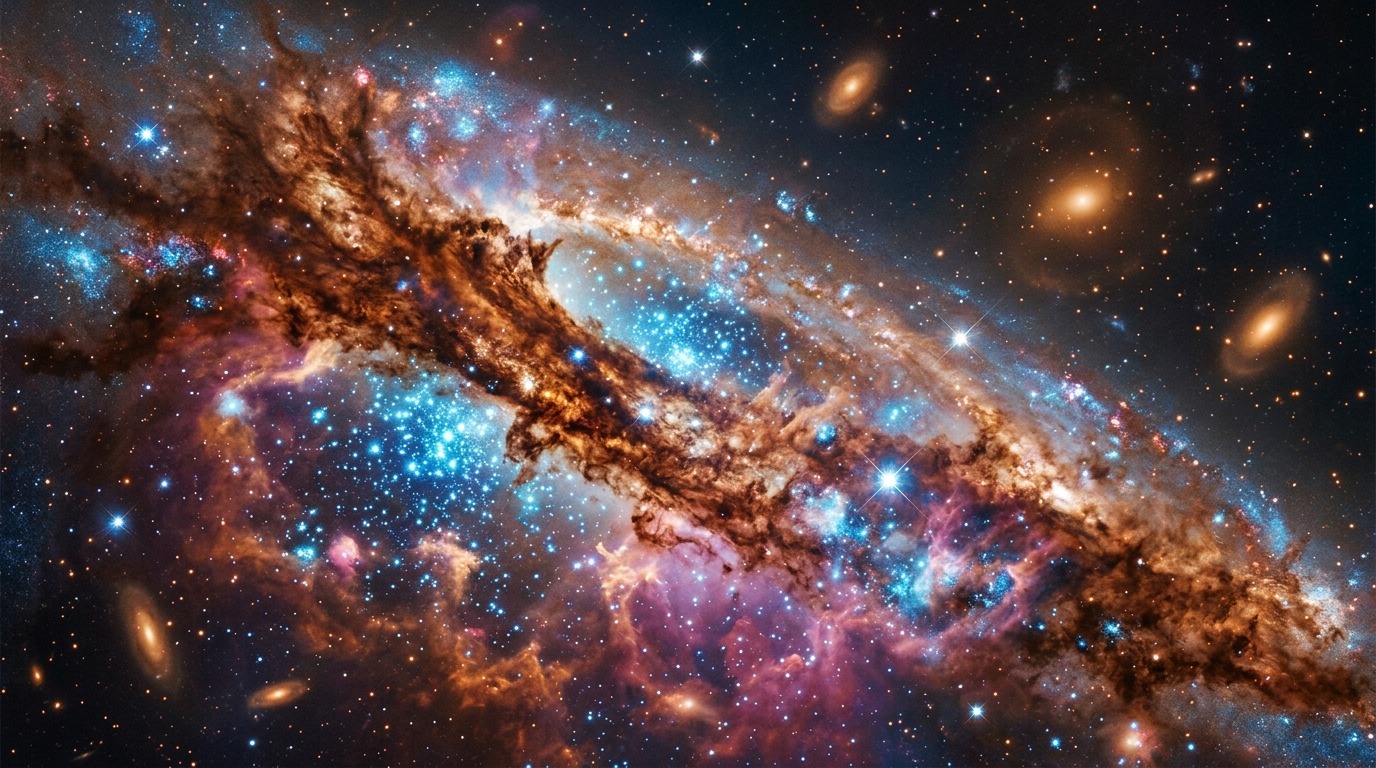
Seen edge-on across deep space, the intermediate spiral galaxy NGC 1827 presents a striking profile to the cameras of the Hubble Space Telescope [s1]. Positioned approximately 37 million light-years from Earth in the southern constellation Columba, also known as the Dove, this stellar system offers astronomers a cross-sectional perspective on galactic architecture [s1]. Rather than observing spiral arms sprawling across a wide face-on orientation, Hubble views NGC 1827 from its rim, turning the entire disc into a slender, luminous ribbon divided by dark cosmic material [s1].
Edge-on geometries are particularly valuable in astrophysics because they decouple radial structure from vertical scale height. By viewing a galaxy along its plane of rotation, researchers can evaluate how dust, gas, and diverse stellar populations settle relative to the midplane. In NGC 1827, this angle allows scientists to inspect the vertical stratification of the disc without the confusing overlapping light from face-on spiral patterns, exposing the structural mechanisms that dictate intermediate spiral galaxies [s1].
Stellar Nurseries and Optical Signatures
Acquired using the High Resolution Channel and Wide Field Channel capabilities of Hubble’s Advanced Camera for Surveys (ACS), the observation resolves fine structures within NGC 1827's disc with exceptional clarity [s1]. Bisecting the galaxy lengthwise are pronounced, rusty-brown lanes of cold interstellar dust [s1]. These dense filaments block optical light emitted by older, underlying stars, carving out a dark trench along the disc's rotational axis [s1].
Interspersed among these shadowy dust lanes are clusters of brilliant blue light [s1]. These azure regions highlight hot, massive, short-lived stars that have recently coalesced from collapsing molecular clouds, indicating that active star formation continues along the length of the galactic plane [s1]. Surrounding this disc, a smattering of foreground stars from our own Milky Way populates the field, while faint, distant background galaxies dot the deep black backdrop [s1]. Notably, a prominent foreground star sits directly between Earth and NGC 1827, appearing just to the left of the galaxy's bright central core [s1]. This star is marked by four bright, razor-sharp diffraction spikes—an optical consequence of incoming starlight bending around the mechanical support struts that suspend Hubble's secondary mirror inside the telescope assembly [s1].
The 260-Galaxy Satellite Census
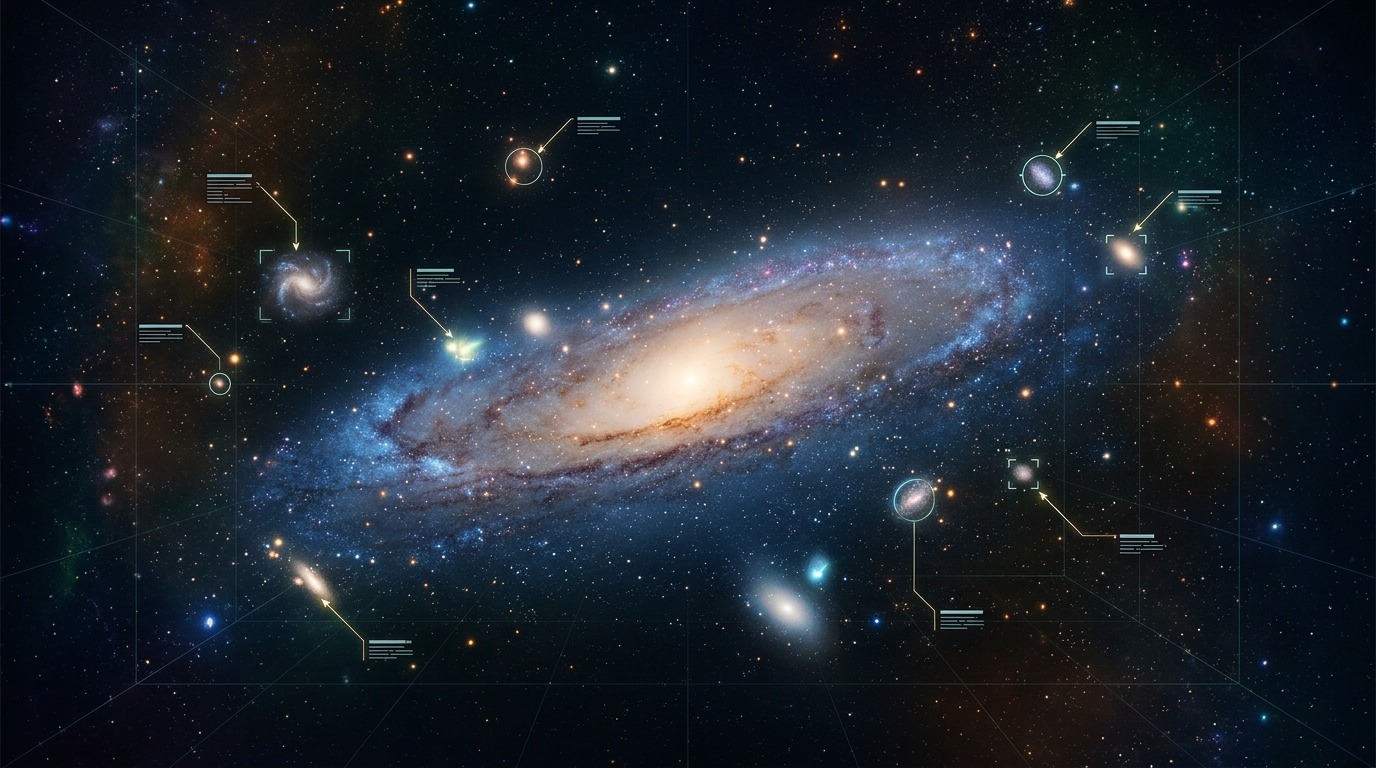
While NGC 1827 is visually captivating on its own, Hubble’s observation of the galaxy forms part of an ambitious systematic observing campaign [s1]. The targeted program is conducting an extensive census of 260 satellite galaxies distributed around 22 Milky Way-like host galaxies, all located within a distance horizon of roughly 32 million light-years from Earth [s1].
Characterizing satellite systems requires meticulous high-resolution imaging to separate diffuse dwarf and intermediate companions from distant background sources. According to NASA, Hubble has successfully observed 111 of the 260 satellite galaxies planned in this campaign [s1]. The remaining 149 satellite targets will require an additional 149 individual Hubble orbits—allocating one complete spacecraft orbit per galaxy—to assemble the complete sample [s1]. Once finalized, the program will yield a comprehensive, homogeneous observational archive of satellite environments orbiting standard Milky Way analogues in the local universe [s1].
Testing Small-Scale Cosmological Models
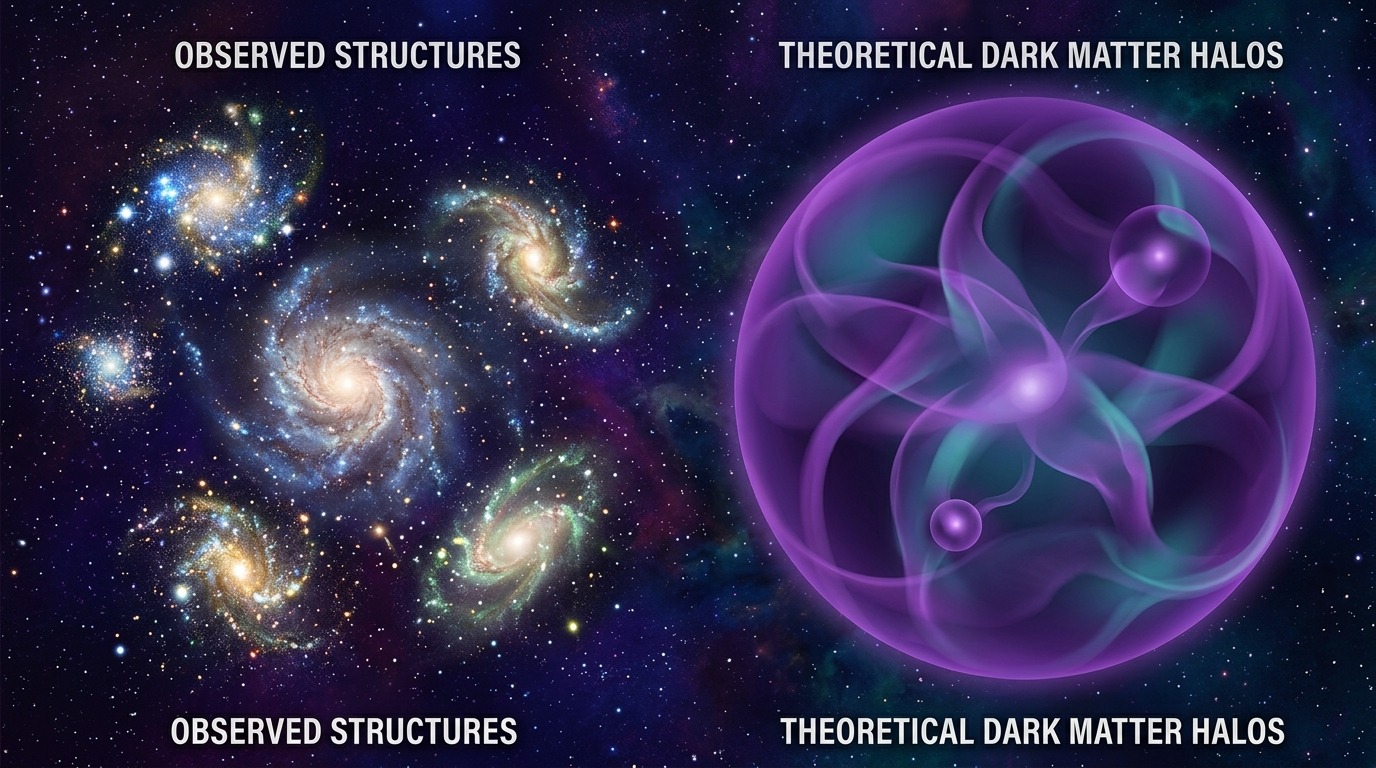
The principal scientific motivation behind cataloging hundreds of small satellite systems lies in addressing long-standing discrepancies in modern astrophysics [s1]. Low-mass satellite galaxies serve as critical testing grounds for the predictions of cosmological models on small scales, where current theoretical simulations struggle to match direct astronomical observations [s1].
On cosmic scales spanning hundreds of millions of light-years, the standard cosmological paradigm successfully describes the large-scale distribution of matter, galaxy clustering, and cosmic microwave background fluctuations. However, when extrapolated down to sub-galactic regimes, theoretical expectations often diverge from empirical findings [s1]. Cosmological models frequently predict an overabundance of low-mass satellite substructures around massive hosts compared to what astronomers observe, while also grappling with questions surrounding core densities and satellite spatial distributions. Low-mass galaxies like NGC 1827 and its fellow survey targets provide the empirical benchmarks required to test whether these discrepancies stem from incomplete models of dark matter, unaccounted baryonic feedback processes, or observational selection effects [s1].
Refining Galactic Evolutionary Theory
By assembling precise empirical profiles for 260 satellite galaxies across 22 representative host environments, the ongoing Hubble survey will help establish whether the satellite population around the Milky Way is typical or an outlier [s1]. The observational data collected by Hubble will allow researchers to better understand and characterize the fundamental properties of low-mass galaxies residing in Milky Way-like systems [s1].
Detailed metrics of stellar mass, star formation activity, structural morphology, and gas distribution extracted from images like those of NGC 1827 will enable theorists to fine-tune cosmological simulations [s1]. By contrasting observational properties across dozens of distinct galactic environments, astronomers can determine how external tidal forces and internal feedback influence satellite survival and evolution. As the remaining 149 orbits of the survey proceed, Hubble’s continued scrutiny of edge-on systems and faint dwarf companions will supply the vital empirical evidence needed to align small-scale cosmological predictions with the observed universe [s1].
Sources & further reading
[s1] NASA's Hubble Spies Spiral’s Edge - NASA ScienceFacebook logoInstagram logo ↗science.nasa.gov · 2026-10-16
Updated 16/10/2026. Report a correction.