Beyond the Observable Horizon
When we look upward into a clear night sky, we are gazing into the deep history of our cosmos. Telescopes can trace radiant starlight and ancient cosmic microwaves across vast cosmic expanses, but that journey inevitably meets a hard physical boundary. This limit is the observable universe: the finite bubble of space from which light has had enough time to reach Earth since the beginning of cosmic expansion. Beyond that visible threshold, however, fundamental questions arise: Does space simply go on forever with more stars and galaxies, or could our entire cosmos be merely a solitary drop in a boundless ocean of separate universes?
In contemporary theoretical physics and cosmology, the concept of such an ensemble is known as the multiverse. Formally, an entire set or collection of parallel universes is designated as a multiverse [s1]. Depending on the theoretical framework one examines, these alternate domains might take wildly different forms. Some cosmological scenarios envision them as distinct, bubble-like cosmic spheres scattered across an inflating higher-dimensional medium. In certain models, these domains may contain different realizations of our own universe, while others might operate under entirely different physical laws or fundamental constants [s1]. Yet, because no astronomical instrument has ever detected another universe, mainstream physics treats the multiverse strictly as a speculative hypothesis rather than an established physical discovery.
Causally Disconnected Realities
To understand why parallel universes are so elusive, one must confront the principle of causality—the foundational rule that causes must precede effects, constrained by the finite speed of light. In standard relativity, no information, particle, or electromagnetic wave can travel faster than light in a vacuum. Consequently, regions of spacetime separated by distances greater than the distance light could have traveled across the age of the cosmos cannot influence one another in any way.
This physical constraint leads directly to one of the most critical properties in several multiverse scenarios: causal disconnection. In certain theoretical multiverse models, independent universes are conceptualized as separate spheres that are causally disconnected from all other spheres [s1]. This separation is absolute: it means that no light, no physical particles, and no communication signals of any kind can ever pass between them [s1]. If another universe exists entirely outside the causal boundary of our own, it remains irrevocably isolated. We cannot send a radio beam to ping its boundaries, nor can any photon from that distant realm ever illuminate an astronomical detector on Earth. This total causal isolation forms a formidable barrier between theoretical contemplation and traditional observational astronomy.
Quantum States and Information Flow
While cosmological inflation models arrive at multiple universes through the runaway expansion of cosmic space, another prominent avenue emerges from the strange mathematics of quantum mechanics. In the microscopic realm of atoms and subatomic particles, physical systems often exist in states of superposition, meaning they hold multiple probabilistic outcomes simultaneously until a measurement occurs. In foundational quantum history, physicist Hugh Everett proposed the relative state formulation, which later became popularized as the many-worlds interpretation, suggesting that every quantum probability splits the cosmos into branching, coexisting branches of reality.
Decades later, researchers sought to articulate the exact physical and computational mechanism behind this branching structure. In an April 2001 preprint titled "The Structure of the Multiverse," physicist David Deutsch presented a theoretical framework linking quantum mechanics directly to information theory [s2]. Deutsch argued that the underlying architecture of the multiverse is determined by information flow [s2]. In this perspective, the multiverse is not merely an untidy collection of disjointed worlds, but an intricately structured quantum system whose branches and interactions are governed by how quantum information is processed, copied, and partitioned across states [s2]. Because this work was distributed as a preliminary preprint and remains a theoretical formulation, it represents an interpretive proposal for understanding quantum systems rather than a confirmed physical detection of parallel realities.

The Crucible of Falsifiability
The prospect of other realities where physical laws take different forms or quantum choices play out differently has ignited both public fascination and intense academic debate. However, this fascination brings forward a fundamental challenge at the heart of the philosophy of science: the criterion of falsifiability. Established by philosopher Karl Popper, falsifiability holds that for a hypothesis to be genuinely scientific, it must make definite, empirical predictions that could, in principle, be tested and proven false by experiment or observation.
Multiverse hypotheses face severe scrutiny precisely on this criterion. A central and persistent criticism of multiverse hypotheses is that they are frequently difficult to test, with some proposals lacking practical falsifiability and therefore possessing no predictive scientific value [s1]. If a parallel universe is by definition causally isolated, no telescope, particle collider, or space probe can ever collect data to confirm or refute its existence [s1]. Critics argue that without empirical verification, multiverse concepts risk drifting away from empirical science and into the domain of mathematical metaphysics. Some scientists even caution that realizations of certain multiverse hypotheses might exist only as abstract constructs in the human mind rather than as physical realities [s1]. Without testable consequences, mathematical elegance alone cannot elevate a speculative idea into a confirmed feature of nature.
An Unresolved Scientific Frontier
Despite the profound challenges of empirical verification, physicists have explored whether subtle, indirect signatures could ever bridge the divide between theoretical speculation and observational reality. For example, some cosmologists have investigated whether collisions between adjacent "bubble universes" during the primordial inflationary epoch could have left faint, circular temperature anomalies imprinted on the cosmic microwave background—the thermal afterglow of the early universe. While sensitive space observatories have mapped this ancient radiation with extraordinary precision, no definitive evidence of any such cosmic impact has been confirmed.
Similarly, in laboratory settings, researchers investigate the boundaries of quantum coherence, interference, and quantum computing. While these experiments test how quantum information behaves in highly controlled environments, determining whether quantum information flow proves the physical existence of parallel worlds or merely describes mathematical probabilities remains unresolved.
For modern science, the multiverse remains an intellectual frontier. It illustrates how the rigorous equations of cosmology and quantum theory can push human understanding to the very edge of what is observable. Until future breakthroughs provide testable predictions that survive empirical confrontation, the multiverse will remain what it is today: a profound, mathematically captivating hypothesis that challenges how we define the boundaries of the cosmos itself [s1].
Sources & further reading
[s1] APOD: 2010 November 14 - Multiverses: Do Other Universes Exist? - NASA Science ↗science.nasa.gov
[s2] [quant-ph/0104033] The Structure of the Multiverse ↗arxiv.org
Updated 20/10/2026. Report a correction.Image credits
Related source image: Multiverse
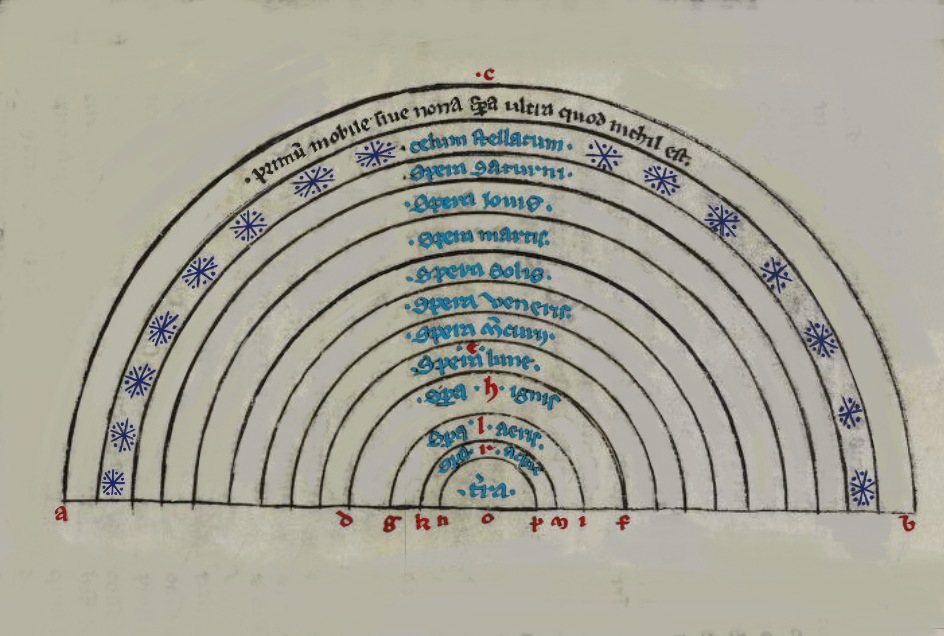
Source image · Cosmological diagram from Robert Grosseteste’s De Sphaera (13th century) · Cosmosanchez · CC0 · Original image and rights details ↗
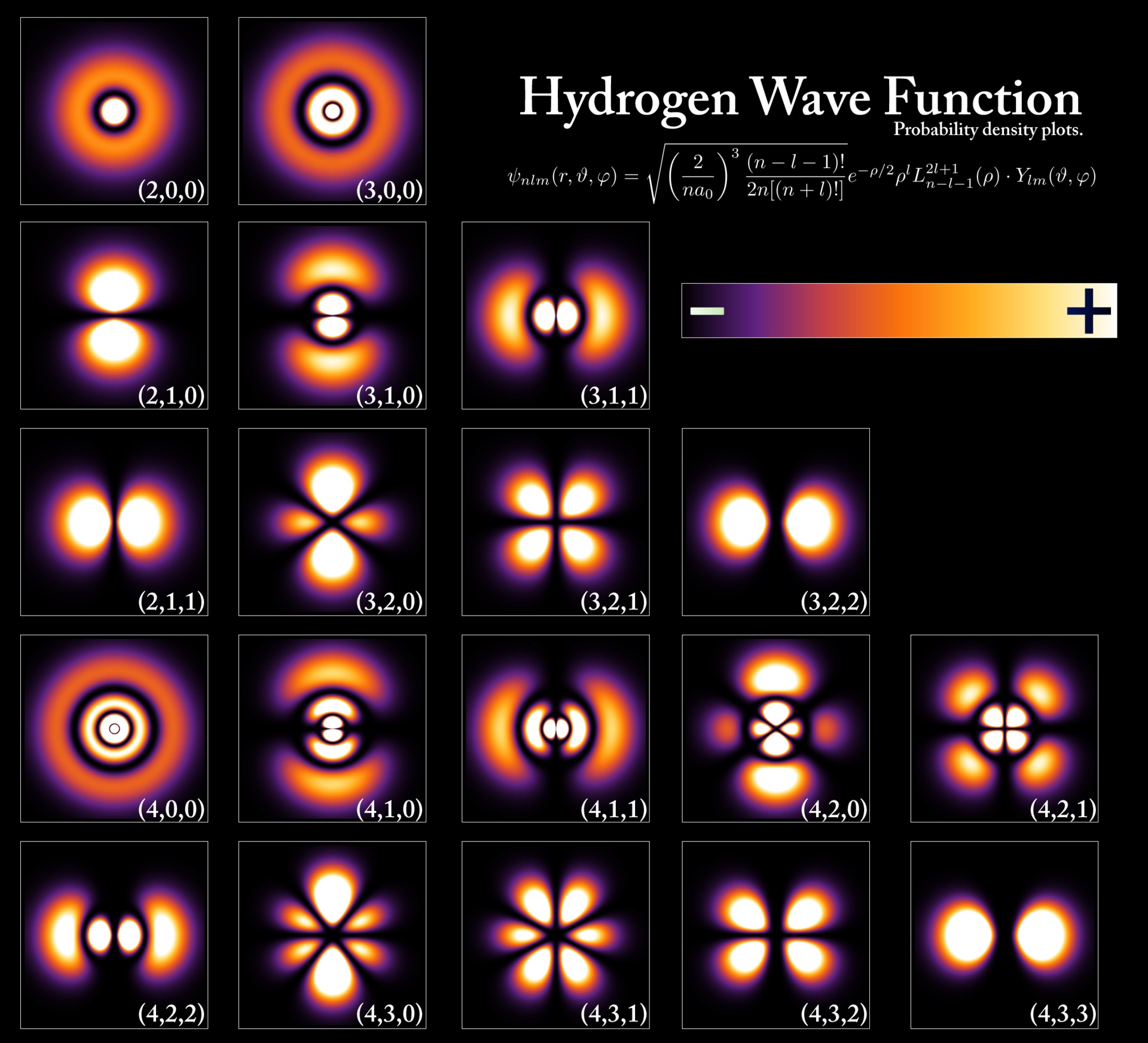
Source image · Hydrogen Density Plots · PoorLeno (talk) · Public domain · Original image and rights details ↗
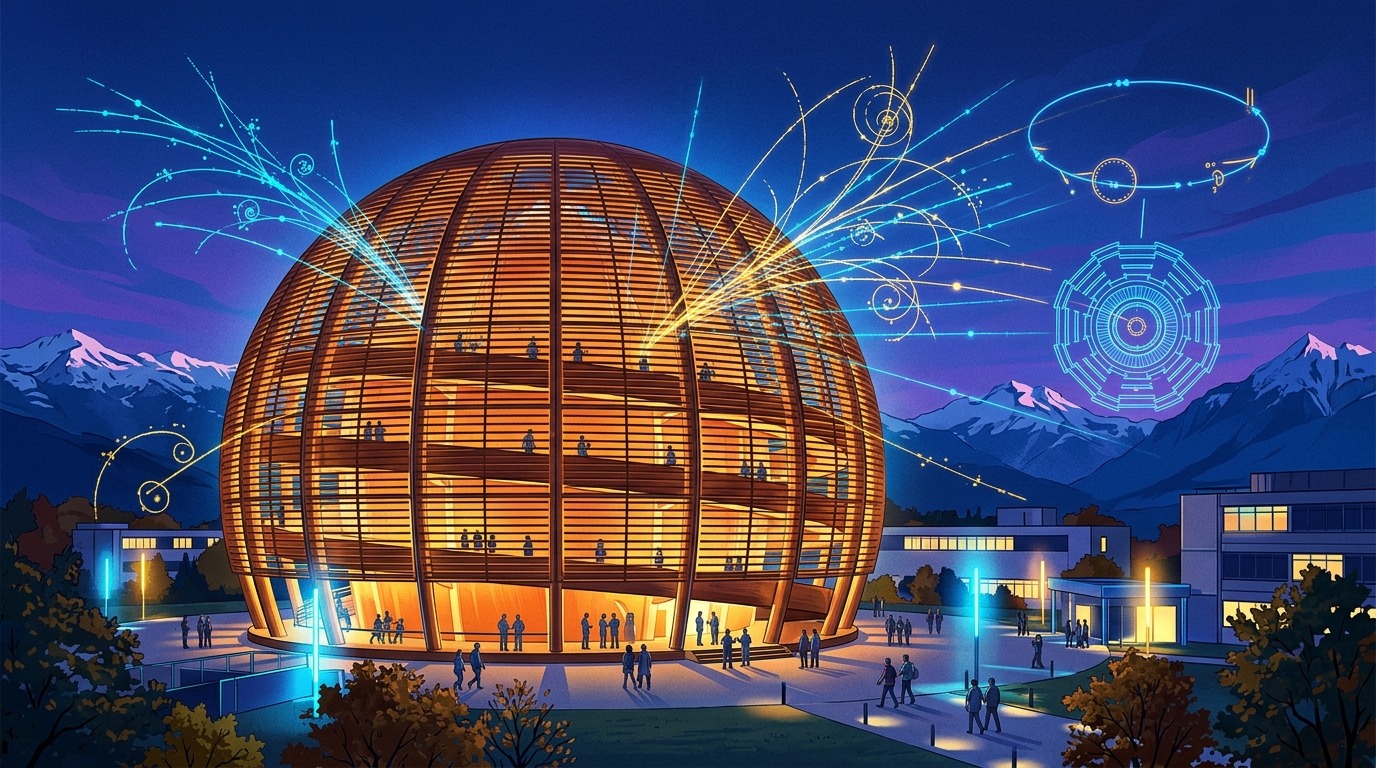
Gemini-generated conceptual illustration · COSMORA
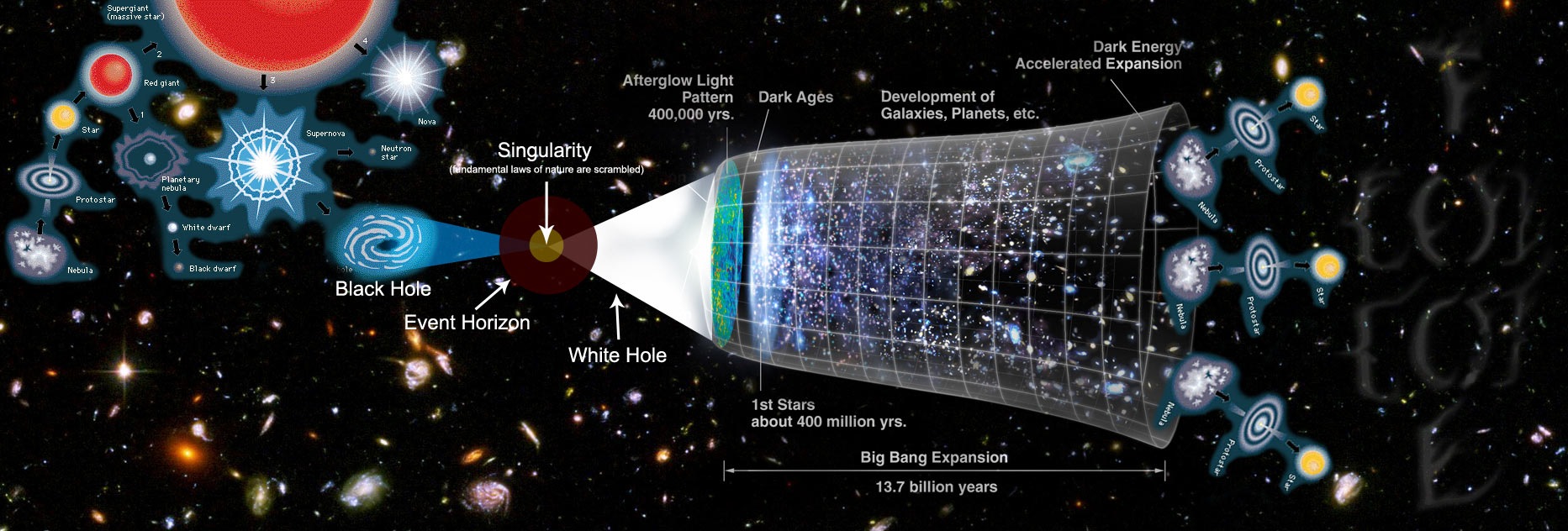
Source image · Multiverse · KronicTOOL · Public domain · Original image and rights details ↗