A Global Hackathon Opens Its Doors
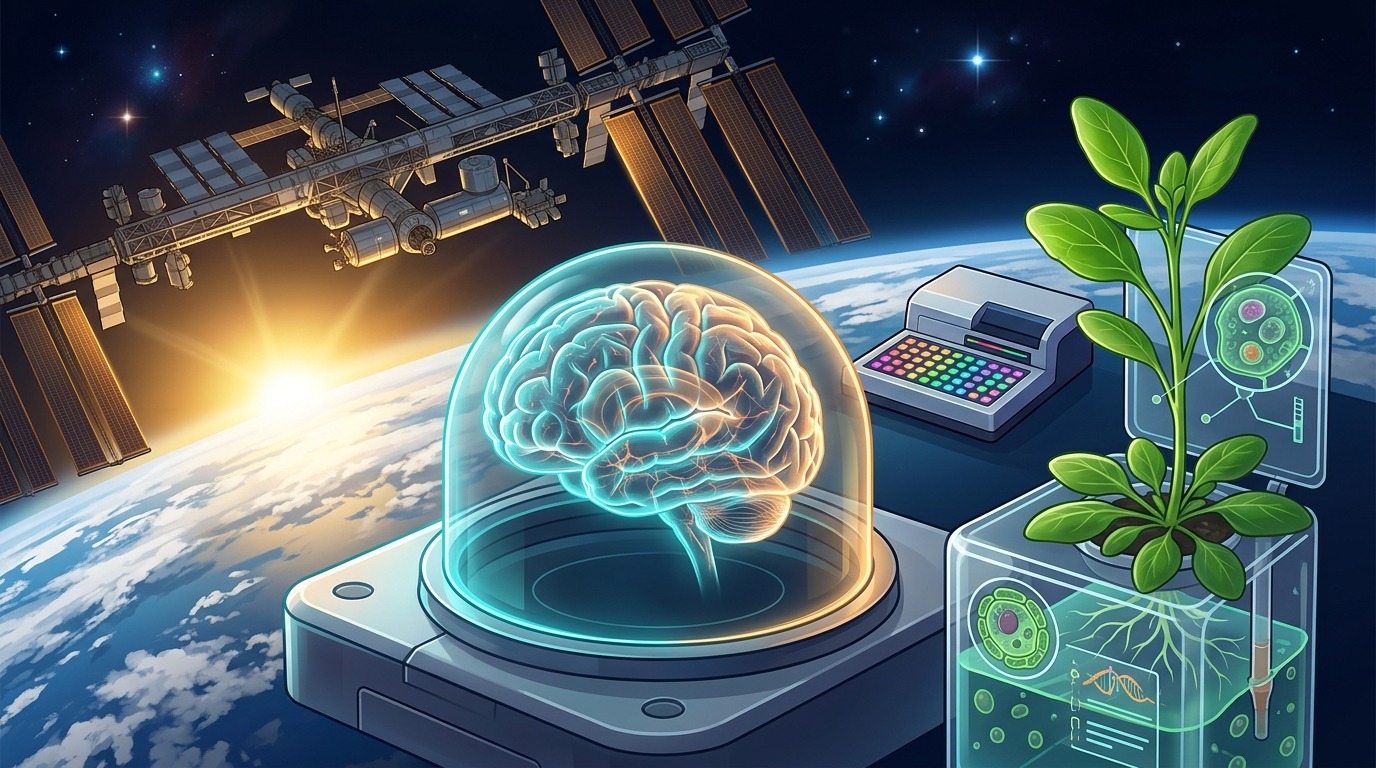
Registration has officially opened for the 2026 NASA Space Apps Challenge, inviting innovators, students, and enthusiasts worldwide to join an intensive collaborative hackathon on Saturday, November 14, and Sunday, November 15, 2026 [s1]. Operating across more than 500 local host events around the globe, the annual initiative empowers teams to craft functional solutions to complex aerospace hurdles using NASA’s expansive repository of free and publicly accessible data [s1].
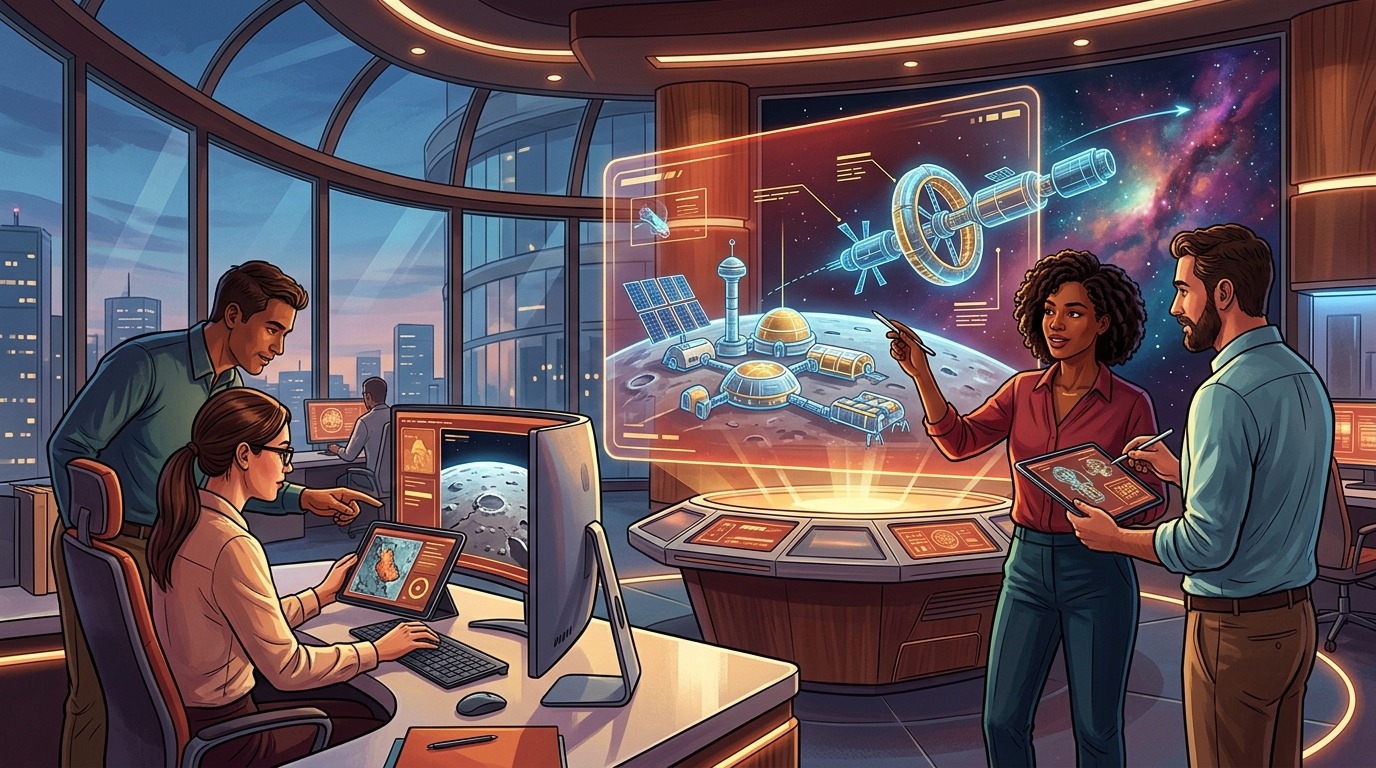
The Space Apps Challenge represents one of the largest civilian problem-solving initiatives in modern space exploration [s1]. As agency leaders emphasize, the hackathon is intentionally democratized: participants do not need formal programming experience to make meaningful contributions [s1]. Instead, the initiative convenes students, research scientists, software engineers, graphic designers, storytellers, and technologists of all ages and technical backgrounds to combine their multidisciplinary perspectives [s1]. By welcoming diverse skill sets, NASA seeks to bridge the gap between technical data architectures and creative, human-centered mission planning [s1].
Highlighting the interconnected ethos of the agency's scientific portfolio, Nicky Fox, associate administrator for the Science Mission Directorate at NASA Headquarters, noted that participants from across the globe can leverage NASA's open datasets to assemble what amounts to an interplanetary survival guide [s1]. The resulting community-developed concepts aim not only to help astronauts survive and thrive on extraterrestrial surfaces such as the Moon and Mars, but also to incubate transformative innovations that yield direct benefits for life on Earth [s1].
Engineering the Artemis Lunar Foothold
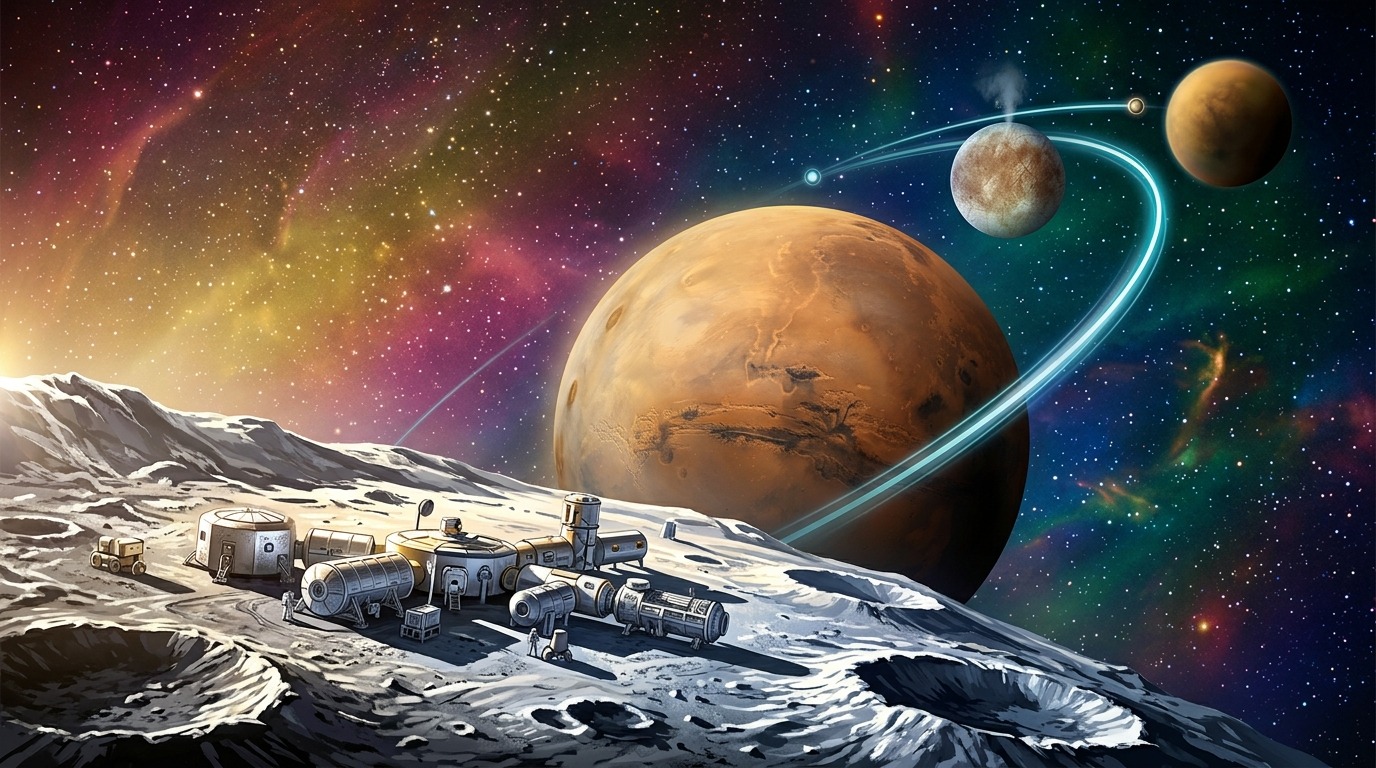
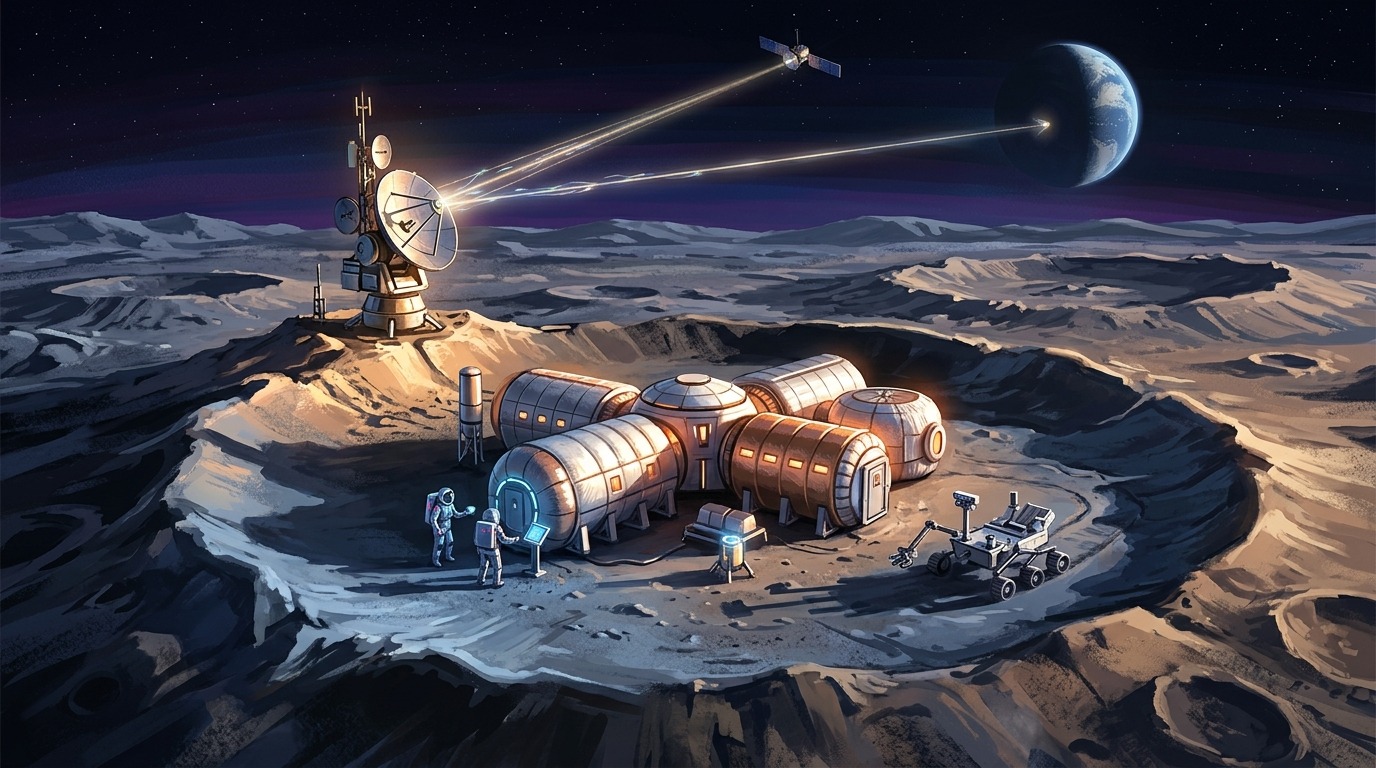
A central pillar of the 2026 Space Apps Challenge focuses on the technical and logistical architecture necessary for returning humans to the Moon under the Artemis program [s1]. As NASA advances toward establishing a sustained human presence at a permanent Moon Base, mission planners face unprecedented engineering, environmental, and operational constraints [s1].
Several hackathon challenge tracks specifically address the extreme conditions encountered at the lunar South Pole [s1]. Unlike equatorial landing sites explored during the Apollo era, the lunar polar environment is characterized by grazing solar angles, elongated shadows, and permanently shadowed craters containing volatile water ice deposits. Hackathon participants are challenged to build analytical tools and operational workflows that manage complex illumination cycles, optimize intermittent direct-to-Earth and orbital communication windows, and allocate limited power resources [s1].
Beyond surface orbital geometry, participant projects explore the broader human-system integration demands of extended lunar deployments [s1]. Challenge statements direct teams to simulate outpost operations, model consumable replenishment schedules, and safeguard astronaut physiological and psychological well-being during multi-week stays [s1]. By evaluating logistical pipelines through system-level modeling, crowdsourced teams can help simulate the real-world operational friction that mission directors must resolve before long-duration surface missions begin [s1].
Strengthening Readiness for Mars and Deep Space
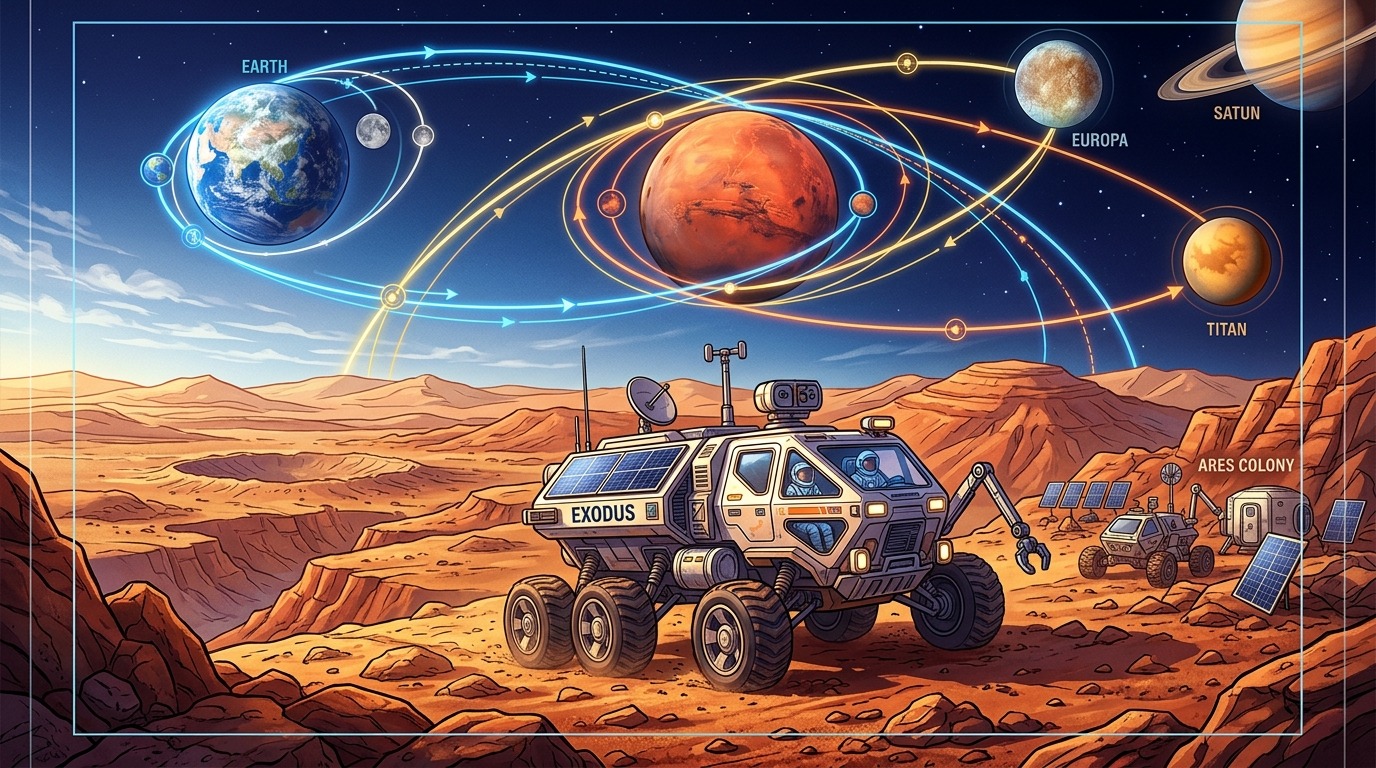
While the Moon serves as an immediate testing ground, the 2026 challenge tracks simultaneously look outward toward deep space, aligning directly with agency preparations for future human exploration of Mars and robotic journeys into the outer solar system [s1]. Long-duration interplanetary travel introduces harsh realities, including prolonged communication latency, microgravity degradation, and cumulative space radiation exposure.
To support Mars readiness, challenge tracks invite participants to formulate operational concepts for Martian surface campaigns, integrate data streams across multiple active Mars orbiters and rovers, and navigate intricate mission-design trade-offs [s1]. Other focus areas address the vital biological metrics required for interplanetary transits, tasking solvers with devising frameworks to track physiological and behavioral health indicators over multi-year journeys far removed from immediate medical evacuation [s1].
These deep-space challenges also draw upon NASA's broader solar system portfolio, including operational planning for outer-planet robotic missions targeting destinations like Jupiter’s moon Europa and Saturn’s moon Titan [s1]. By running mission simulations and analyzing terrestrial environmental analog data, hackathon teams can test how scientific exploration goals interact with tight engineering constraints, providing valuable conceptual frameworks for autonomous operations in extreme outer solar system environments [s1].
Mapping the Cosmos: SPHEREx and Open Astrophysics
The third major operational focus of the 2026 challenge directs public ingenuity toward expanding collective understanding of the broader cosmos [s1]. NASA’s astrophysics fleet continuously collects petabytes of observational data regarding the origin, geometry, and evolution of stellar and galactic structures, yet translating these immense data streams into accessible, interpretable tools remains a persistent challenge [s1].
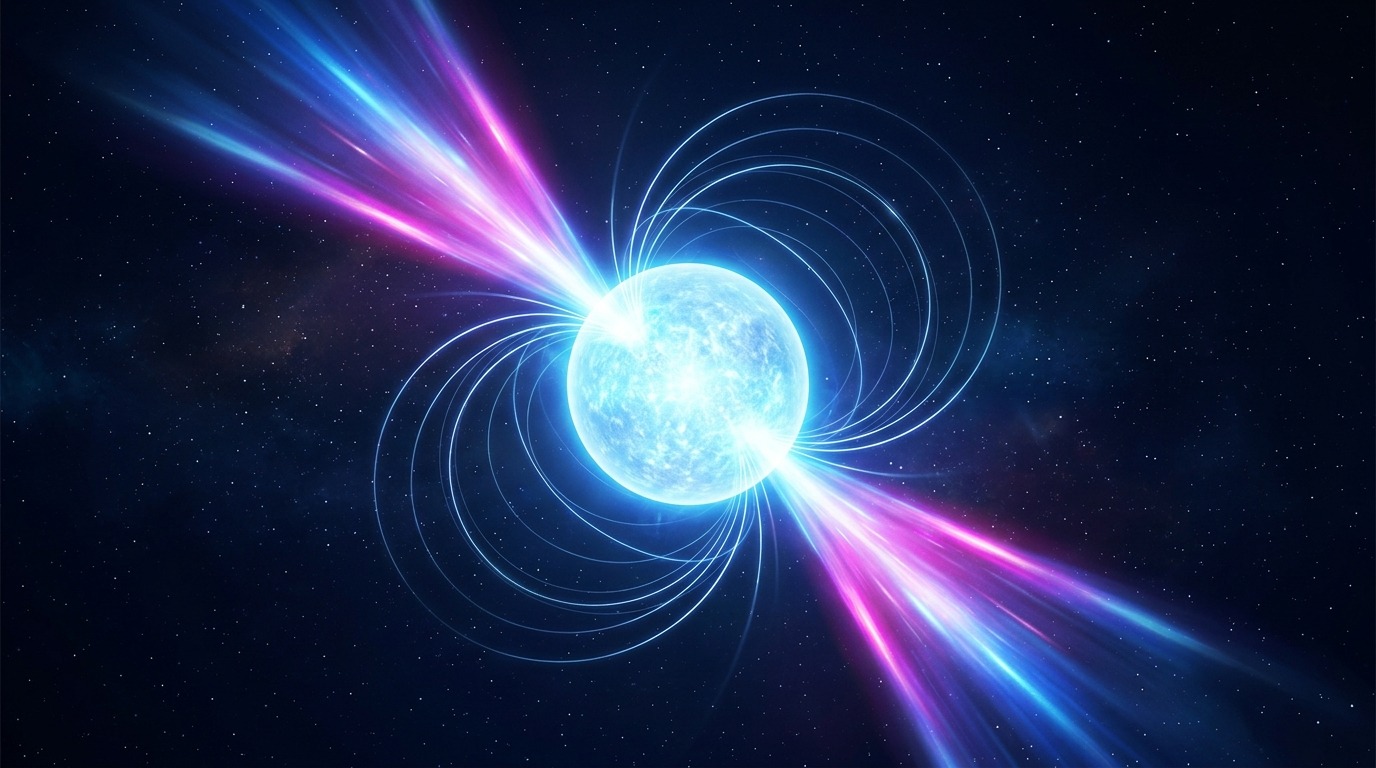
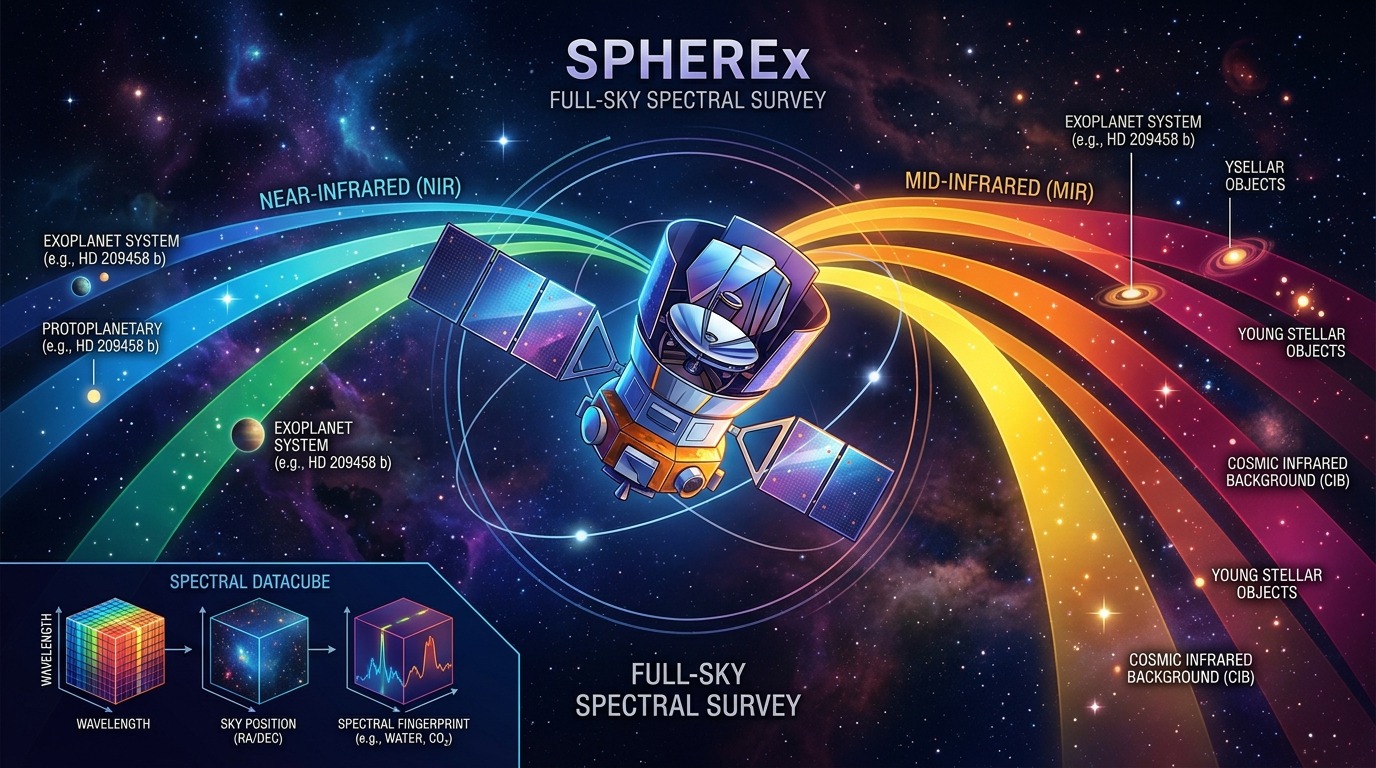
A prominent focal point in 2026 is the Spectro-Photometer for the History of the Universe, Epoch of Reionization and Ices Explorer (SPHEREx) mission, which performs an all-sky spectral survey across optical and near-infrared wavelengths [s1]. SPHEREx data provides astronomers with critical spectral signatures to probe the inflationary origin of the cosmos, trace the history of cosmic light production during the epoch of reionization, and catalogue biogenic water and organic ices across our Milky Way galaxy [s1].
Through Space Apps, teams will design specialized visualization platforms and user-friendly software interfaces capable of displaying dynamic temporal changes across the sky [s1]. By creating interactive data pipelines for missions studying cosmic evolution and expanding exoplanet catalogs, participants enhance open scientific engagement and assist both professional researchers and citizen scientists in querying complex all-sky spectral repositories [s1].
Open Science as an Engine of Interplanetary Exploration
The breadth of the 2026 Space Apps Challenge highlights the transformative potential of NASA’s open-access data philosophy [s1]. By eliminating paywalls and making raw and calibrated instrument streams freely available worldwide, the agency cultivates an international collaborative ecosystem that accelerates scientific inquiry and technological prototyping [s1].
While hackathon prototypes are preliminary by design, the event functions as a proving ground for novel methodologies that challenge conventional aerospace workflows. Rapid prototyping by diverse international teams can surface unanticipated approaches to telemetry visualization, machine learning models for remote sensing, and intuitive public outreach tools.
With over 500 local gatherings running concurrently across the globe on November 14 and 15, the 2026 challenge stands as an open invitation to global talent [s1]. By uniting aspiring students, seasoned specialists, and creative problem-solvers around real-world flight data, NASA demonstrates that the journey to the Moon, Mars, and the frontiers of the cosmos is an endeavor propelled by all of humanity [s1].
Sources & further reading
[s1] NASA Welcomes All Ages, Experience Levels for Space Apps Challenge - NASA Science ↗science.nasa.gov · 2026-10-15
Updated 15/10/2026. Report a correction.